
The European Commission proposed an exceptional measure funded by the European Agricultural Fund for Rural Development (EAFRD) to allow Member States to pay a one-off lump sum to farmers and agri-food businesses affected by significant increases in input costs.
Such increases in prices, notably for energy, fertiliser and animal feed, are disrupting the agricultural sector and rural communities, leading to liquidity and cash flow problems for farmers and small rural businesses active in processing, marketing or development of agricultural products. By directly addressing these cash-flow challenges, helping to keep them afloat, the support will address the market disturbances and thus contribute to global food security.
Agriculture Commissioner Janusz Wojciechowski said:
“Farmers, with the support of the Common Agricultural Policy, continue to relentlessly prove their worth by producing food under difficult circumstances. After the COVID-19 pandemic, they are now being heavily hit by the consequences of the Russian invasion of Ukraine. For some, survival is at stake. With this measure, the latest in a series deployed under the CAP, we support them so they can keep producing the food the world needs, care for their land and provide for their families.”
Once adopted by the co-legislators, this measure will allow Member States to decide to use available funds of up to 5% of their EAFRD budget for the years 2021-2022 for direct income support for farmers and SMEs active in processing, marketing or development of agricultural products. This represents a potential budget of €1.4 billion in the EU. Member States are required to target this support to beneficiaries who are most affected by the current crisis and who are engaged in circular economy, nutrient management, efficient use of resources or environmental and climate friendly production methods. Selected farmers and SMEs could receive up to €15,000 and €100,000 respectively. The payments should be made by 15 October 2023. To make use of that exceptional possibility, Member States will have to submit a modification to their rural development programme(s) introducing this new measure.
This exceptional proposal follows the €500 million support package for EU farmers adopted on 23 March in the framework of the Communication on “safeguarding food security and reinforcing the resilience of food systems”. In these two measures, the Commission encourages Member States to support farmers engaged in sustainable practices.
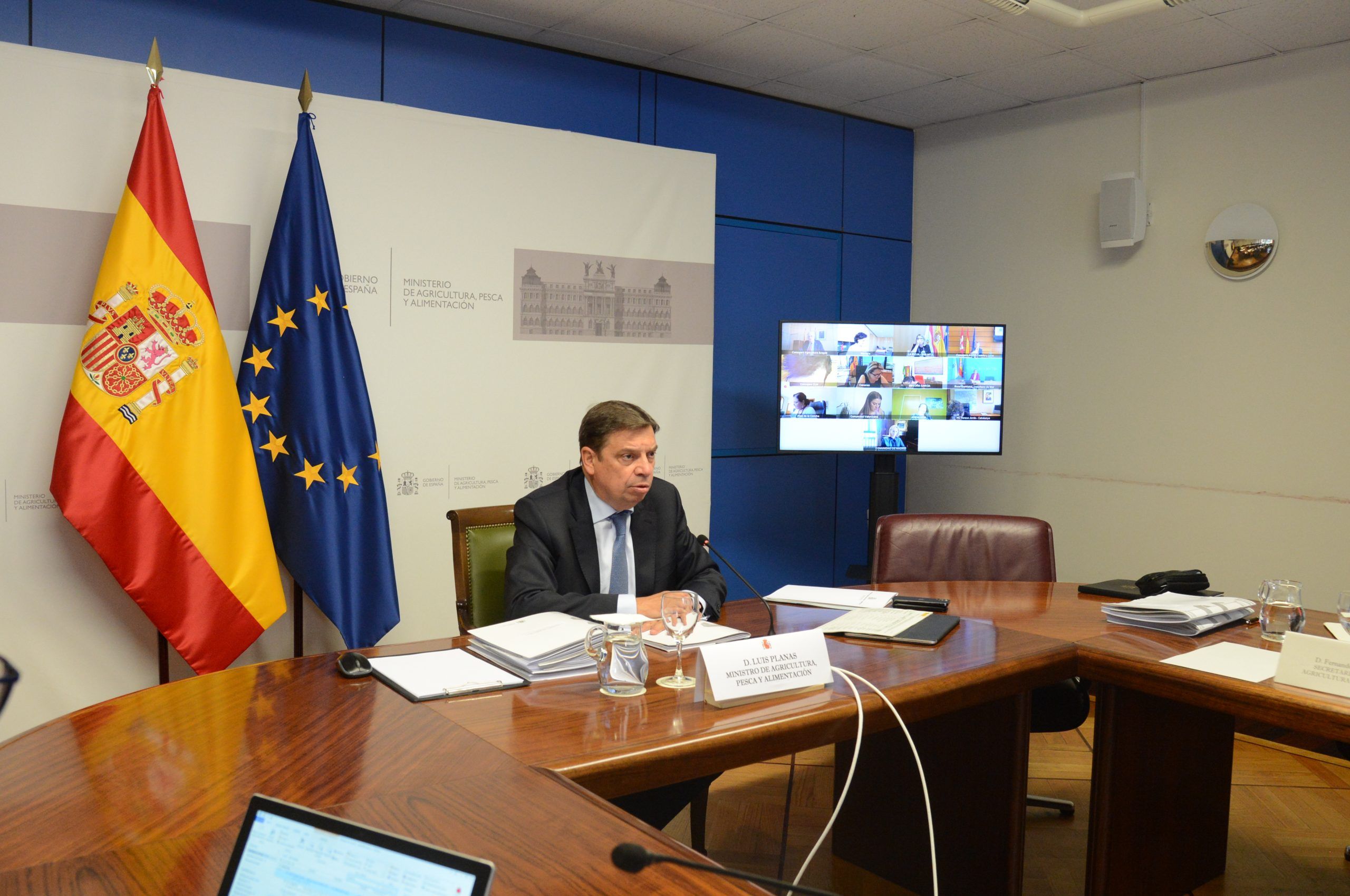
Spain will reiterate the need for the Commission to allow greater flexibility for the fruit and vegetable sector
|
In this context, the Commission is also stepping up its monitoring of the main agricultural markets impacted by the war. Following a decision published today, Member States will have to notify the Commission their monthly level of stocks of cereals, oilseeds, rice and certified seeds of these products held by relevant producers, wholesalers and operators. The European Commission has also launched a dedicated dashboard presenting up-to-date, detailed statistics on prices, production, and trade of milling wheat, maize, barley, rapeseed, sunflower oil, and soya beans at EU and global level. This provides market operators a timely and accurate picture of the availability of essential commodities for food and feed.
European agricultural fund for rural development (EAFRD)
The European agricultural fund for rural development (EAFRD) finances the EU’s contribution to rural development programmes (RDPs).
RDPs consist of measures and projects that contribute to the EU-wide objectives of:
- improving the competitiveness of agriculture
- encouraging sustainable management of natural resources and climate action
- achieving a balanced territorial development of rural economies and communities
Programmes are prepared on a national or regional basis, and must work towards specific targets relating to the EU’s rural development objectives.
Source: European Commission – Press release
Publicaciones relacionadas:
 Needs of farmers and agri-food companies are significant, also in light of the COVID-19 crisis
 Healthy Agricultural Soils: 24 EU countries coordinate unprecedented research programme
 Coronavirus: Commission announces further measures to support the agri-food sector
 Commission prepares new initiatives to boost the organic farming sector
 Results from the last EU Agriculture and Fisheries Council
Leave a Reply