• Skip to primary navigation
  • Skip to main content
  • Skip to primary sidebar
  • Skip to footer
  • Bluesky
  • Facebook
  • Instagram
  • Twitter
  • YouTube
CDE Almería – Centro de Documentación Europea – Universidad de Almería

CDE Almería - Centro de Documentación Europea - Universidad de Almería

Centro de Documentación Europea de la Universidad de Almería

  • HOME
  • WHAT´S ON
    • EU NEWS
    • Activities
    • EU Calls and Awards
    • Radio Program «Europe with You»
  • DOCUMENTATION
    • EU Media Collection
      • Web Space
      • MEDIATHEQUE REPOSITORY
  • Europe on the net
    • Institutions
    • EU Representation in Spain
    • European information network of Andalusia
  • ABOUT US
    • Presentation
    • Services
    • People
    • Contact
  • Spanish
  • English

MEPs express concerns over attacks on media in Poland, Hungary and Slovenia

Inicio » EU News » Education and Culture » Communication » MEPs express concerns over attacks on media in Poland, Hungary and Slovenia

12 de March de 2021

Free and independent media are vital for democratic societies, MEPs say, calling on Commission and Council to defend them vigorously.
In the debate on Wednesday with Commissioner Jourová and Portuguese Secretary of State Zacarias, most MEPs highlighted the importance of free media for democracy and democratic societies and insisted that their independence from political interference must be guaranteed. They called on the Commission to do more to protect journalists in Europe and stop governments acting with impunity, and on the Council to conclude the Article 7 procedures in relation to Hungary and Poland. Some also affirmed that the rule of law conditionality mechanism should be activated.
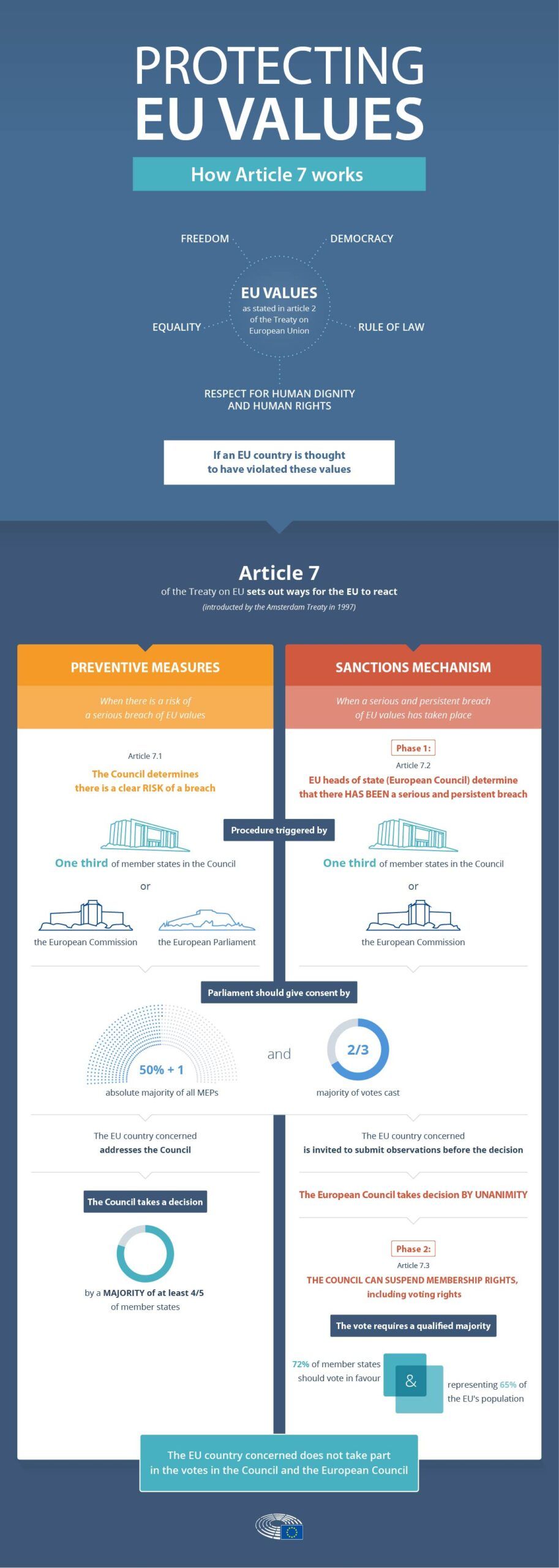
 

As for the rule of law conditionality mechanism, this is a procedure that links the payment of European funds to compliance with the principles of the rule of law. Therefore, non-compliance would entail the suspension or freezing of payments from EU coffers. This mechanism has raised suspicions in some Member States, such as Hungary and Poland.

Background

The debate was organised in the wake of concerns raised after Klubradio in Hungary was taken off the air, the proposed new levy on media advertising revenue in Poland, and emerging reports of political interference in Slovenian media.

Further information:

EU News-European Parliament

European Parliament Debate/10-03-21


Publicaciones relacionadas:
Council agrees its negotiating mandate on the Digital Green Certificate María Ángeles Benítez Salas, new Director of the European Commission Representation meets with the Spanish CDEs The European Commission fights against disinformation puzzle de la bandera europea con la palabra BREXITNew EU-UK agreement is welcome but thorough scrutiny remains, insist lead MEPs Successive amendments to the Polish Law on the National Council of the Judiciary are liable to infringe EU law


Communication,  EU News,  Institutional Affairs European Parliament,  Hungary,  Media,  Poland

“This is a space for debate. All comments, for or against publication, that are respectful and do not contain expressions that are discriminatory, defamatory or contrary to current legislation will be published”.

Reader Interactions

Leave a Reply Cancel reply

Your email address will not be published. Required fields are marked *

This site uses Akismet to reduce spam. Learn how your comment data is processed.

Primary Sidebar

Footer

  • CDE Almería
  • Biblioteca Nicolás Salmerón – Universidad de Almería
  • Planta: 1ª, Despacho: 1.05.0B.
  • Ctra. Sacramento s/n. Almería (Spain)
  • Teléfono: (+34) 950 015266

HOME
NEWS
DOCUMENTATION
EUROPE ON THE NET
ABOUT US

  • LEGAL NOTICE
  • PRIVACY POLICY
  • COOKIE POLICY
  • ACCESSIBILITY
  • SITEMAP

Copyright © 2026 CDE Almería · Creative Commons LicenseThis work is licensed under a Creative Commons Attribution-NonCommercial 4.0 International License.

<p>El Centro de Documentación Europea de la Universidad de Almería utiliza cookies propias y de terceros para facilitar al usuario la navegación en su página Web y el acceso a los distintos contenidos alojados en la misma. Asimismo, se utilizan cookies analíticas de terceros para medir la interacción de los usuarios con el sitio Web. Pinche el siguiente enlace si desea información sobre el uso de cookies y como deshabilitarlas. </p>

Politica de privacidad

El Centro de Documentación Europea de la Universidad de Almería utiliza cookies propias y de terceros para facilitar al usuario la navegación en su página Web y el acceso a los distintos contenidos alojados en la misma. Asimismo, se utilizan cookies analíticas de terceros para medir la interacción de los usuarios con el sitio Web. Pinche el siguiente enlace si desea información sobre el uso de cookies y como deshabilitarlas. <a href="/politica-de-cookies" rel="noopener" target="_blank">Más información</a>

Cookies estrictamente necesarias

Las cookies estrictamente necesarias tiene que activarse siempre para que podamos guardar tus preferencias de ajustes de cookies.

Básicamente la web no funcionara bien si no las activas.

Estas cookies son:

  • Comprobación de inicio de sesión.
  • Cookies de seguridad.
  • Aceptación/rechazo previo de cookies.
Cookies de terceros

Esta web utiliza Google Analytics, Google Tag Manager y Yandex Metrika para recopilar información anónima tal como el número de visitantes del sitio, o las páginas más populares.

Dejar estas cookies activas nos permite mejorar nuestra web.

Política de cookies

Pinche el siguiente enlace si desea información sobre el uso de cookies y como deshabilitarlas. Más información