
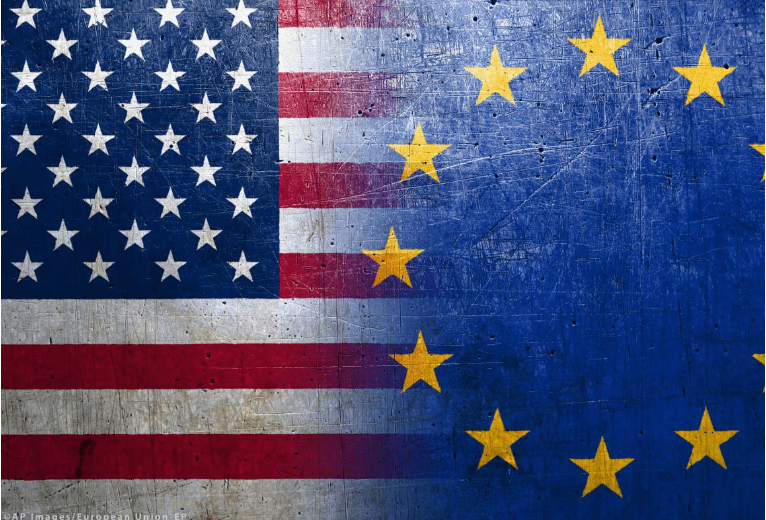
The European Union and the United States have held the fourth ministerial meeting of the EU-US Trade and Technology Council (TTC) in Luleå, Sweden.
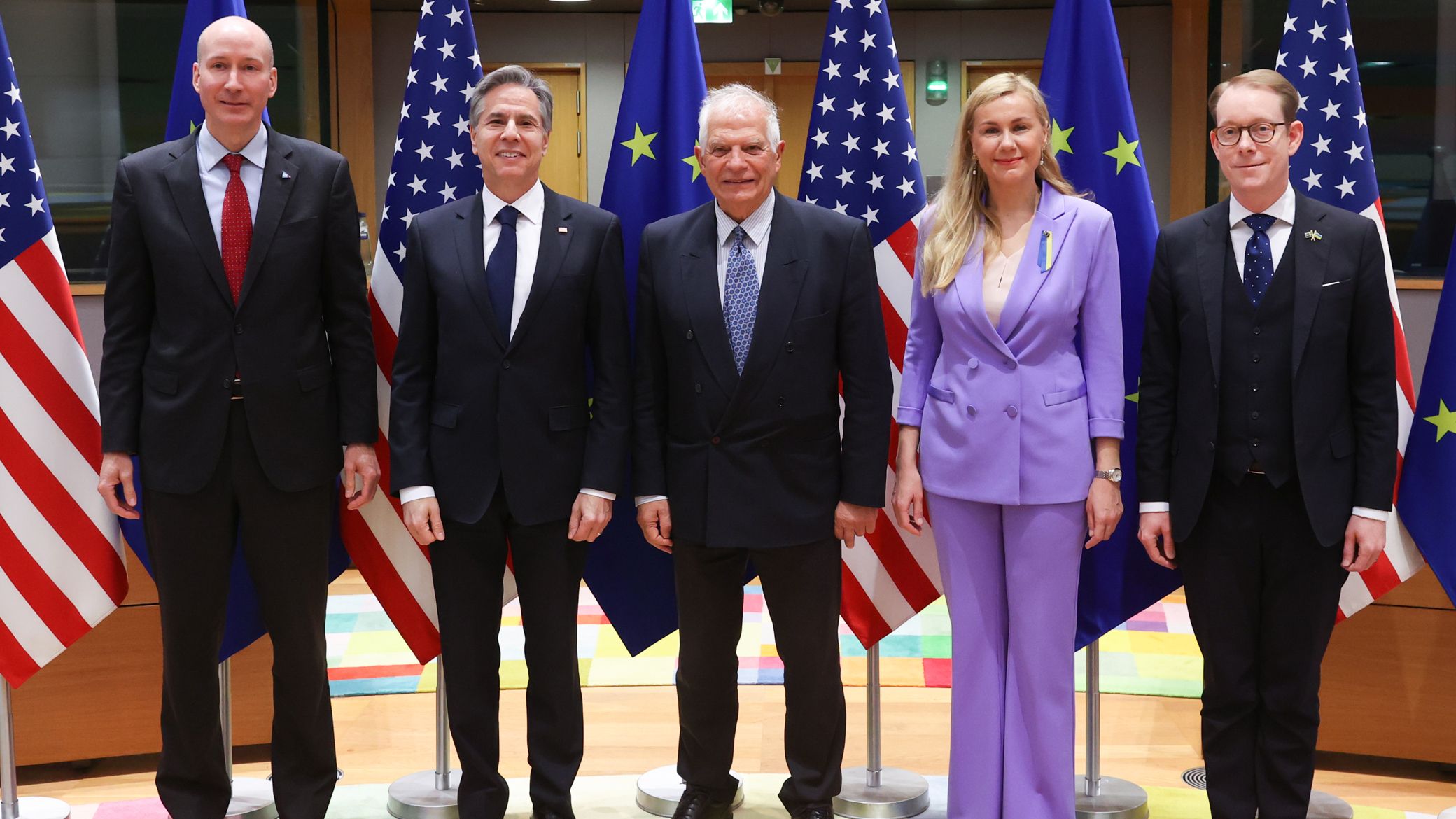
It was co-chaired by European Commission Executive Vice-President Margrethe Vestager, European Commission Executive Vice-President Valdis Dombrovskis, United States Secretary of State Antony Blinken, United States Secretary of Commerce Gina Raimondo, and United States Trade Representative Katherine Tai, joined by European Commissioner Thierry Breton, and hosted by the Swedish Presidency of the Council of the European Union.
The EU and the US remain key geopolitical and trading partners. The EU-US bilateral trade is at historical highs, with over €1.55 trillion in 2022, including over €100 billion of digital trade.
On the occasion of the ministerial meeting, the EU and the US agreed on a list of key outcomes to advance transatlantic cooperation on emerging technologies, sustainable trade, economic security and prosperity, secure connectivity and human rights in the digital environment. Both parties also reaffirmed their unwavering commitment to support Ukraine.
United States Hosts U.S.– EU Space Dialogue |
Key outcomes of the 4th TTC ministerial meeting
Transatlantic cooperation on emerging technologies, connectivity and digital infrastructure
The EU and the US share the common understanding that Artificial Intelligence (AI) technologies hold great opportunities but can also present risks for our societies. They showcased the first results in the implementation of the TTC Joint Roadmap for Trustworthy AI and risk management through dedicated experts’ groups, working notably on the identification of standards and tools for trustworthy AI. Going forward, this work will include a focus on generative AI systems.
The EU and the US have advanced work on semiconductors, implementing agreements on supply chain early warning and subsidies transparency. They have put in place a mechanism to prevent subsidy races, deepened cooperation on their respective Chips Acts and will join forces in research to replace PFAS in semiconductor supply chains.
The EU and the US are advancing their work in the area of e-mobility. They agreed on a common international standard on megawatt charging systems for the recharging of electric heavy-duty vehicles. This will facilitate transatlantic trade and investment by reducing the manufacturing and deployment costs. They also developed recommendations for the government-funded implementation of e-vehicle charging infrastructure.
Both parties have accelerated their cooperation towards a common vision and industry roadmap on 6G wireless communication systems and issued a 6G outlook, which sets out guiding principles and next steps to develop this critical technology.
The EU and US are continuing their efforts to accelerate the roll-out of secure and resilient connectivity projects in third countries and announced today new initiatives in Costa Rica and the Philippines.
Human rights and values in a changing geopolitical digital environment
The EU and US consider that online platforms should exercise greater responsibility in protecting and empowering minors. Data access for researchers is key to help understand risks on online platforms and to advance understanding of the online ecosystem. The EU and the US developed a list of high-level principles on the protection and empowerment of minors and data access for researchers, which are in line with the EU’s Digital Services Act.
Both parties are also deeply concerned about Russia’s strategic use of disinformation narratives, and foreign information manipulation and interference (FIMI) actions in third countries. Today, the EU and the US have issued a joint statement setting out actions to combat foreign information manipulation and interference in third countries, including a standard for structured threat intelligence and capacity building, particularly in Africa and Latin-America.
10th EU-US Energy Council |
Transatlantic cooperation for easier, greener and safer trade
The EU and US are working to grow their €1.5 billion worth of bilateral trade further by making it easier to trade and they have today taken steps to facilitate trade in key sectors. They have extended mutual recognition for pharmaceutical goods to include veterinary medicines and updated the existing EU-US marine equipment mutual recognition rules. Work will continue to facilitate conformity assessment in certain key sectors, such as machinery.
As part of their commitment to greener and fairer trade, the EU and US have agreed on a work programme for the Transatlantic Initiative on Sustainable Trade. This will lead to closer cooperation on jointly advancing the green transition. The newly-launched Clean Energy Incentives Dialogue will help ensure that EU and US incentive programs for a clean economy are mutually reinforcing.
The second principal-level session of the Trade and Labour Dialogue deepened the discussion on the eradication of forced labour from global supply chains, based on joint recommendations from social partners.
The EU and US continue their work on challenges impacting their security. This includes aligning their respective regulations related to export restrictions on sensitive items to Russia and Belarus. They continue to coordinate adjustments to control lists, discuss emerging technologies, and cooperate to ensure the non-proliferation of weapons of mass destruction.
The TTC reiterated the importance of robust foreign investment screening to address specific national security risks, and of coordination to diversify our supply chains, to address non-market policies and practices as well as economic coercion.
The EU and US continue to advocate for digital solutions to make trade easier and to promote the digital trade principles agreed in G7.
More information: European Commission
Publicaciones relacionadas:
 EU-US Relations : Strengthening Trade and Technology
 EU and Chile strengthen a comprehensive political and trade partnership
 EU and India form Trade and Technology Council
 EU, Latin America and Caribbean step up cooperation on environment
 Boeing WTO case: The EU puts in place countermeasures against U.S. exports
Leave a Reply