
The last Monday, February 6th, he EU and India have strengthened their relationship as strategic partners by setting up a new Trade and Technology Council (TTC).
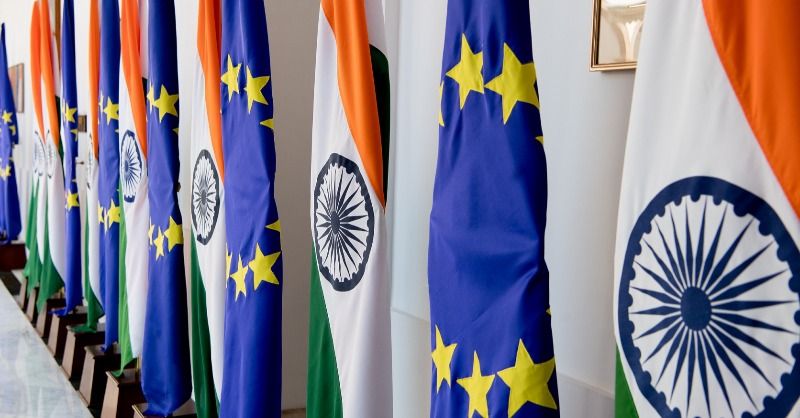
The new TTC will deepen strategic engagement on trade and technology between both partners. This follows the announcement by President of the European Commission Ursula von der Leyen and Prime Minister of India, Narendra Modi, on 25 April 2022 in New Delhi. It will be co-chaired on the EU side by Executive Vice-Presidents Margrethe Vestager and Valdis Dombrovskis, and on the Indian side by Subrahmanyam Jaishankar, Minister of External Affairs, Piyush Goyal, Minister of Commerce and Industry, and Ashwini Vaishnaw, Minister of Electronics and Information Technology.
Working Groups
In a rapidly changing geopolitical environment, the EU and India have a common interest in ensuring security, prosperity and sustainable development based on shared values. The TTC will provide the political steer and the necessary structure to coordinate approaches and advance technical work. To lay the groundwork, both sides have agreed to work on critical areas such as connectivity, green technologies and resilient supply chains.
10th EU-India Human Rights Dialogue
|
Ministerial meetings of the TTC will rely on the preparatory work of three working groups, which will meet within two weeks to organise their work:
- Strategic technologies, digital governance and digital connectivity: the group will work jointly on areas of mutual interest such as digital connectivity, Artificial Intelligence, 5G/6G, high performance and quantum computing, semiconductors, cloud systems, cybersecurity, digital skills and digital platforms.
- Green & clean energy technologies: this group will focus on green technologies, including investment and standards, with emphasis on research and innovation. Areas to be explored could be clean energy, circular economy, waste management, plastic and litter in the ocean. It will also foster cooperation between EU and Indian incubators, SMEs and start-ups.
- Trade, investment and resilient value chains: the group will work on the resilience of supply chains and access to critical components, energy, and raw materials. It will also work to resolve identified trade barriers and global trade challenges by promoting cooperation in multilateral fora. It will work towards promotion of international standards and cooperation on addressing global geopolitical challenges.
The three strands of bilateral negotiations on trade, investment and geographical indications will continue separately from the TTC. The High-level Trade & Investment Dialogue will remain the principal organ for steering these negotiations. In addition, the EU-India High-level Digital Investment Forum (DIF) may be organised on the margins of the first TTC Ministerial meeting.
Next Steps
Ministerial meetings of the TTC will take place at least once a year, with the venue alternating between the EU and India. The three working groups are established and will begin their cooperation. The first EU-India ministerial meeting is planned to be held in spring 2023.
Source: Press release – European Commission
Publicaciones relacionadas:
 New VAT rules for e-commerce in the EU
 Negotiations on the future EU-Mexico trade agreement
 EU and Singapore step up cooperation as strategic partners and launch Digital Partnership
 Commission starts testing interoperability gateway service for national contact tracing and warning apps
 EU-UK relations: Commission proposes draft mandate for negotiations on Gibraltar
Leave a Reply