• Skip to primary navigation
  • Skip to main content
  • Skip to primary sidebar
  • Skip to footer
  • Bluesky
  • Facebook
  • Instagram
  • Twitter
  • YouTube
CDE Almería – Centro de Documentación Europea – Universidad de Almería

CDE Almería - Centro de Documentación Europea - Universidad de Almería

Centro de Documentación Europea de la Universidad de Almería

  • HOME
  • WHAT´S ON
    • EU NEWS
    • Activities
    • EU Calls and Awards
    • Radio Program «Europe with You»
  • DOCUMENTATION
    • EU Media Collection
      • Web Space
      • MEDIATHEQUE REPOSITORY
  • Europe on the net
    • Institutions
    • EU Representation in Spain
    • European information network of Andalusia
  • ABOUT US
    • Presentation
    • Services
    • People
    • Contact
  • Spanish
  • English

EUvsDisinfo: Russian media deny the Srebrenica genocide to deflect responsibility for Bucha

Inicio » EU News » Defence & Security » International Safety and Defence Politics » EUvsDisinfo: Russian media deny the Srebrenica genocide to deflect responsibility for Bucha

27 de July de 2023

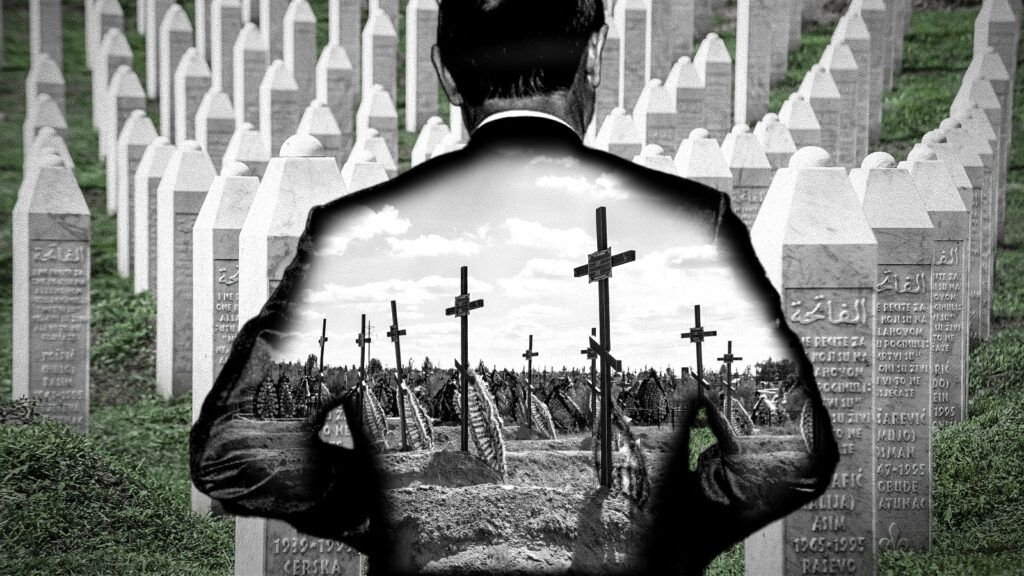
The Srebrenica Memorial Center published the report “Denial of the Srebrenica genocide in the Russian media”. It shows how prominent Russian mass media outlets, as well as bloggers, commentators, and political figures denied the historical facts about the genocide in Srebrenica to strengthen their denial narratives about Russia’s crimes.

The main example analysed by the report is related Bucha.

In April 2022, Ukrainian forces entered the city of Bucha. Global media outlets issued photos and videos of the victims on the streets of the city, sparking international condemnation of the actions attributed to the Russian army. Russian media responded denying the Russia’s responsibility for the events in Bucha, by also referring to them as staged provocations or fabrications similarly to what happened in Srebrenica. The strategy is to equate the two events, Bucha and Srebrenica, to discredit the credibility of both, portraying them as manufactured narratives.

Only during the month of April 2022, the reports identifies over 30 cases of Srebrenica genocide denial, including in mainstream Russian media outlets. Here is an example of the language used by the First TV, a Russian state television channel: “[…] by the way, about the Yugoslav Srebrenica. Recall that this town has become synonymous with the genocide of the Muslim population, which, according to the West, was committed by the Bosnian Serbs in July 1995. But over time, many facts appeared confirming that a well-planned operation was carried out in Srebrenica, behind which stood Western intelligence services.”

Different Russian media exhibited similar language, terminology, and publication timelines. This suggests a coordinated effort, a pattern and also a connection between mass media and Russian government view. The reports highlights how dangerous these operation could be for the public, concluding:

“The impact of such denial narratives can be significant, as they shape public opinion and foster scepticism towards well-established historical truths. It is crucial to recognize and critically assess the sources of information, particularly in cases where denialism is employed to distort historical events“.
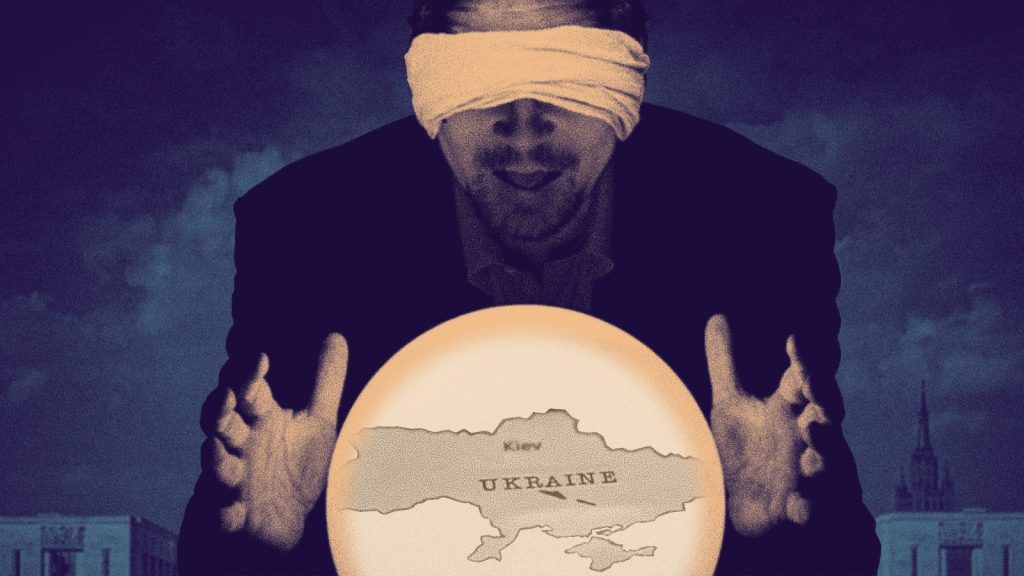
EUvsDisinfo: The crystal ball of wishful thinking

The Srebrenica Memorial Center published the report entitled “Denial of the Srebrenica genocide in the Russian media”, in cooperation with the Austrian Service Abroad and country’s researchers looking at materials from 2000 to 2023.

The report was issued around the annual commemoration of the genocide of Srebrenica, which was committed in July 1995 by the Army of Republika Srpska (VRS) in Bosnia and Herzegovina. Over 8,300 Muslim boys and men were systematically and deliberately killed in and around the city of Srebrenica.

The International Criminal Tribunal for ex-Yugoslavia in 2004 and the International Court of Justice in 2006 established these atrocities as genocide.

The tragedy of Srebrenica took place at the depth of the war that swept across Bosnia and Herzegovina from 1992 to 1995 that claimed around 100,000 victims, half of them civilians.

More information: EUvsDisinfo
Publicaciones relacionadas:

borrellDeclaration by the High Representative on behalf of the EU on Russian atrocities committed in Bucha Nato Salesman of the year is surprised by his own efficiency Kremlin’s Never-Ending Thirst for Death and Devastation PROPAGANDA PRO-KREMLINPro-Kremlin Propaganda running out of Gas EU reaction to cyber-attacks on Ukraine

Defence & Security,  EU News,  International Safety and Defence Politics Bucha,  euvsdisinfo,  Genocide,  russia,  Srebrenica

“This is a space for debate. All comments, for or against publication, that are respectful and do not contain expressions that are discriminatory, defamatory or contrary to current legislation will be published”.

Reader Interactions

Leave a Reply Cancel reply

Your email address will not be published. Required fields are marked *

This site uses Akismet to reduce spam. Learn how your comment data is processed.

Primary Sidebar

Footer

  • CDE Almería
  • Biblioteca Nicolás Salmerón – Universidad de Almería
  • Planta: 1ª, Despacho: 1.05.0B.
  • Ctra. Sacramento s/n. Almería (Spain)
  • Teléfono: (+34) 950 015266

HOME
NEWS
DOCUMENTATION
EUROPE ON THE NET
ABOUT US

  • LEGAL NOTICE
  • PRIVACY POLICY
  • COOKIE POLICY
  • ACCESSIBILITY
  • SITEMAP

Copyright © 2026 CDE Almería · Creative Commons LicenseThis work is licensed under a Creative Commons Attribution-NonCommercial 4.0 International License.

<p>El Centro de Documentación Europea de la Universidad de Almería utiliza cookies propias y de terceros para facilitar al usuario la navegación en su página Web y el acceso a los distintos contenidos alojados en la misma. Asimismo, se utilizan cookies analíticas de terceros para medir la interacción de los usuarios con el sitio Web. Pinche el siguiente enlace si desea información sobre el uso de cookies y como deshabilitarlas. </p>

Politica de privacidad

El Centro de Documentación Europea de la Universidad de Almería utiliza cookies propias y de terceros para facilitar al usuario la navegación en su página Web y el acceso a los distintos contenidos alojados en la misma. Asimismo, se utilizan cookies analíticas de terceros para medir la interacción de los usuarios con el sitio Web. Pinche el siguiente enlace si desea información sobre el uso de cookies y como deshabilitarlas. <a href="/politica-de-cookies" rel="noopener" target="_blank">Más información</a>

Cookies estrictamente necesarias

Las cookies estrictamente necesarias tiene que activarse siempre para que podamos guardar tus preferencias de ajustes de cookies.

Básicamente la web no funcionara bien si no las activas.

Estas cookies son:

  • Comprobación de inicio de sesión.
  • Cookies de seguridad.
  • Aceptación/rechazo previo de cookies.
Cookies de terceros

Esta web utiliza Google Analytics, Google Tag Manager y Yandex Metrika para recopilar información anónima tal como el número de visitantes del sitio, o las páginas más populares.

Dejar estas cookies activas nos permite mejorar nuestra web.

Política de cookies

Pinche el siguiente enlace si desea información sobre el uso de cookies y como deshabilitarlas. Más información