
Around the globe, during the last days of the year, people customarily spend some time reflecting and trying to divine what the New Year might bring. Usually this is a time of sombre self-reflection, when people make an honest inventory of past successes and failures to chart out the year ahead. In line with previous EUvsDisinfo work, we have done our own reflection on the twists and turns of Russian disinformation last year.
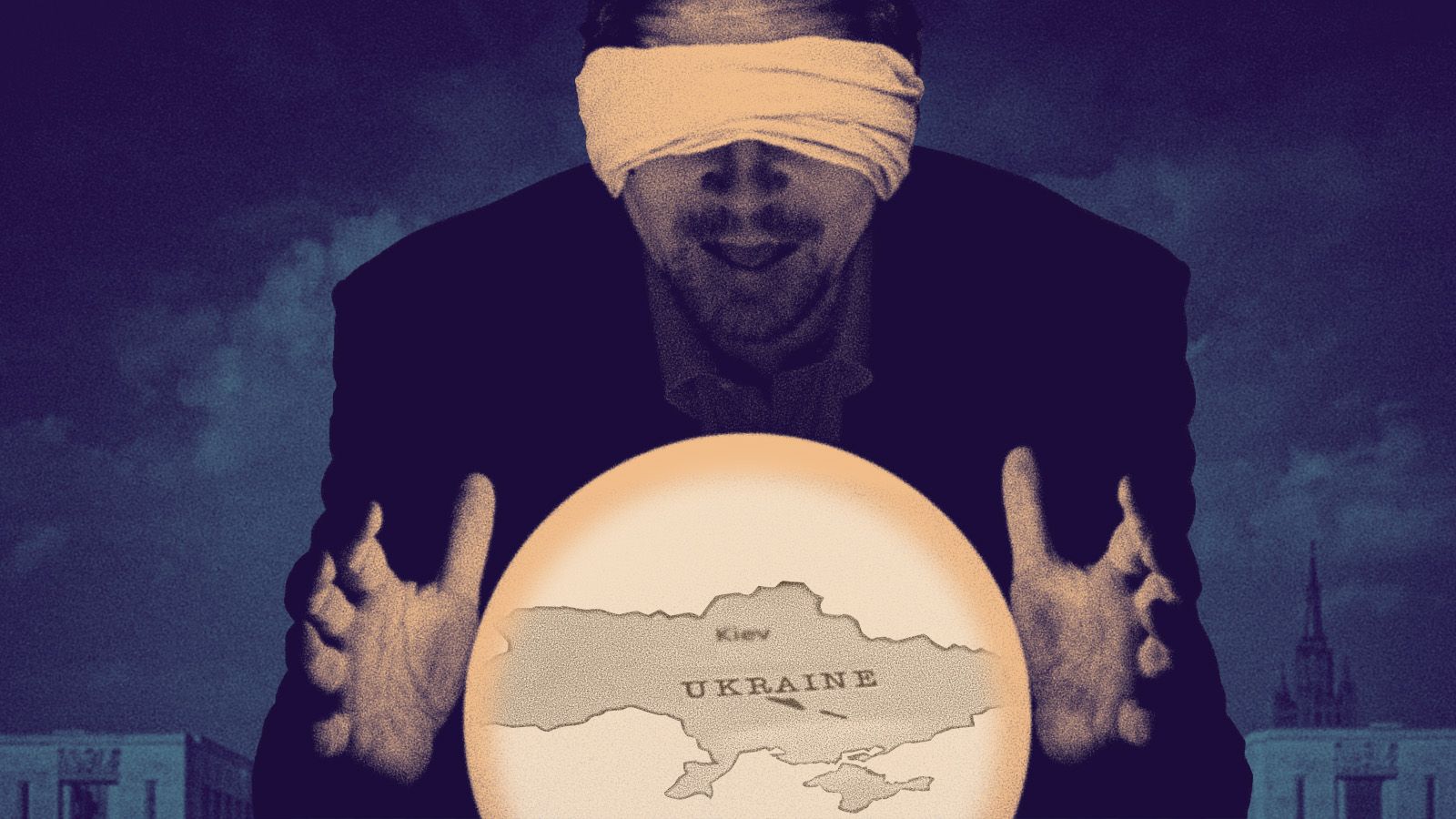
But for pro-Kremlin disinformation outlets, 2022 was yet another opportunity to twist the truth and lay the foundations for further information manipulation in 2023. Let’s have a look at the Kremlin’s crystal ball, attuned to a very different reality.
Into the crystal ball
Most pro-Kremlin disinformation predictions focus on some variation of the claim that Ukraine will lose the war and Western support will falter. Some claim that Europe is pushing Kyiv to concede to Russia because of allegedly growing discontent with Ukrainian refugees in Europe. Of course, scaring EU populations with the refugee bogeyman is another old trick in the pro-Kremlin disinformation playbook. This narrative conveniently ignores that Europe has welcomed millions of Ukrainian refugees and that the EU recently committed to providing 18 billion EUR in assistance to Ukraine.
Others are drawing up an apocalyptic picture for Europe if it continues to oppose Russia and refuses to negotiate on Moscow’s terms. Oddly enough, pro-Kremlin disinformation seeks to prove the West’s seemingly inevitable demise by claiming that the majority of the global community views Russia’s actions in Ukraine in a positive light. Yet the math does not add up. 143 Member States of the United Nations recognised that the Donetsk, Kherson, Luhansk and Zaporizhzhia regions are temporarily occupied by Russia as a result of aggression, violating Ukraine’s territorial integrity, sovereignty, and political independence. They also called for an immediate reversal of these actions.
Foreign Information Manipulation Interference (FIMI) and Cybersecurity – Threat Landscape |
Against all odds
A note of pretend triumphalism is interwoven into pro-Kremlin assessments of 2022 and predictions for 2023. Claims that Russia is preparing an unstoppable advance abound in the pro-Kremlin info-sphere. Or that the oil price cap will spell doom for the global oil markets, and none but Russia will survive the fallout.
But one pro-Kremlin propagandist really took his divination of the future through the looking glass. As keen as ever to propagate the ether with Kremlin Newspeak, Mr Medvedev unleashed upon his Telegram followers the most bizarre predictions. Ranging from the abolition of the EU to a civil war in the US, they seem too outrageous to be taken seriously. But upon a closer took, the pro-Kremlin disinformation meta-narrative of Russia triumphantly succeeding against all odds rings through.
Every triumphant victor needs a bad guy to take on against all odds. For pro-Kremlin disinformation outlets, perhaps sensing that the world will not be too forgiving to Russia in 2023, the ‘real bad guy’ is increasingly found across the Atlantic. The US, regularly personifying the ‘evil West’ in pro-Kremlin propagandists’ rhetoric, is a steady target of Russian disinformation blaming the US for hidden designs to destroy Russia. Yet, weirdly enough, Russian Foreign Minister Sergei Lavrov did not share the same line of attack in recent statements.

Disinformation: Kremlin ABC: Adapt Focus. Blame Others. Cancel Events
|
The past is present
But the most prominent pro-Kremlin reflection on 2022 was done by Putin himself in the annual New Year’s address. Invariably the focus was on the war, recapping most of Russia’s disinformation about Ukraine. While he relished delivering the more tired pro-Kremlin disinformation tropes of ‘Nazi Ukraine’ or NATO allegedly threatening Russia, Putin also used the speech to portray Russia’s brutality in 2022 as an existential struggle for Russia’s survival, securing its sovereignty and safeguarding its true independence. This was a prime example of information manipulation and re-writing history on the go.
Notably, Putin’s calls for sacrifices to be made in 2023 are a crucial part of information manipulation, likely in preparation of more mobilisation to come. Together with pro-Kremlin disinformation outlets downplaying Ukraine’s ability to advance on the battlefield, or unsubstantiated claims of Russian weapons’ superiority, this call is designed to support the grand lie that Russia is destined to be triumphant on the battlefield in Ukraine.
It was not all boastful rhetoric and bizarre predictions. The Kremlin also rushed to introduce a slew of new legislate measures, a New Year’s gift if you will, ostensibly to tighten state security and provide more support to the mobilised.
However, most new measures, such as blocking sites with information about Russian weapons and ammunition manufacture without court orders or sanctions on calls to abandon civic duties (read: opposing the war) will further obscure the information environment and shield Russian government decisions from public oversight and transparency. And that, of course, is a classic pro-Kremlin information manipulation tool to limit access to information and muddy the waters.
More information: EUvsDisinfo




Leave a Reply