• Skip to primary navigation
  • Skip to main content
  • Skip to primary sidebar
  • Skip to footer
  • Bluesky
  • Facebook
  • Instagram
  • Twitter
  • YouTube
CDE Almería – Centro de Documentación Europea – Universidad de Almería

CDE Almería - Centro de Documentación Europea - Universidad de Almería

Centro de Documentación Europea de la Universidad de Almería

  • HOME
  • WHAT´S ON
    • EU NEWS
    • Activities
    • EU Calls and Awards
    • Radio Program «Europe with You»
  • DOCUMENTATION
    • EU Media Collection
      • Web Space
      • MEDIATHEQUE REPOSITORY
  • Europe on the net
    • Institutions
    • EU Representation in Spain
    • European information network of Andalusia
  • ABOUT US
    • Presentation
    • Services
    • People
    • Contact
  • Spanish
  • English

EU leads the fight against breast cancer

Inicio » EU News » EU leads the fight against breast cancer

20 de May de 2019

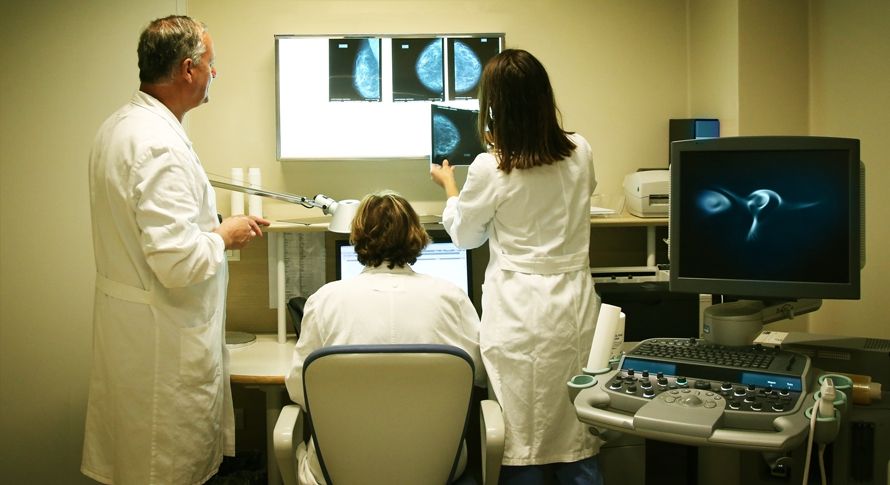
Breast cancer has been a primary focus of EU policy initiatives and research funding. In a commitment to patient-centred care, the EU is overseeing the creation of Breast Units throughout Europe, specialising in all aspects from diagnosis to treatment and reconstruction.
Steered by the EU’s Joint Research Centre in Ispra, Italy, the European Commission Initiative on Breast Cancer (ECIBC) is developing comprehensive care guidelines. This should ensure consistently high-quality treatment across Europe. These cooperative activities show the EU’s leadership in the fight against breast cancer and the benefits of coordinated action for the health of all European citizens.

Guidelines and training to support breast cancer care

The EU’s Joint Research Centre in Ispra, Italy, is spearheading the fight against breast cancer. It coordinates the European Commission Initiative on Breast Cancer (ECIBC), a comprehensive project that involves 35 countries – the EU Member States, Iceland, the Republic of North Macedonia, Montenegro, Norway, Serbia, Switzerland and Turkey.

The ECIBC is drawing up EU-wide guidelines for medical specialists, patients and policy-makers that will include around 90 best practices and recommendations on practical issues such as how to plan and execute screening programmes, or which biopsy and tissue analysis techniques to apply on individual patients. This should universally improve treatment quality and provide a new reference point for practitioners. The ECIBC has also established training requirements for the healthcare professionals involved in the process, such as radiographers or radiologists.

By the end of 2019, the guidelines will be made available to all relevant medical staff and treatment centres in the participating countries. They also have access to a website which is regularly updated with new information, studies and analyses.

Breast Units: a successful cancer treatment model

Specialist units providing all-round breast cancer care brought about increases in survival rates 18% higher than those achieved by traditional treatment facilities during 1995-2000. This was confirmed in a study analysing the effect of the creation of multidisciplinary structures, such as Breast Units, on the survival prospects of treated patients, published in the BMJ (British Medical Journal) in 2012.

The EU launched its long-term commitment to centralising breast cancer care in Breast Units across Europe and establishing a quality certification scheme for screening and treatment facilities in 2006. This culminated in several policy initiatives and projects thanks to which patients enjoy access to fully equipped and quality-assured breast centres today.

Background information

  • 1 in 8 women develops breast cancer at some point in her life
  • 35 countries (both EU and not EU) are collaborating on the European Commission Initiative on Breast Cancer coordinated by the Joint Research Centre (JRC) in Ispra, together with Directorate General Health and Food Safety (DG SANTE)
  • The 5-year survival rate for patients treated in Breast Units is 18% higher

Further information

Noticia completa

European Commission Initiative on Breast Cancer
Joint Research Centre in Ispra
Directorate Health and Food Safety
Book on Breast Units in Europe


Publicaciones relacionadas:

Mini robots to create patterns inspired by nature Brote verde sale de la tierra trabajadaCommission increases national support to farmers up to €25,000 Parliament to host conference on abolishing the death penalty The EC and the consumer protection authorities demand clear information on prices and discounts Economic policies in EU: some progress, challenges remain


EU News

“This is a space for debate. All comments, for or against publication, that are respectful and do not contain expressions that are discriminatory, defamatory or contrary to current legislation will be published”.

Reader Interactions

Leave a Reply Cancel reply

Your email address will not be published. Required fields are marked *

This site uses Akismet to reduce spam. Learn how your comment data is processed.

Primary Sidebar

Footer

  • CDE Almería
  • Biblioteca Nicolás Salmerón – Universidad de Almería
  • Planta: 1ª, Despacho: 1.05.0B.
  • Ctra. Sacramento s/n. Almería (Spain)
  • Teléfono: (+34) 950 015266

HOME
NEWS
DOCUMENTATION
EUROPE ON THE NET
ABOUT US

  • LEGAL NOTICE
  • PRIVACY POLICY
  • COOKIE POLICY
  • ACCESSIBILITY
  • SITEMAP

Copyright © 2026 CDE Almería · Creative Commons LicenseThis work is licensed under a Creative Commons Attribution-NonCommercial 4.0 International License.

<p>El Centro de Documentación Europea de la Universidad de Almería utiliza cookies propias y de terceros para facilitar al usuario la navegación en su página Web y el acceso a los distintos contenidos alojados en la misma. Asimismo, se utilizan cookies analíticas de terceros para medir la interacción de los usuarios con el sitio Web. Pinche el siguiente enlace si desea información sobre el uso de cookies y como deshabilitarlas. </p>

Politica de privacidad

El Centro de Documentación Europea de la Universidad de Almería utiliza cookies propias y de terceros para facilitar al usuario la navegación en su página Web y el acceso a los distintos contenidos alojados en la misma. Asimismo, se utilizan cookies analíticas de terceros para medir la interacción de los usuarios con el sitio Web. Pinche el siguiente enlace si desea información sobre el uso de cookies y como deshabilitarlas. <a href="/politica-de-cookies" rel="noopener" target="_blank">Más información</a>

Cookies estrictamente necesarias

Las cookies estrictamente necesarias tiene que activarse siempre para que podamos guardar tus preferencias de ajustes de cookies.

Básicamente la web no funcionara bien si no las activas.

Estas cookies son:

  • Comprobación de inicio de sesión.
  • Cookies de seguridad.
  • Aceptación/rechazo previo de cookies.
Cookies de terceros

Esta web utiliza Google Analytics, Google Tag Manager y Yandex Metrika para recopilar información anónima tal como el número de visitantes del sitio, o las páginas más populares.

Dejar estas cookies activas nos permite mejorar nuestra web.

Política de cookies

Pinche el siguiente enlace si desea información sobre el uso de cookies y como deshabilitarlas. Más información