
During the informal ministerial meeting in Toledo, EU foreign ministers supported the search for a just peace in Ukraine and the plans drawn up by the Economic Community of West African States (ECOWAS) to restore democracy in Niger.
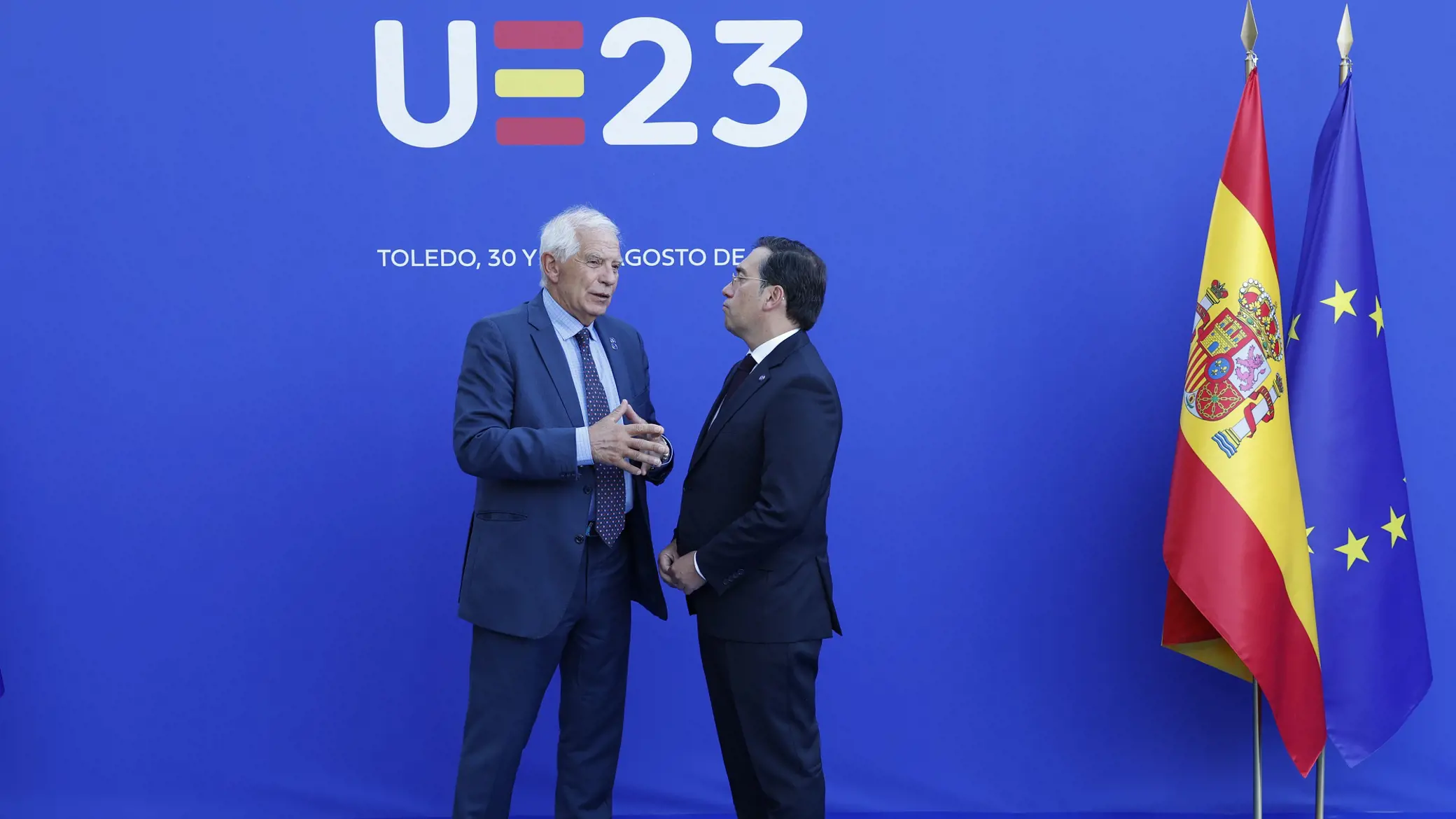
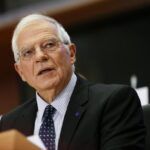
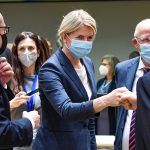
The meeting, which took place in the Old Arms Factory in Toledo under the Spanish presidency of the Council of the EU, was chaired by the EU High Representative for Foreign Affairs and Security Policy, Josep Borrell, and was attended by the Ukrainian Foreign Minister, Dmytro Kuleba.
While on Wednesday the EU defence ministers – also meeting in Toledo – focused on the military and defence aspect in support of Ukraine, on Thursday the focus was diplomatic, “not only on the war, but on how to put an end to the war from the point of view of the peace plan presented by (Ukrainian) President Volodymir Zelenski”, said Borrell at a press conference together with the acting Minister for Foreign Affairs, European Union and Cooperation, José Manuel Albares.
Ministers discussed Zelenski’s peace plan “and how to support it in an ongoing manner and place it at the centre of the international discussion to build a just peace in Ukraine,” Borrell said.
Ukraine and the Western Balkans’ EU membership bid
The foreign ministers also discussed with Kuleba the prospects for Ukraine’s EU membership bid.
The war in Ukraine has had the collateral effect of accelerating the EU enlargement process, a “merit-based process” whereby a state will become a member as and when it fulfils all the conditions, Borrell recalled.
At the same time, however, he considered it positive “to set an objective, a horizon to give political impetus to the process, but also for us, because we must also be prepared for an enlargement that is going to affect 10 new members of the EU”, he argued.
Agreement on additional military support of €3.5 billion |
Ukraine is currently awaiting the European Commission’s progress report on the reform package proposed by Brussels as a prerequisite for starting the accession negotiations phase.
The Spanish presidency of the Council of the EU supports Ukraine’s future accession to the EU, a commitment expressed by the President of the Government of Spain, Pedro Sánchez, before the Ukrainian Rada in Kiev on 1 July, coinciding with the start of the Spanish semester.
Borrell also announced that the Spanish presidency is proposing to hold a ministerial meeting with the ministers of the Western Balkan countries during this six-month period to analyse the prospects for their accession.
Coup d’état in Niger
Another issue at the centre of the informal meeting of EU foreign ministers was the political and security situation in the Sahel following the coup d’état in Niger on 26 July.
The meeting was attended by the President of the ECOWAS Commission, Omar Touray, and the Minister for Foreign Affairs of the legitimate government of Niger, Hassoumi Massoudou.
The ministers reiterated their firm condemnation of the coup and called for the release of President Mohamed Bazoum and his family, as well as a return to constitutional order, explained Borrell and the Spanish minister.
They also reaffirmed their support for ECOWAS diplomatic efforts to bring Niger back to legality, and reiterated their decision to suspend cooperation aid to Niger. However, the humanitarian aid that helps to alleviate the situation of the people of Niger, the second poorest country in the world, will be upheld.
Borrell also announced that EU foreign ministers have initiated “a process to create a legal framework for individual sanctions”.
The ministers expressed support for the diplomatic approach to finding a solution to the situation in the country, stressing the importance of “African solutions to African problems”, the high representative said.
“We give priority to a diplomatic solution, and nobody wants military intervention,” said Albares.
The recent coup d’état in Gabon was also discussed, regarding which Borrell stressed the difference with Niger: the deposed President Bazoum of Niger was the only democratically elected authority in the Sahel, while in Gabon the elections prior to the coup “left much to be desired from a democratic point of view”, Borrell pointed out.
The EU therefore believes that an inclusive dialogue guaranteeing the rule of law and human rights is the best way to try to re-establish a truly democratic system in Gabon.
More information: Spanish Presidency – Council of the European Union

Leave a Reply