• Skip to primary navigation
  • Skip to main content
  • Skip to primary sidebar
  • Skip to footer
  • Bluesky
  • Facebook
  • Instagram
  • Twitter
  • YouTube
CDE Almería – Centro de Documentación Europea – Universidad de Almería

CDE Almería - Centro de Documentación Europea - Universidad de Almería

Centro de Documentación Europea de la Universidad de Almería

  • HOME
  • WHAT´S ON
    • EU NEWS
    • Activities
    • EU Calls and Awards
    • Radio Program «Europe with You»
  • DOCUMENTATION
    • EU Media Collection
      • Web Space
      • MEDIATHEQUE REPOSITORY
  • Europe on the net
    • Institutions
    • EU Representation in Spain
    • European information network of Andalusia
  • ABOUT US
    • Presentation
    • Services
    • People
    • Contact
  • Spanish
  • English

Commission takes further steps to foster the openness, strength and resilience of Europe’s economic and financial system

Inicio » EU News » Market » Economy and Finance » Commission takes further steps to foster the openness, strength and resilience of Europe’s economic and financial system

25 de January de 2021

Commission takes further steps to foster the openness, strength and resilience of Europe's economic and financial system

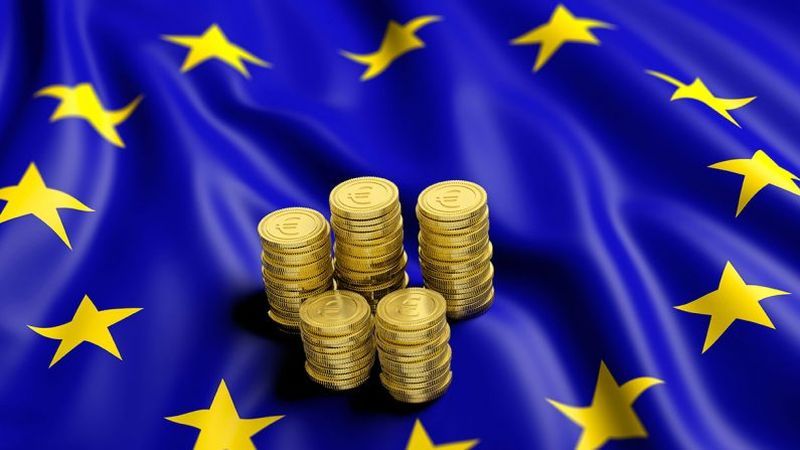
The European Commission today presented a new strategy to stimulate the openness, strength and resilience of the EU’s economic and financial system for the years to come. This strategy aims to better enable Europe to play a leading role in global economic governance, while protecting the EU from unfair and abusive practices. This goes hand in hand with the EU’s commitment to a more resilient and open global economy, well-functioning international financial markets and the rules-based multilateral system.

This proposed approach is based on three mutually reinforcing pillars:

  1. Promoting a stronger international role of the euro by reaching out to third-country partners to promote its use, supporting the development of euro‑denominated instruments and benchmarks and fostering its status as an international reference currency in the energy and commodities sectors, including for nascent energy carriers such as hydrogen.
  2. Further developing EU financial market infrastructures and improving their resilience, including towards the extraterritorial application of sanctions by third countries. The Commission, in cooperation with the ECB and the European Supervisory Authorities (ESAs), will engage with financial-market infrastructure companies to carry out a thorough analysis of their vulnerabilities as regards the unlawful extraterritorial application of unilateral measures by third countries and take action to address such vulnerabilities.
  3. Further promoting the uniform implementation and enforcement of the EU’s own sanctions. This year, the Commission will develop a database – the Sanctions Information Exchange Repository – to ensure effective reporting and exchange of information between Member States and the Commission on the implementation and enforcement of sanctions.

Today’s strategy builds on the 2018 Communication on the International Role of the Euro, which had a strong focus on strengthening and deepening the Economic and Monetary Union (EMU). A resilient economic and monetary union is at the heart of a stable currency. The strategy also acknowledges the unprecedented recovery plan ‘Next Generation EU’ that the EU adopted to tackle the COVID-19 pandemic and to help Europe’s economies recover and embrace the green and digital transformations.

More information

European Commission

Publicaciones relacionadas:

Nearly 70 billion euros in Spain’s Recovery Plan New VAT rules for e-commerce in the EU EIB and Banca March support spanish companies affected by the COVID-19 crisis Macao: EU reports on political and economic developments in 2020 Green light for a more accessible Globalisation Fund

Economy and Finance,  EU News,  International Politics and Cooperation Economy,  EU,  European Commission

“This is a space for debate. All comments, for or against publication, that are respectful and do not contain expressions that are discriminatory, defamatory or contrary to current legislation will be published”.

Reader Interactions

Leave a Reply Cancel reply

Your email address will not be published. Required fields are marked *

This site uses Akismet to reduce spam. Learn how your comment data is processed.

Primary Sidebar

Footer

  • CDE Almería
  • Biblioteca Nicolás Salmerón – Universidad de Almería
  • Planta: 1ª, Despacho: 1.05.0B.
  • Ctra. Sacramento s/n. Almería (Spain)
  • Teléfono: (+34) 950 015266

HOME
NEWS
DOCUMENTATION
EUROPE ON THE NET
ABOUT US

  • LEGAL NOTICE
  • PRIVACY POLICY
  • COOKIE POLICY
  • ACCESSIBILITY
  • SITEMAP

Copyright © 2026 CDE Almería · Creative Commons LicenseThis work is licensed under a Creative Commons Attribution-NonCommercial 4.0 International License.

<p>El Centro de Documentación Europea de la Universidad de Almería utiliza cookies propias y de terceros para facilitar al usuario la navegación en su página Web y el acceso a los distintos contenidos alojados en la misma. Asimismo, se utilizan cookies analíticas de terceros para medir la interacción de los usuarios con el sitio Web. Pinche el siguiente enlace si desea información sobre el uso de cookies y como deshabilitarlas. </p>

Politica de privacidad

El Centro de Documentación Europea de la Universidad de Almería utiliza cookies propias y de terceros para facilitar al usuario la navegación en su página Web y el acceso a los distintos contenidos alojados en la misma. Asimismo, se utilizan cookies analíticas de terceros para medir la interacción de los usuarios con el sitio Web. Pinche el siguiente enlace si desea información sobre el uso de cookies y como deshabilitarlas. <a href="/politica-de-cookies" rel="noopener" target="_blank">Más información</a>

Cookies estrictamente necesarias

Las cookies estrictamente necesarias tiene que activarse siempre para que podamos guardar tus preferencias de ajustes de cookies.

Básicamente la web no funcionara bien si no las activas.

Estas cookies son:

  • Comprobación de inicio de sesión.
  • Cookies de seguridad.
  • Aceptación/rechazo previo de cookies.
Cookies de terceros

Esta web utiliza Google Analytics, Google Tag Manager y Yandex Metrika para recopilar información anónima tal como el número de visitantes del sitio, o las páginas más populares.

Dejar estas cookies activas nos permite mejorar nuestra web.

Política de cookies

Pinche el siguiente enlace si desea información sobre el uso de cookies y como deshabilitarlas. Más información