
Hybrid threats pose a specific danger to the EU and other democracies, because they target core democratic processes and weaken citizens’ trust in their institutions and governments. In recent years, authoritarian regimes and non-state actors use hybrid threats to achieve their hostile, strategic objectives.
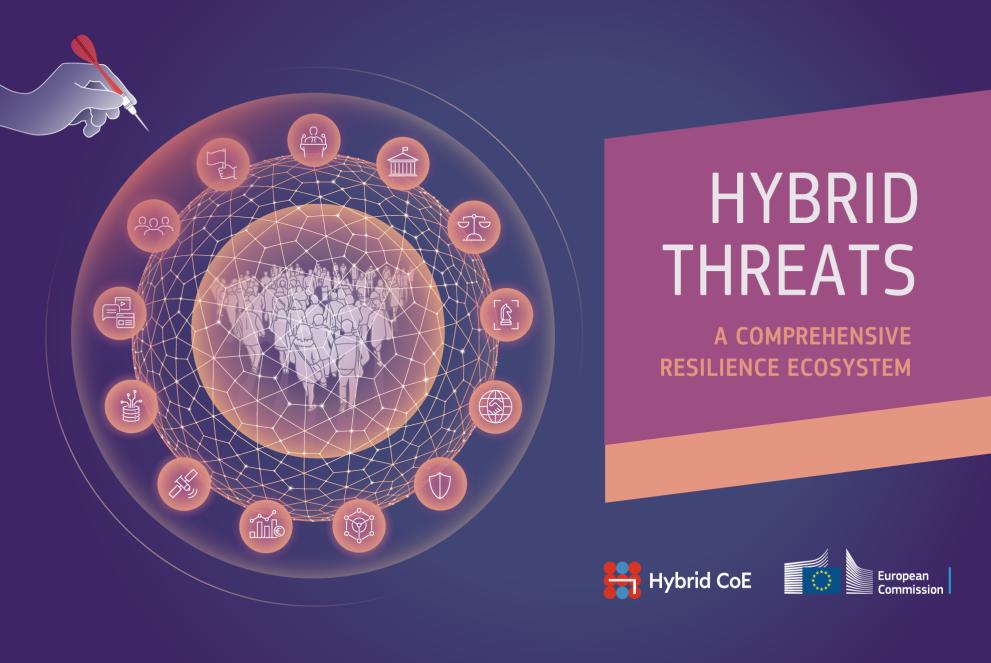
By combining different types of tools and organised actions, such as disinformation, economic pressure, abuse of migrants, cyber-attacks and other covert actions, hybrid threats are becoming more and more sophisticated. The EU and the Member States therefore need to increase their level of vigilance, preparedness and cooperation, as also outlined the Communication on the EU Security Union Strategy and A Strategic Compass for Security and Defence.
Hybrid threats are in fact expected to grow in frequency, impact, and scale in future – as we are already seeing for example with the Russian war in Ukraine, various election interferences as well as Brexit campaigns.
In response to the above-mentioned recent political initiatives, the Joint Research Centre of the European Commission (JRC) in partnership with The European Centre of Excellence for Countering Hybrid Threats (Hybrid CoE) outline in their recent report Hybrid threats: a comprehensive resilience ecosystem ongoing trends in hybrid threats, including what to expect in the future.
Hybrid threats. A Comprehensive Resilience Ecosystem
|
Moreover, as a tangible method for how to defend democratic societies against hybrid threats, the authors propose a ‘Comprehensive Resilience Ecosystem’ model, CORE. This model proposes for the first time a systems-thinking approach to help policymakers counter even complex hybrid threats in an efficient and coordinated way.
Finally, the report presents concrete recommendations for policymakers on how to address hybrid threats in practice.
What does the new CORE model offer?
To defend our democracies from hybrid threats effectively it is necessary to analyse our society in a comprehensive manner. This is because different parts of society are interconnected, meaning that attacks in one area also affect other areas, which is exactly what hostile actors wish to see. Hybrid threat actors usually target less resilient areas or “domains” of society as entry points for large-scale cascade effects, potentially leading to systemic failures.
The new CORE model developed by the JRC and Hybrid CoE takes this into account and is based on a ‘whole-of-society’ approach: it considers different “spaces” of society (e.g., governance, civic, services), different “levels” (international, national, and local), and, most importantly, their interactions.
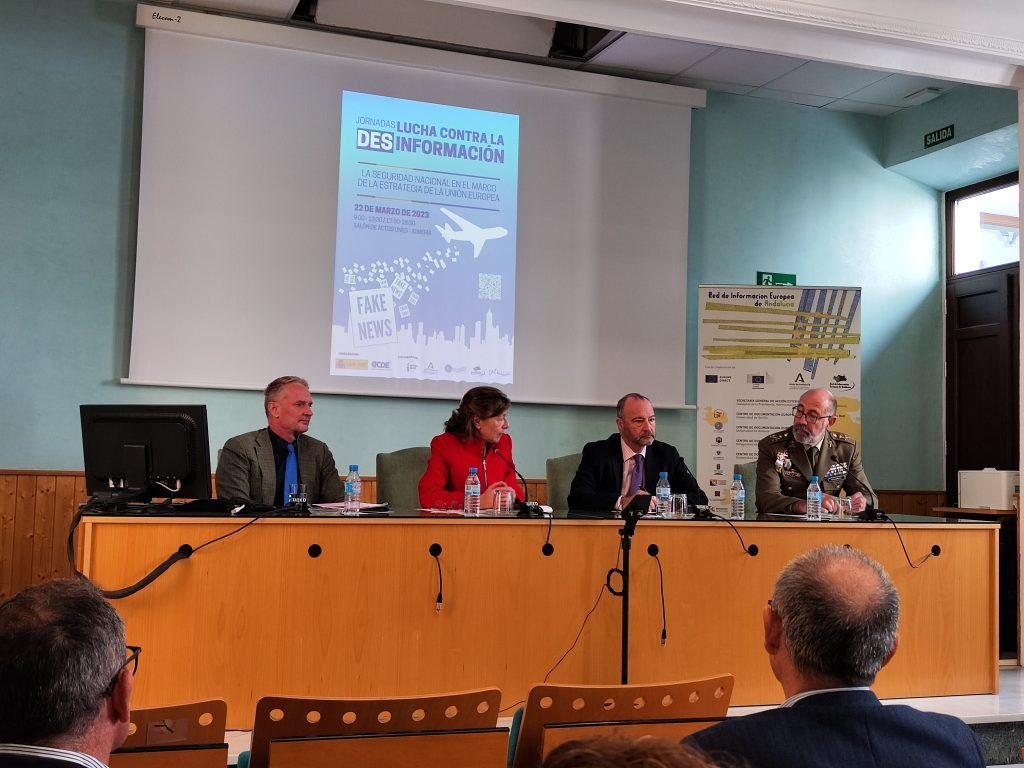
Seminar “Fight against disinformation: National Security in the framework of the EU strategy”.
|
It helps to show how hybrid threat activities, bit by bit, challenge democracies by introducing different types of pressure to the various elements (i.e. the spaces and levels) of the model. As such, the CORE model is a strategic dashboard for policymakers to decide which resources, tools and measures to mobilise in the face of hostile activities at EU, Member State or operational level.
Specifically, the CORE model:
- maps how malicious actors use various tools against different domains to reach their target;
- helps detect hostile activities and their intensity;
- monitors affected dependencies to avoid possible cascading effects;
- facilitates the anticipation of damage to our democracies; and
- assesses impacts of possible hybrid attacks and campaigns.
The ecosystem approach helps to spot early signals, facilitates their analysis and identifies responses to counter hybrid threats and build resilience.
The novelty of the CORE model is that it provides democratic policymakers with a hands-on methodology to estimate how authoritarian states or non-state actors employ hybrid threats activity to manipulate or destabilise democracies.
The CORE model may therefore be considered a blueprint for adaptive thinking, helping EU Member States understand how they – individually or collectively – can foster resilience and enhance their margin of manoeuvre when facing hybrid threats.
The CORE model will assist EU policymakers feed in the creation of the EU Hybrid toolbox announced in A Strategic Compass for Security and Defence.
In more practical terms, this document also will serve as the basis for the further work on the Sectoral Hybrid Resilience Baselines. The EU Security Union Strategy and the Commission contribution European defence underline the need to build resilience to protect the EU against hybrid threats and the importance to systematically track and objectively measure progress in this area.
With this in mind, the Council invited the Commission and the EEAS to continue the assessment of the sectoral resilience baselines by identifying gaps and needs as well as steps to address them, closely related to this new CORE model.
More information: Joint Research Centre
Publicaciones relacionadas:
 EU agrees on new rules to strengthen the security and resilience of critical entities
 EU launches the Support Hub for Internal Security and Border Management in Moldova
 Commission highlights a slow decline in road traffic fatalities since the pandemic
 Feasibility of a future European army
 Republic of Korea and Europol sign arrangement to combat cross-border serious organised crime
Leave a Reply