• Skip to primary navigation
  • Skip to main content
  • Skip to primary sidebar
  • Skip to footer
  • Bluesky
  • Facebook
  • Instagram
  • Twitter
  • YouTube
CDE Almería – Centro de Documentación Europea – Universidad de Almería

CDE Almería - Centro de Documentación Europea - Universidad de Almería

Centro de Documentación Europea de la Universidad de Almería

  • HOME
  • WHAT´S ON
    • EU NEWS
    • Activities
    • EU Calls and Awards
    • Radio Program «Europe with You»
  • DOCUMENTATION
    • EU Media Collection
      • Web Space
      • MEDIATHEQUE REPOSITORY
  • Europe on the net
    • Institutions
    • EU Representation in Spain
    • European information network of Andalusia
  • ABOUT US
    • Presentation
    • Services
    • People
    • Contact
  • Spanish
  • English

Two Spaniards elected as Vice-Presidents of the European Parliament Fourteen Vice-Presidents of the European Parliament elected

Inicio » EU News » Institutional Affairs » Two Spaniards elected as Vice-Presidents of the European Parliament Fourteen Vice-Presidents of the European Parliament elected

17 de July de 2024

On Tuesday MEPs elected the 14 vice-presidents for the first half of the 10th parliamentary term.
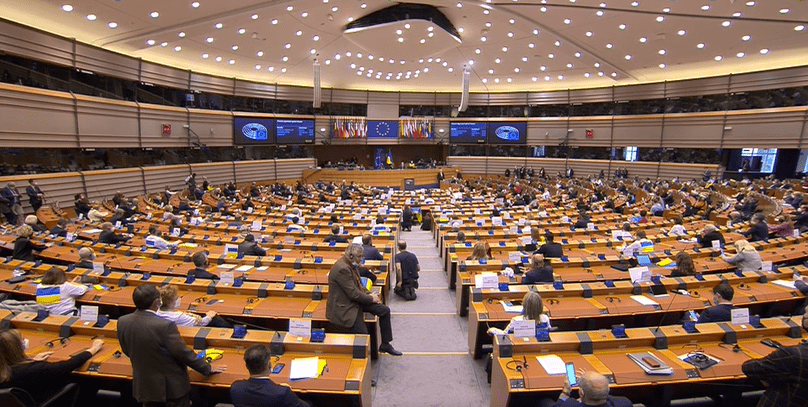
Eleven vice-presidents, including the Spanish Esteban González Pons (EPP) and Javi López (S&D), were appointed by secret ballot in a first round, and the remaining three in a second round.

The new Vice-Presidents are:

Sabine Verheyen (EPP, Germany)
Ewa Kopacz (EPP, Poland)
Esteban Gonzalez Pons (EPP, Spain)
Katarina Barley (S&D, Germany)
Pina Picierno (S&D, Italy)
Victor Negrescu (S&D, Romania)
Martin Hojsik (Renew, Slovakia)
Christel Schaldemose (S&D, Denmark)
Javi López (S&D, Spain)
Sophie Wilmès (Renew, Belgium)
Nicolae Stefanuta (Greens/EFA, Romania)
Roberts Zīle (ECR, Latvia)
Antonella Sberna (ECR, Italy)
Younous Omarjee (The Left, France)

The election of the five Quaestors will take place on Wednesday.

Powers of the Vice-Presidents and Quaestors

The fourteen Vice-Presidents and five Quaestors, together with the President, form the Bureau of Parliament. The Bureau lays down the rules for the smooth running of Parliament. Among other things, it draws up Parliament’s preliminary draft budget and decides on administrative, staffing and organisational matters.

The President assigns specific tasks to each Vice-President and Quaestor. In addition to their own duties, the Vice-Presidents may deputise for the President, including during plenary sittings and in representing Parliament at specific ceremonies or events, where necessary.

The Quaestors deal with administrative matters directly affecting the Members themselves, and are members of the Bureau in an advisory capacity.

In electing the members of the Bureau, the political groups ensure that the composition of the Bureau reflects the composition of the Parliament and the size of the groups, as well as having the result of the election of the presidency.a.

Election procedure

Parliament’s Rules of Procedure lay down the procedure for electing the members of the Bureau. As for the election of the presidency, nominations must be submitted by a political group or by at least one twentieth of the members of the House.

The Vice-Presidents are elected in the same ballot, by an absolute majority of the votes cast. If the number of nominated candidates is less than fourteen, a second round of voting shall be held, according to the same rules. If a third round of voting is necessary, only a simple majority is required. The protocol order of the Vice-Presidents is assigned on the basis of the order in which they are elected and, in the event of a tie, on the basis of age.

The same procedure applies for the election of the quaestors.

Further information:European Parliament
Publicaciones relacionadas:

MEPs call on UK not to adopt new bill sillasCorruption scandal: MEPs insist on reforms for transparency and accountability The new R+I Bulletin No. 10 is now available! Informal meeting of defence ministers, 4-5 March 2020 Council of the European Union forward look: 2 – 15 March 2020

EU News,  Institutional Affairs European Parlament,  MEPs,  Vice-Presidents

“This is a space for debate. All comments, for or against publication, that are respectful and do not contain expressions that are discriminatory, defamatory or contrary to current legislation will be published”.

Reader Interactions

Leave a Reply Cancel reply

Your email address will not be published. Required fields are marked *

This site uses Akismet to reduce spam. Learn how your comment data is processed.

Primary Sidebar

Footer

  • CDE Almería
  • Biblioteca Nicolás Salmerón – Universidad de Almería
  • Planta: 1ª, Despacho: 1.05.0B.
  • Ctra. Sacramento s/n. Almería (Spain)
  • Teléfono: (+34) 950 015266

HOME
NEWS
DOCUMENTATION
EUROPE ON THE NET
ABOUT US

  • LEGAL NOTICE
  • PRIVACY POLICY
  • COOKIE POLICY
  • ACCESSIBILITY
  • SITEMAP

Copyright © 2026 CDE Almería · Creative Commons LicenseThis work is licensed under a Creative Commons Attribution-NonCommercial 4.0 International License.

<p>El Centro de Documentación Europea de la Universidad de Almería utiliza cookies propias y de terceros para facilitar al usuario la navegación en su página Web y el acceso a los distintos contenidos alojados en la misma. Asimismo, se utilizan cookies analíticas de terceros para medir la interacción de los usuarios con el sitio Web. Pinche el siguiente enlace si desea información sobre el uso de cookies y como deshabilitarlas. </p>

Politica de privacidad

El Centro de Documentación Europea de la Universidad de Almería utiliza cookies propias y de terceros para facilitar al usuario la navegación en su página Web y el acceso a los distintos contenidos alojados en la misma. Asimismo, se utilizan cookies analíticas de terceros para medir la interacción de los usuarios con el sitio Web. Pinche el siguiente enlace si desea información sobre el uso de cookies y como deshabilitarlas. <a href="/politica-de-cookies" rel="noopener" target="_blank">Más información</a>

Cookies estrictamente necesarias

Las cookies estrictamente necesarias tiene que activarse siempre para que podamos guardar tus preferencias de ajustes de cookies.

Básicamente la web no funcionara bien si no las activas.

Estas cookies son:

  • Comprobación de inicio de sesión.
  • Cookies de seguridad.
  • Aceptación/rechazo previo de cookies.
Cookies de terceros

Esta web utiliza Google Analytics, Google Tag Manager y Yandex Metrika para recopilar información anónima tal como el número de visitantes del sitio, o las páginas más populares.

Dejar estas cookies activas nos permite mejorar nuestra web.

Política de cookies

Pinche el siguiente enlace si desea información sobre el uso de cookies y como deshabilitarlas. Más información