• Skip to primary navigation
  • Skip to main content
  • Skip to primary sidebar
  • Skip to footer
  • Bluesky
  • Facebook
  • Instagram
  • Twitter
  • YouTube
CDE Almería – Centro de Documentación Europea – Universidad de Almería

CDE Almería - Centro de Documentación Europea - Universidad de Almería

Centro de Documentación Europea de la Universidad de Almería

  • HOME
  • WHAT´S ON
    • EU NEWS
    • Activities
    • EU Calls and Awards
    • Radio Program «Europe with You»
  • DOCUMENTATION
    • EU Media Collection
      • Web Space
      • MEDIATHEQUE REPOSITORY
  • Europe on the net
    • Institutions
    • EU Representation in Spain
    • European information network of Andalusia
  • ABOUT US
    • Presentation
    • Services
    • People
    • Contact
  • Spanish
  • English

The EU-backed FIRE-RES project is joining the battle against Europe’s forest fires with its new platform and app.

Inicio » EU News » Environmental Affairs » The EU-backed FIRE-RES project is joining the battle against Europe’s forest fires with its new platform and app.

13 de September de 2023

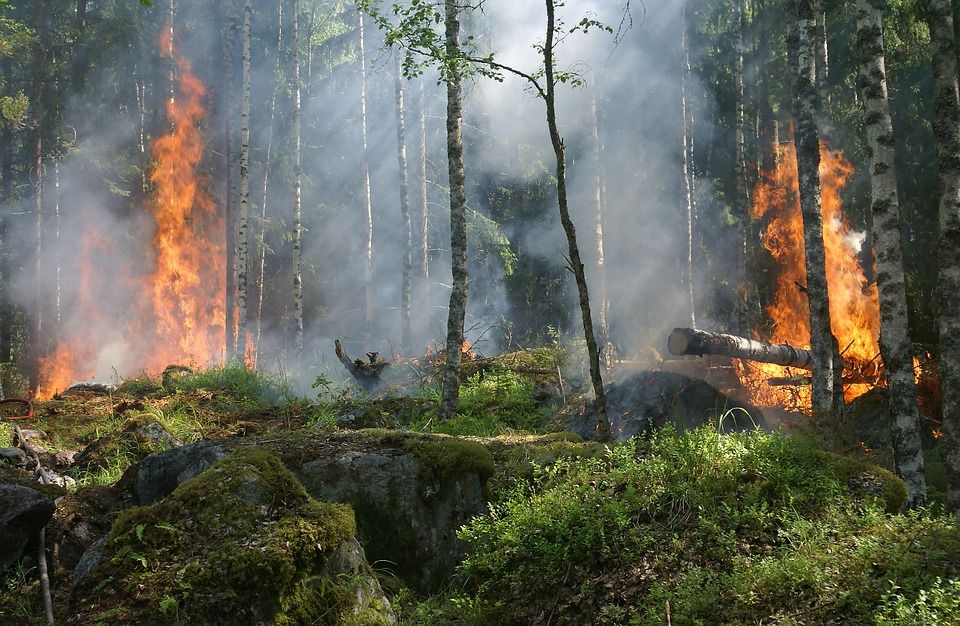
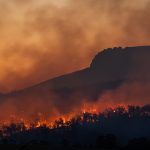
Wildfires are becoming a major threat worldwide. In Europe alone, they are responsible for around 85 % of annual burned areas. To help address this problem, the EU-funded FIRE-RES project is developing an integrated fire management strategy that will focus on fire prevention and preparedness, detection and response, and restoration and adaptation.

incendio forestal

As part of these efforts, FIRE-RES project partner University of Padova, Italy, has developed a mobile app that will help improve Europe’s forest fuel maps. Called the FIRE-RES Geo Catch App, this user-friendly solution will make it possible to assess fire risks more accurately, and therefore plan more efficient preventive measures.

Mapping fuel types across vast forest areas is often challenging because of the limited ground-based data available for model training. Although satellites, drones and other remote sensing technologies have improved our ability to map vegetation parameters, predictions based on them can still have errors, especially at large scales when there is no control data.

Quick, simple and reliable data collection

So how does the FIRE-RES Geo Catch App tackle these problems? As reported in a news item posted on the project website, it incorporates mobile-based surveying approaches. “By conducting field inventories using mobile devices, the app enables the collection of reliable data that accurately represents the real-world variability of fuel types and landscapes. Its primary objective is to provide a quick, simple, and reliable mean [sic] of collecting oriented and geolocated images, ensuring consistency across large areas and capturing a comprehensive range of European fuel types and landscapes.”

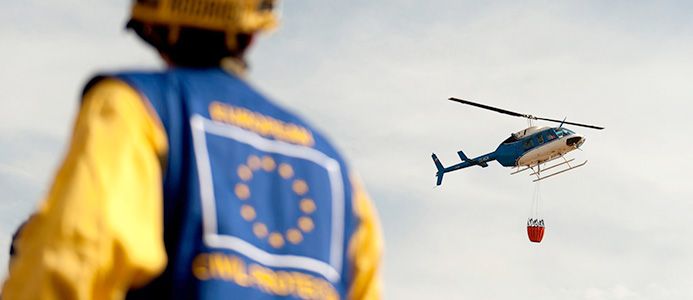
EU doubles rescEU firefighting fleet for summer 2023

The news item describes what happens after the images are gathered: “The collected images are interpreted by experts using an online web-GIS and standard guides to classify them into fuel types. To ensure the highest quality in the images, they need to pass a rigorous clean-up process before moving forward.” Each image is then interpreted by multiple experts to enable consensus checks among them. “In cases where interpretations differ, further interaction among experts is conducted to reach a consensus. This rigorous process ensures the generation of a robust pan-European fuel map during subsequent research conducted by the project.”

The app can either be downloaded or used in your browser by clicking this link. There are also guidelines available on its use.

Another tool in FIRE-RES’s firefighting toolbox is the Fire Education Platform. Currently being developed by project coordinator Forest Science and Technology Centre of Catalonia, Spain, and three project partners, the platform will gather and share knowledge and best practices on wildfire management across multiple countries.

The online tool will cater to policymakers, teachers, students, local communities and the general public. “Its primary objective is to delve into the concept and extent of fire culture in Europe and beyond, exploring topics such as fire ecology, fire risk, and the social dimension of wildfires … Through an interactive model, citizens and scientists from various countries will contribute their local knowledge, covering different stages of the fire cycle,” reports another FIRE-RES news item.

The Fire Education Platform is expected to be launched in 2024. It will be available in five languages, and access will be free. The FIRE-RES (Innovative technologies and socio-ecological-economic solutions for fire resilient territories in Europe.) team is currently conducting a survey to find out the views of the platform’s future users on wildfires.

More information: CORDIS

Publicaciones relacionadas:

Forest fires: EU mobilises its firefighting fleet to help Portugal European aircraft fleet for the 2021 forest fire season Commission report on forest fires: climate change is more noticeable every year EU solidarity with Slovenia in combating wildfires How Australia’s wildfires affected an ocean area thousands of kilometres away

Environmental Affairs,  EU News fire,  FIRE-RES,  firefighting,  forest,  forest fire,  fuel map,  fuel type,  wildfire

“This is a space for debate. All comments, for or against publication, that are respectful and do not contain expressions that are discriminatory, defamatory or contrary to current legislation will be published”.

Reader Interactions

Leave a Reply Cancel reply

Your email address will not be published. Required fields are marked *

This site uses Akismet to reduce spam. Learn how your comment data is processed.

Primary Sidebar

Footer

  • CDE Almería
  • Biblioteca Nicolás Salmerón – Universidad de Almería
  • Planta: 1ª, Despacho: 1.05.0B.
  • Ctra. Sacramento s/n. Almería (Spain)
  • Teléfono: (+34) 950 015266

HOME
NEWS
DOCUMENTATION
EUROPE ON THE NET
ABOUT US

  • LEGAL NOTICE
  • PRIVACY POLICY
  • COOKIE POLICY
  • ACCESSIBILITY
  • SITEMAP

Copyright © 2026 CDE Almería · Creative Commons LicenseThis work is licensed under a Creative Commons Attribution-NonCommercial 4.0 International License.

<p>El Centro de Documentación Europea de la Universidad de Almería utiliza cookies propias y de terceros para facilitar al usuario la navegación en su página Web y el acceso a los distintos contenidos alojados en la misma. Asimismo, se utilizan cookies analíticas de terceros para medir la interacción de los usuarios con el sitio Web. Pinche el siguiente enlace si desea información sobre el uso de cookies y como deshabilitarlas. </p>

Politica de privacidad

El Centro de Documentación Europea de la Universidad de Almería utiliza cookies propias y de terceros para facilitar al usuario la navegación en su página Web y el acceso a los distintos contenidos alojados en la misma. Asimismo, se utilizan cookies analíticas de terceros para medir la interacción de los usuarios con el sitio Web. Pinche el siguiente enlace si desea información sobre el uso de cookies y como deshabilitarlas. <a href="/politica-de-cookies" rel="noopener" target="_blank">Más información</a>

Cookies estrictamente necesarias

Las cookies estrictamente necesarias tiene que activarse siempre para que podamos guardar tus preferencias de ajustes de cookies.

Básicamente la web no funcionara bien si no las activas.

Estas cookies son:

  • Comprobación de inicio de sesión.
  • Cookies de seguridad.
  • Aceptación/rechazo previo de cookies.
Cookies de terceros

Esta web utiliza Google Analytics, Google Tag Manager y Yandex Metrika para recopilar información anónima tal como el número de visitantes del sitio, o las páginas más populares.

Dejar estas cookies activas nos permite mejorar nuestra web.

Política de cookies

Pinche el siguiente enlace si desea información sobre el uso de cookies y como deshabilitarlas. Más información