
A new study shows a link between the windborne iron aerosols from Australia’s 2019-2020 wildfires deposited in the Southern Ocean and the massive algal blooms observed there, raising new questions about oceanic carbon uptake.
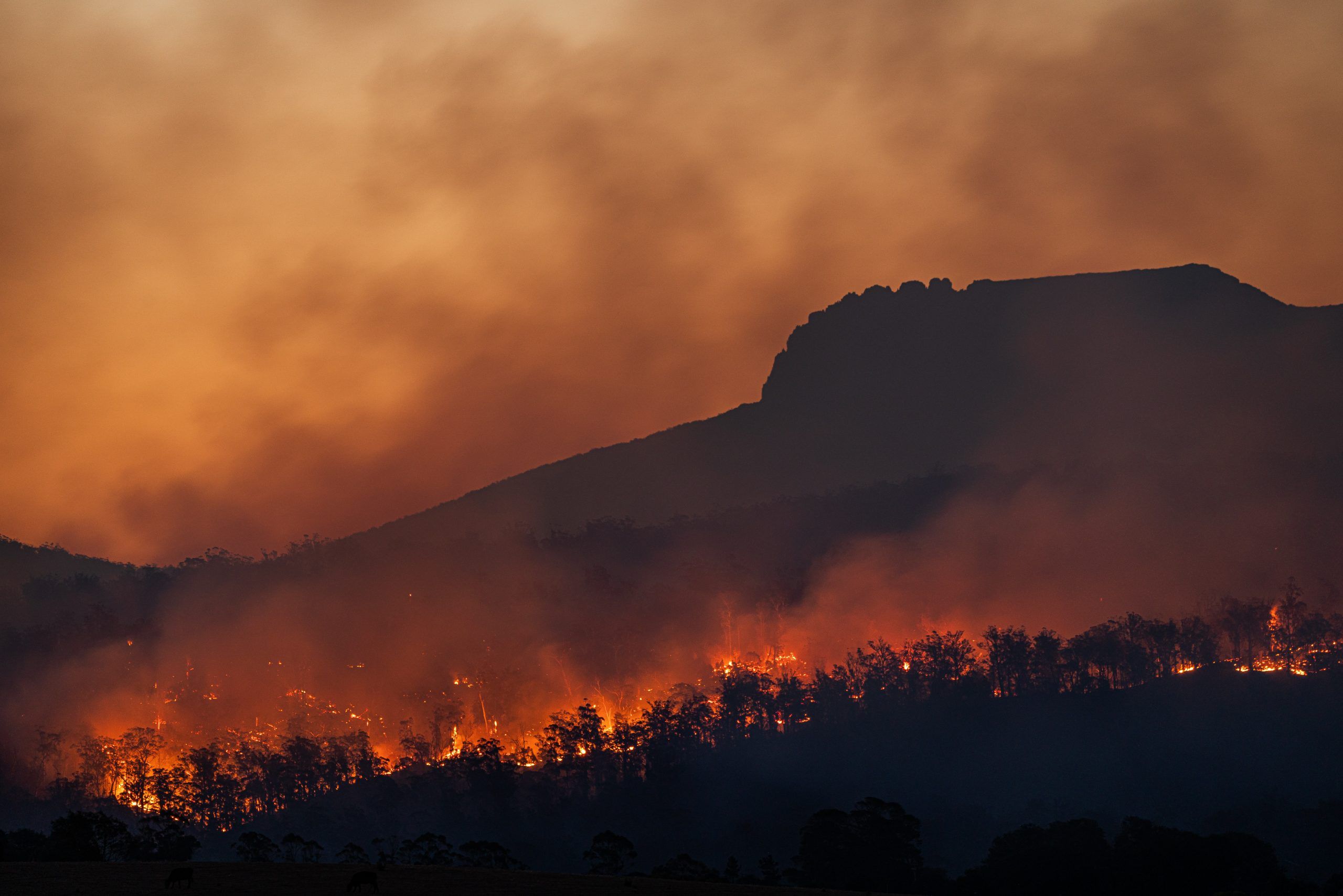
The wildfires that devastated Australia in 2019 and 2020 burned millions of hectares of land and resulted in nearly 3 billion animals losing their homes or lives. However, the blazes did not only affect the land and air on the continent but also the ocean thousands of kilometres away, reveals a new study published in the journal ‘Nature’. According to the study, supported in part by the EU-funded STARS project, clouds of ash and smoke from the wildfires triggered widespread blooms of phytoplankton in the Southern Ocean thousands of kilometres to the east of the continent. The study is reportedly the first to provide a conclusive link between large-scale phytoplankton productivity and iron aerosols from wildfires being deposited in oceans.
Phytoplankton and their vital role
Oceanic phytoplankton are tiny organisms that drift with water currents responsible for transferring about 10 gigatonnes of CO2 from the atmosphere to the ocean every year. They are also the primary food source of almost all living things in the ocean. “In open water of the ocean, as the ones where we observed this phenomena, phytoplankton blooms provide the very first source of food,” explains biogeochemical oceanographer Dr Joan Llort, who co-led the study as a research fellow at the University of Tasmania, Australia. “The organic matter produced like this indirectly feeds all marina fauna, from zooplankton up to whales and sharks,” he goes on to say in a news item posted on ‘Space.com’. When the iron particles in the windborne smoke and ash produced by the fires fell into the ocean, they fertilised the water, providing nutrients to the phytoplankton, the study found. This triggered blooms at a scale never before seen in that part of the iron-limited Southern Ocean. “The response was observed in an oceanic region that usually holds a very low concentration of phytoplankton, a bit like an oceanic desert,” comments Dr Llort. So, what does this imply about the role that wildfires play in higher rates of CO2 absorption by the ocean? “Our results provide strong evidence that pyrogenic iron from wildfires can fertilize the oceans, potentially leading to a significant increase in carbon uptake by phytoplankton,” states senior author Prof. Nicolas Cassar of Duke University, United States, in an article posted on ‘SciTechDaily’. The algal blooms triggered by the Australian wildfires covered an area bigger than the Sahara Desert – over 9.4 million square kilometres. According to Prof. Cassar, it is possible that the increase in photosynthesis resulting from this rapid growth of phytoplankton temporarily offset a significant amount of the CO2 released by the fires, since phytoplankton consume CO2 during photosynthesis. However, he added that it is not yet clear how much of the absorbed carbon remains in the ocean and how much is released into the atmosphere once again. With climate change, large wildfires are expected to become a more frequent phenomenon. “Given the number of regions around the world that are being currently affected by large wildfires, it is plausible to think that other marine ecosystems might be affected by wildfires smoke,” notes Dr Llort, who is currently a researcher at STARS (SupercompuTing And Related applicationS Fellows Program) project coordinator Barcelona Supercomputing Center in Spain. “The question now is which are these ecosystems and which type of response we can expect in them.”
More information
Publicaciones relacionadas:
 In a first, the EU produced more energy from renewables than fossil fuels in 2020
 Global emissions cuts in line with Paris Agreement mean near-term benefits for Earth
 Building urban resilience to climate change
 World’s glaciers melting faster this century
 Accelerated rates of change in Earth’s vegetation go back thousands of years
Leave a Reply