• Skip to primary navigation
  • Skip to main content
  • Skip to primary sidebar
  • Skip to footer
  • Bluesky
  • Facebook
  • Instagram
  • Twitter
  • YouTube
CDE Almería – Centro de Documentación Europea – Universidad de Almería

CDE Almería - Centro de Documentación Europea - Universidad de Almería

Centro de Documentación Europea de la Universidad de Almería

  • HOME
  • WHAT´S ON
    • EU NEWS
    • Activities
    • EU Calls and Awards
    • Radio Program «Europe with You»
  • DOCUMENTATION
    • EU Media Collection
      • Web Space
      • MEDIATHEQUE REPOSITORY
  • Europe on the net
    • Institutions
    • EU Representation in Spain
    • European information network of Andalusia
  • ABOUT US
    • Presentation
    • Services
    • People
    • Contact
  • Spanish
  • English

Russian voters had no real choice, says the EU

Inicio » EU News » Defence & Security » International Safety and Defence Politics » Russian voters had no real choice, says the EU

18 de March de 2024

The presidential elections held by Russia on 15-17 March took place in a highly restricted environment exacerbated also by Russia’s illegal war of aggression against Ukraine.
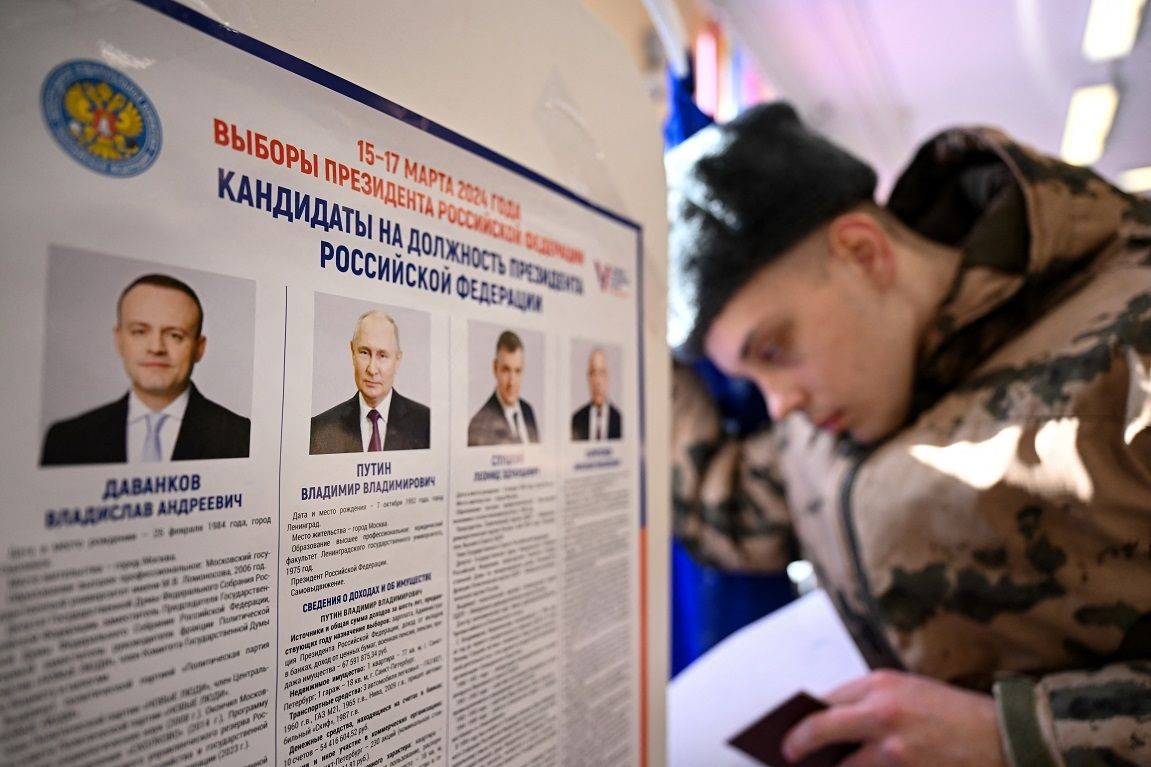
A service member votes in Russia’s presidential election in Moscow on March 15, 2024. (Photo by NATALIA KOLESNIKOVA / AFP)

Russian authorities have continued to increase the systematic internal repression by cracking down on opposition politicians, civil society organisations, independent media and other critical voices with the use of repressive legislation and politically motivated prison sentences. The shocking death of opposition politician Alexei Navalny in the run-up to the elections is yet another sign of the accelerating and systematic repression. The elections took place in an ever-shrinking political space, which has resulted in an alarming increase of violations of civil and political rights, and precluded many candidates from running, including all those opposed to Russia’s illegal war of aggression, deprived Russian voters of a real choice and heavily limited their access to accurate information. The European Union will continue to support the important work of Russian civil society organisations, human rights defenders and independent media.

The European Union regrets the decision of Russian authorities not to invite OSCE/ODIHR observers to its elections. This runs contrary to Russia’s OSCE commitments and has denied Russia’s voters and institutions an impartial and independent assessment of these elections.
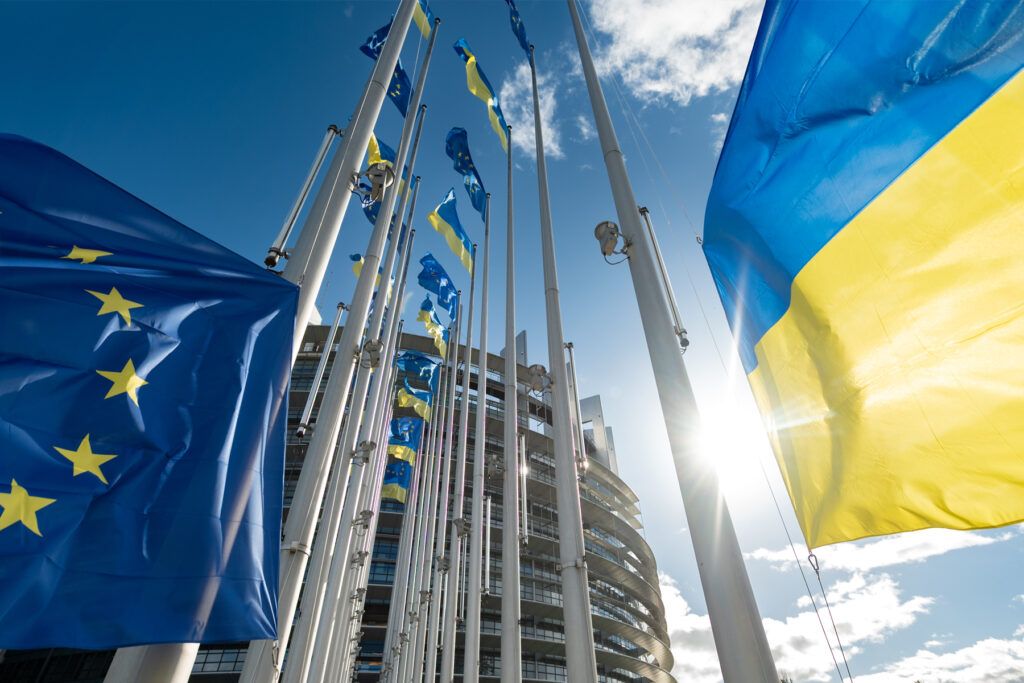
Parliament calls on the EU to give Ukraine whatever it needs to defeat Russia

Furthermore, the European Union strongly condemns the illegal holding of so-called “elections” in the territories of Ukraine that Russia has temporarily occupied: Autonomous Republic of Crimea and the City of Sevastopol, as well as in parts of the Donetsk, Luhansk, Zaporizhzhia and Kherson regions. The so-called “elections” in these territories represent yet another manifest violation by Russia of international law, including the UN Charter, and of Ukraine’s independence, sovereignty and territorial integrity. Referring to the two UNGA Resolutions of 12 October 2022 and 27 March 2014, we urge Russia to respect Ukraine’s internationally recognised borders and sovereignty. The European Union reiterates that it does not and will never recognise either the holding of these so-called “elections” in the territories of Ukraine or their results. They are null and void and cannot produce any legal effect whatsoever. Russia’s political leadership and those involved in organising them will face consequences of these illegal actions.

The European Union reiterates its unwavering support for Ukraine’s independence, sovereignty and territorial integrity within its internationally recognised borders. Russia must cease its illegal war of aggression against Ukraine and immediately, completely and unconditionally withdraw its military forces and equipment from the entire territory of Ukraine.

More information: Council of the EU

Publicaciones relacionadas:

EU reaction to cyber-attacks on Ukraine EU-Russia Crisis: ‘Spheres of influence’ have no place in 21st century Foreign Affairs Council Main Results, 24 January 2022 The UN Security Council discussed the Ukraine-Russia border crisis How the EU is supporting Ukraine

Defence & Security,  EU News,  International Safety and Defence Politics Elections,  presidential elections,  Putin,  russia

“This is a space for debate. All comments, for or against publication, that are respectful and do not contain expressions that are discriminatory, defamatory or contrary to current legislation will be published”.

Reader Interactions

Leave a Reply Cancel reply

Your email address will not be published. Required fields are marked *

This site uses Akismet to reduce spam. Learn how your comment data is processed.

Primary Sidebar

Footer

  • CDE Almería
  • Biblioteca Nicolás Salmerón – Universidad de Almería
  • Planta: 1ª, Despacho: 1.05.0B.
  • Ctra. Sacramento s/n. Almería (Spain)
  • Teléfono: (+34) 950 015266

HOME
NEWS
DOCUMENTATION
EUROPE ON THE NET
ABOUT US

  • LEGAL NOTICE
  • PRIVACY POLICY
  • COOKIE POLICY
  • ACCESSIBILITY
  • SITEMAP

Copyright © 2026 CDE Almería · Creative Commons LicenseThis work is licensed under a Creative Commons Attribution-NonCommercial 4.0 International License.

<p>El Centro de Documentación Europea de la Universidad de Almería utiliza cookies propias y de terceros para facilitar al usuario la navegación en su página Web y el acceso a los distintos contenidos alojados en la misma. Asimismo, se utilizan cookies analíticas de terceros para medir la interacción de los usuarios con el sitio Web. Pinche el siguiente enlace si desea información sobre el uso de cookies y como deshabilitarlas. </p>

Politica de privacidad

El Centro de Documentación Europea de la Universidad de Almería utiliza cookies propias y de terceros para facilitar al usuario la navegación en su página Web y el acceso a los distintos contenidos alojados en la misma. Asimismo, se utilizan cookies analíticas de terceros para medir la interacción de los usuarios con el sitio Web. Pinche el siguiente enlace si desea información sobre el uso de cookies y como deshabilitarlas. <a href="/politica-de-cookies" rel="noopener" target="_blank">Más información</a>

Cookies estrictamente necesarias

Las cookies estrictamente necesarias tiene que activarse siempre para que podamos guardar tus preferencias de ajustes de cookies.

Básicamente la web no funcionara bien si no las activas.

Estas cookies son:

  • Comprobación de inicio de sesión.
  • Cookies de seguridad.
  • Aceptación/rechazo previo de cookies.
Cookies de terceros

Esta web utiliza Google Analytics, Google Tag Manager y Yandex Metrika para recopilar información anónima tal como el número de visitantes del sitio, o las páginas más populares.

Dejar estas cookies activas nos permite mejorar nuestra web.

Política de cookies

Pinche el siguiente enlace si desea información sobre el uso de cookies y como deshabilitarlas. Más información