• Skip to primary navigation
  • Skip to main content
  • Skip to primary sidebar
  • Skip to footer
  • Bluesky
  • Facebook
  • Instagram
  • Twitter
  • YouTube
CDE Almería – Centro de Documentación Europea – Universidad de Almería

CDE Almería - Centro de Documentación Europea - Universidad de Almería

Centro de Documentación Europea de la Universidad de Almería

  • HOME
  • WHAT´S ON
    • EU NEWS
    • Activities
    • EU Calls and Awards
    • Radio Program «Europe with You»
  • DOCUMENTATION
    • EU Media Collection
      • Web Space
      • MEDIATHEQUE REPOSITORY
  • Europe on the net
    • Institutions
    • EU Representation in Spain
    • European information network of Andalusia
  • ABOUT US
    • Presentation
    • Services
    • People
    • Contact
  • Spanish
  • English

Postdoctoral Fellows in Social Anthropology at the University of Oslo

Inicio » Convocatorias y Premios UE » Euraxess » Arts and Humanities » Postdoctoral Fellows in Social Anthropology at the University of Oslo

12 de July de 2023

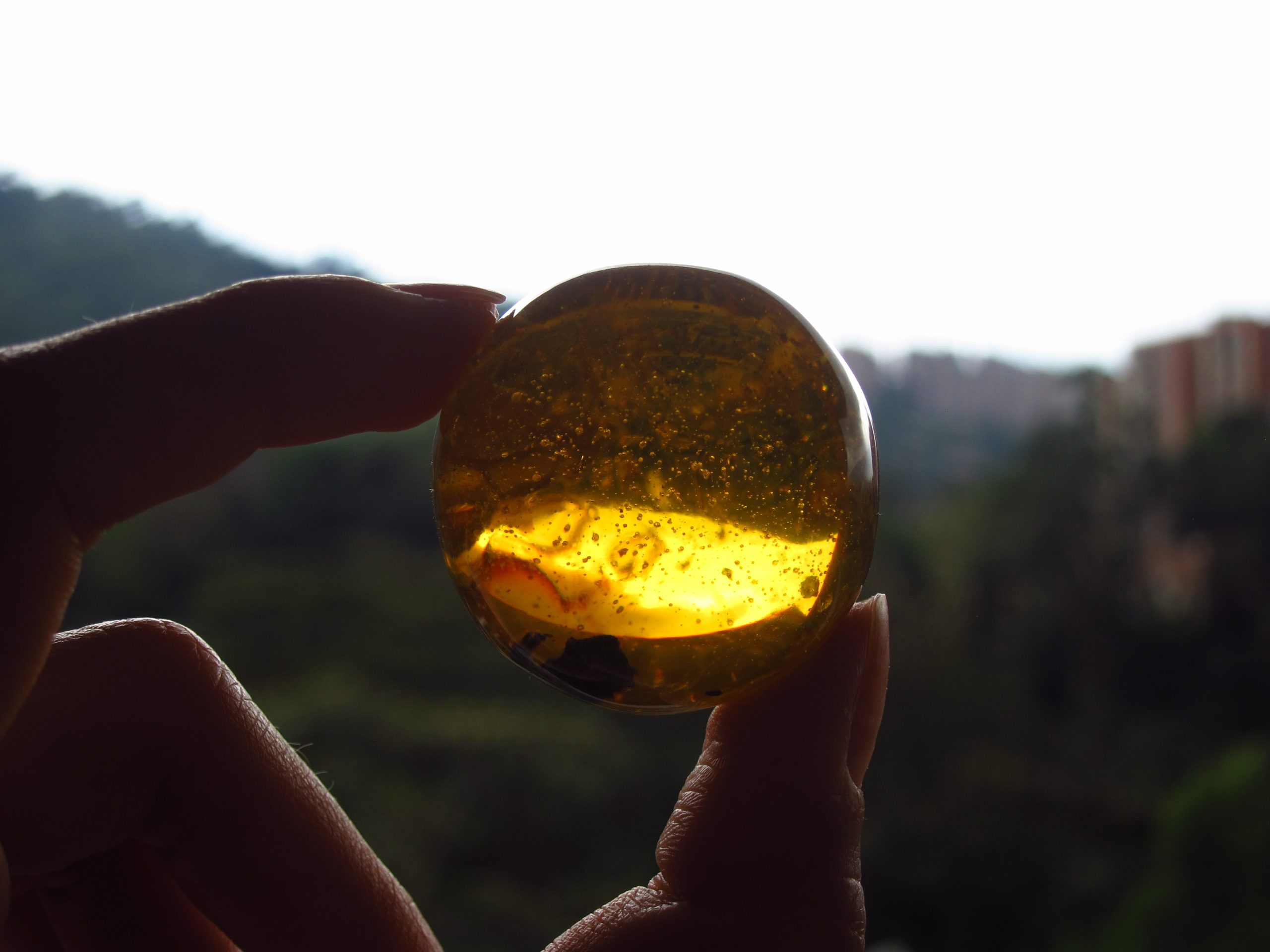
amber

Amber is a fossil resin secreted by plants between 300 and 16 million years ago, mostly during phases of climate breakdown and ecological crises. Today, geologists and palaeontologists believe that the study of amber specimens can help us answering key questions about the planet’s climatic history, and understanding how and why species adapted, or failed to adapt, during previous phases of mass extinction. Amber is also a well-known and sought-after organic gemstone, fuelling violent mining economies from Myanmar to Russia, Ukraine, and Mexico, and constitutes a global market increasingly driven by Chinese demand. Amber thus offers a privileged entry point to interrogate the current moment characterised by growing extractivism, trade, environmental crises, and conflict. And it is a compelling lens through which we can address some of the key empirical and theoretical challenges posed by the Anthropocene.

The AMBER project, funded for 5 years by an ERC Starting Grant, builds on recent literature (variously referred to as the “vertical” or “geological” turn) arguing that anthropological engagements with the nonhuman must pay closer ethnographic attention to a study of the geological, and to how scientific knowledge production is tangled up with broader socioeconomic processes of resource exploitation and circulation. As a violently extracted, organic gemstone with great scientific value for the (extinct) lifeforms it often contains, amber offers a unique ethnographic entry point to study such dynamics and the relations between them. This project’s main objective is to explore the nexus of extraction, exchanges, and extinctions through the global entanglements of amber and thus lay the groundwork for a geological anthropology for the Anthropocene that moves beyond the divisions between human and nonhuman, life and nonlife, and the biological and the geological. In doing so, AMBER will contribute a more effective toolbox to both the study and the communication of current planetary crises.

Organisation/Company

University of Oslo

Research Field

Anthropology -> Social anthropology

Researcher Profile

First Stage Researcher (R1)

Country

Norway

Application Deadline

3 Sep 2023
More information: Euraxess

Publicaciones relacionadas:

PhD Fellow in Gender Research at the Centre for Women´s and Gender Research PhD Scholarship in Marketing in Norway Associate Professor at the interface between architecture and art asientos del interior de un teatroPhD Research Fellowship Position in Theater Studies in Norway Doctoral Research Fellowship in Literature and Culture in the Spanish-speaking World


Arts and Humanities,  EU Calls and Awards,  Euraxess amber,  Euraxess,  Norway,  University of Oslo

“This is a space for debate. All comments, for or against publication, that are respectful and do not contain expressions that are discriminatory, defamatory or contrary to current legislation will be published”.

Reader Interactions

Leave a Reply Cancel reply

Your email address will not be published. Required fields are marked *

This site uses Akismet to reduce spam. Learn how your comment data is processed.

Primary Sidebar

Footer

  • CDE Almería
  • Biblioteca Nicolás Salmerón – Universidad de Almería
  • Planta: 1ª, Despacho: 1.05.0B.
  • Ctra. Sacramento s/n. Almería (Spain)
  • Teléfono: (+34) 950 015266

HOME
NEWS
DOCUMENTATION
EUROPE ON THE NET
ABOUT US

  • LEGAL NOTICE
  • PRIVACY POLICY
  • COOKIE POLICY
  • ACCESSIBILITY
  • SITEMAP

Copyright © 2026 CDE Almería · Creative Commons LicenseThis work is licensed under a Creative Commons Attribution-NonCommercial 4.0 International License.

<p>El Centro de Documentación Europea de la Universidad de Almería utiliza cookies propias y de terceros para facilitar al usuario la navegación en su página Web y el acceso a los distintos contenidos alojados en la misma. Asimismo, se utilizan cookies analíticas de terceros para medir la interacción de los usuarios con el sitio Web. Pinche el siguiente enlace si desea información sobre el uso de cookies y como deshabilitarlas. </p>

Politica de privacidad

El Centro de Documentación Europea de la Universidad de Almería utiliza cookies propias y de terceros para facilitar al usuario la navegación en su página Web y el acceso a los distintos contenidos alojados en la misma. Asimismo, se utilizan cookies analíticas de terceros para medir la interacción de los usuarios con el sitio Web. Pinche el siguiente enlace si desea información sobre el uso de cookies y como deshabilitarlas. <a href="/politica-de-cookies" rel="noopener" target="_blank">Más información</a>

Cookies estrictamente necesarias

Las cookies estrictamente necesarias tiene que activarse siempre para que podamos guardar tus preferencias de ajustes de cookies.

Básicamente la web no funcionara bien si no las activas.

Estas cookies son:

  • Comprobación de inicio de sesión.
  • Cookies de seguridad.
  • Aceptación/rechazo previo de cookies.
Cookies de terceros

Esta web utiliza Google Analytics, Google Tag Manager y Yandex Metrika para recopilar información anónima tal como el número de visitantes del sitio, o las páginas más populares.

Dejar estas cookies activas nos permite mejorar nuestra web.

Política de cookies

Pinche el siguiente enlace si desea información sobre el uso de cookies y como deshabilitarlas. Más información