
The European Commission has adopted the Livestock Strategy to ensure that Europe’s valuable livestock sector remains strong and resilient in the long term. This strategy, the first of its kind, sets out measures to help livestock farmers tackle economic, environmental and market challenges. This long-term vision recognises the vital role of sustainable livestock farming in Europe’s future, in safeguarding European food security and supporting rural communities in all their diversity.
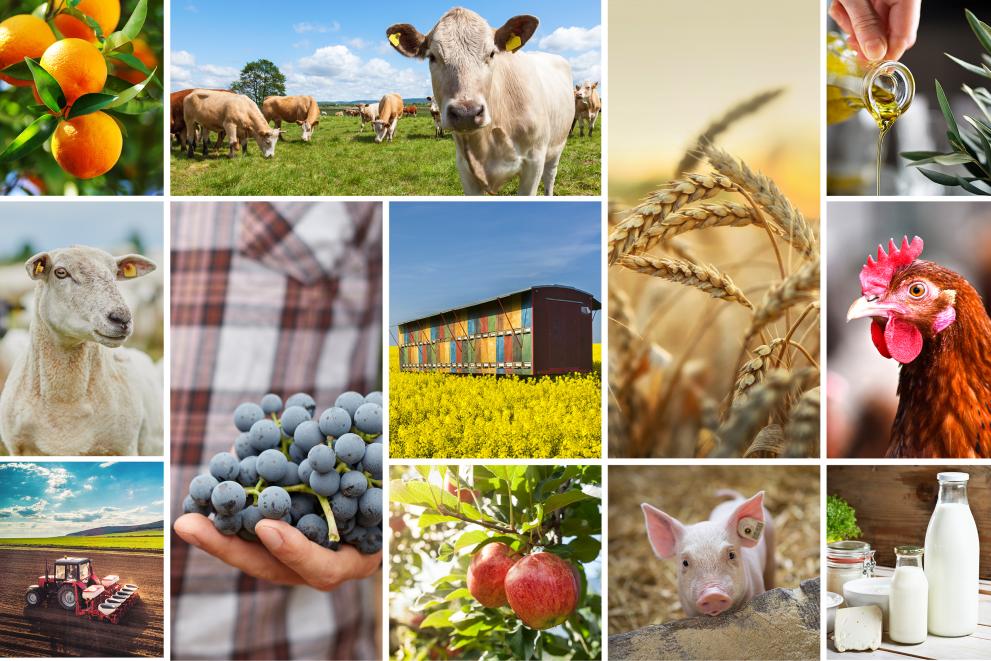
The Livestock Strategy sets out the following five priorities:
- A resilient and crisis-ready livestock sector. The Commission is strengthening preparedness to reduce exposure to risk and enable livestock farmers to recover more quickly following a crisis.It will strengthen risk management tools and explore a new insurance and reinsurance system. It will also support Member States in managing the impact of animal diseases to strengthen prevention, early detection and early action. Investments in climate resilience and reducing dependence on imports remain a key priority.
- A competitive livestock sector, both within the EU and globally. The Commission will work to boost profitability and the uptake of innovations, as well as to strengthen competitiveness and sustainability, so that the sector can thrive. In addition to the important role of the future EU budget, the Commission will examine how access to funding can facilitate the transition to cage-free systems and support authorisation procedures, the circular economy, the bioeconomy and the utilisation of biomass. Furthermore, with equity at the heart of the Strategy, it will focus on ensuring fair incomes for livestock farmers and international reciprocity. To this end, the Commission will work towards greater harmonisation of production standards, particularly regarding animal welfare, in line with World Trade Organisation obligations. Efforts to promote new market opportunities through agri-food diplomacy will also be stepped up.
- A sustainable livestock sector. Given the diversity of livestock farming across different regions, the Strategy will promote a tailored approach to addressing sustainability challenges. It proposes measures to improve animal welfare through specific reviews for laying hens, broiler chickens and pigs, based on evidence and accompanied by appropriate transition periods and financial support. Furthermore, the EU will develop harmonised methods for calculating livestock emissions at farm level, climate change mitigation practices, nutrient management and the sustainable circulation of resources. It will strengthen cooperation between livestock farmers and producers and support the sector’s sustainability and socio-economic objectives.
- A livestock sector suitable for all farms and regions. The relationship between livestock farming and the land is fundamental, as livestock farming brings economic, environmental and social benefits to rural areas. The Commission will work with Member States on a plan to restore sustainable livestock production in vulnerable regions, particularly those at risk of depopulation, with the support of a Land Observatory and EU demographic policies. The working group on livestock farming will draw up a roadmap for mobile or low-capacity abattoirs, helping to promote locally integrated livestock value chains, reduce animal transport and revitalise local economies.
- Excellence in livestock production. Quality is Europe’s strategic asset. The Commissionwill make the EU’s excellence in production more visible and rewarding throughenhanced origin labelling and quality recognition. It will develop a European programme of excellence to better recognise the highest standards, sustainability and the specific characteristics of production. Furthermore, it will promote sustainable EU livestock products through targeted promotion policies, geographical indications, the ‘Buy European’ campaign and organic production systems.
Addressing the pressures affecting the sector is essential to ensuring a resilient and sustainable future, and to attracting future generations of farmers. This involves relying less on imported inputs and more on domestic and circular resources, as well as reducing emissions, as set out in the Protein Action Plan and the Fertiliser Action Plan. At the same time, safeguarding food safety and improving animal welfare remain key objectives.
The Livestock Strategy includes a Protein Action Plan. Together, these initiatives aim to reduce strategic dependencies, strengthen European food security and contribute to a stronger, more resilient and strategic European agri-food system. The Protein Action Plan also aims to increase the supply and use of proteins produced in the EU. In 2025, only 25 per cent of proteins derived from oilseeds and protein crops were sourced within the EU. The Plan aims to increase this proportion to 35 per cent by 2035. The Commission will support European protein crop production and improve the competitiveness of EU-produced proteins. By recognising the strong links between the food, feed, energy and industrial value chains, it will also promote innovation, investment, dietary diversification and better monitoring of protein dependencies.
Background
Livestock farming is a diverse and complex sector that accounts for approximately 40 per cent of the EU’s agricultural value added and generates €400,000 million in annual turnover. It has a significant social and regional impact, employing around 7 million people on 4 million farms across Europe, often in areas with limited economic opportunities. The sector provides high-quality protein and represents European excellence on the global stage, with some of the world’s most stringent environmental, safety and quality standards.
However, the livestock sector faces ever-greater challenges: low profitability and rising costs, changing market conditions, recurrent outbreaks of animal diseases as well as the emergence of new ones, social expectations for higher animal welfare standards, and environmental challenges.
Consequently, the Commission announced in itsVision for Agriculture and Foodthat it would work to strengthen the competitiveness and resilience of the livestock sector. The Commission set up a working group on livestock farming to develop policy pathways offering region-specific solutions for the sector’s competitiveness and sustainability. The Livestock Strategy is based on broad stakeholder involvement, within the frameworkoftheworking group on livestock, which includes more than a year of dialogue with Member States, livestock farmers, industry representatives and civil society, such as theEuropean Council for Agriculture and Food.
The Vision also aims to strengthen Europe’s protein system, making it more self-sufficient, sustainable and resilient.
More information: European Commission.
Publicaciones relacionadas:
 EU agricultural markets remain robust despite uncertainty and rising input costs
 Agroecology: 14 EU-funded projects that are helping to shape the future of agriculture
 Commission supports the EU wine sector
 Deal to simplify EU agriculture rules
 Commission approves €1.04 billion state aid scheme to support climate projects
Leave a Reply