
Hungary will hold the presidency of the Council of the EU from 1 July to 31 December 2024. The Hungarian presidency’s programme is structured around seven priorities, including enhancing the EU’s competitiveness and reinforcing the EU’s defence policy. This is the second time Hungary has held the Council presidency.
The Council of the EU is one of the seven EU institutions. Its official name is the Council of the European Union – the Council for short. The Council debates legislation proposed by the European Commission and decisions are often taken after additional discussions with the European Parliament. The Council is made up of ministers from each EU country.
The country holding the presidency organises and chairs meetings and represents the Council in its relations with the other EU institutions.
Leadership of the Council of the EU
The Council meets in ten different configurations, all chaired by the country holding the presidency, with the exception of the Foreign Affairs Council. For example, when the Economic and Financial Affairs Council meets, the finance minister of the country holding the presidency chairs the meeting. The only exception is the Foreign Affairs Council, which is chaired by the High Representative of the Union for Foreign Affairs and Security Policy.
The country holding the presidency is responsible for setting the agenda, ensuring that the discussions follow the workflow and facilitating the negotiations in a professional manner.
Representation of the Council of the EU
The presidency represents the Council in relations with the other EU institutions, particularly with the Commission and the European Parliament. This includes reaching consensus on the European Commission’s legislative proposals through informal trialogue meetings.
Representatives of the Council, the Parliament and the Commission attend informal tripartite meetings (often referred to as trilogues). In trilogues, the Council is always represented by the country holding the presidency.
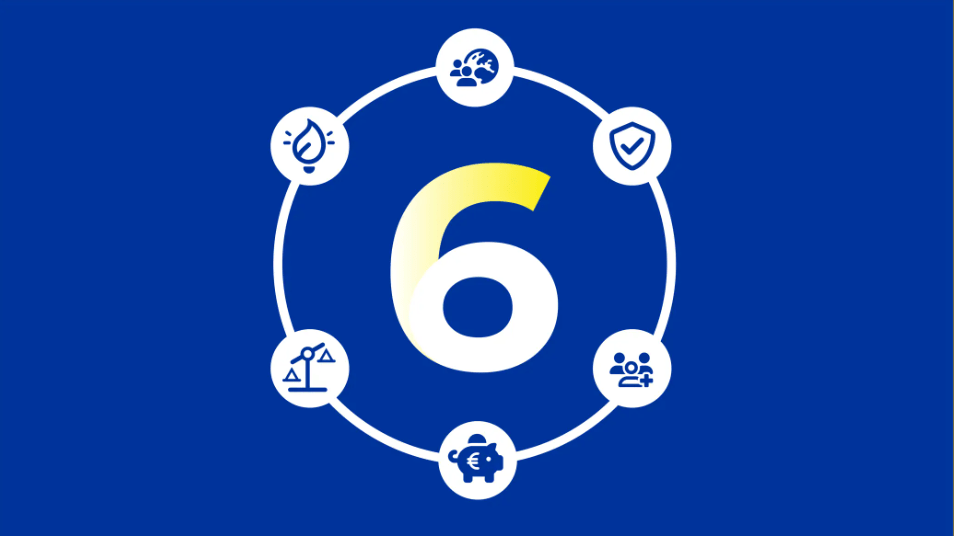
Priorities of the Belgian presidency of the Council of the European Union |
The rotating presidency and the Trio programme
The rotation system allows each member state to take over the EU presidency once every 13.5 years. The presidency of the Council of the European Union rotates among the EU member states every six months.
Member states holding the presidency work together closely in groups of three, known as “trios”, to ensure continuity. Working together, the trio prepares the overall programme for all three presidencies, known as the 18-month programme or Trio Programme.
Hungary will be the last country to hold the presidency in the second half of 2024, as part of a trio including Spain and Belgium.
Not to be confused
The European Council is made up of the heads of state or government of all EU countries and defines the EU’s overall political direction and priorities. The current President of the European Council is Charles Michel.
The Council of Europe is not part of the EU institutional setup. It is an international organisation with 46 European member countries, based in Strasbourg (France) aiming to protect human rights, democracy and the rule of law.
Source: Council of the European Union
Publicaciones relacionadas:
 International Day for the Elimination of Racial Discrimination
 Czech Presidency puts focus on regions and cities’ challenges and responses to crisis
 European Parliament convenes grants to inform 2024 European elections
 European Parliament calls for coordinated strategy to protect 2024 European elections against foreign interference
 The European Commission has proposed an annual EU budget of €189.3 billion for 2024
Leave a Reply