• Skip to primary navigation
  • Skip to main content
  • Skip to primary sidebar
  • Skip to footer
  • Bluesky
  • Facebook
  • Instagram
  • Twitter
  • YouTube
CDE Almería – Centro de Documentación Europea – Universidad de Almería

CDE Almería - Centro de Documentación Europea - Universidad de Almería

Centro de Documentación Europea de la Universidad de Almería

  • HOME
  • WHAT´S ON
    • EU NEWS
    • Activities
    • EU Calls and Awards
    • Radio Program «Europe with You»
  • DOCUMENTATION
    • EU Media Collection
      • Web Space
      • MEDIATHEQUE REPOSITORY
  • Europe on the net
    • Institutions
    • EU Representation in Spain
    • European information network of Andalusia
  • ABOUT US
    • Presentation
    • Services
    • People
    • Contact
  • Spanish
  • English

Human rights breaches in Nigeria and Burundi

Inicio » EU News » Human rights breaches in Nigeria and Burundi

20 de January de 2020

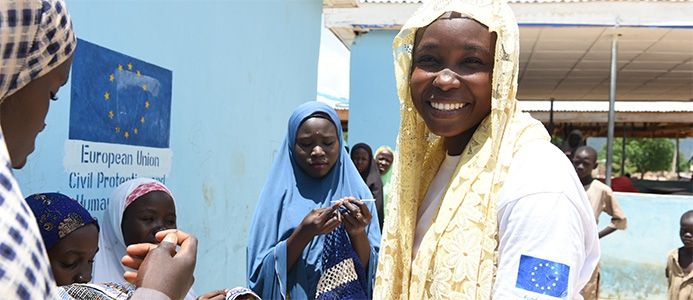
The European Parliament has adopted two resolutions taking stock of the human rights and rule of law situation in Nigeria and Burundi.
Nigeria

Following the recent terrorist attacks in the country, the European Parliament strongly condemns the repeated violations of human rights and international and humanitarian law, ‘’whether based on religion or ethnicity’’. MEPs urge the Nigerian authorities to guarantee respect for human rights and to protect the civilian population from terrorism and violence. The fight against impunity is fundamental to the stability of the country and to building lasting peace, MEPs say.

The situation in Nigeria has significantly deteriorated over the last few years, posing a serious threat to international and regional security. Recent killings are part of a wider series of terrorist acts, including the attack on 24 December 2019 on a village near Chibok that resulted in the death of seven villagers and the kidnapping of a teenage girl.

Burundi

MEPs strongly condemn the current restrictions on freedom of expression in Burundi, including the limitations placed on public freedom, large-scale violations of human rights, the intimidation and arbitrary arrests of journalists and broadcast bans. They recall that Burundi is bound by the human rights clause of the Cotonou agreement and therefore urge the country’s authorities to immediately revert this abusive trend and to uphold its human rights obligations.

Civil society and journalists play a vital role in a democratic society, MEPs say, particularly in the context of upcoming elections in Burundi. The European Parliament calls on the Burundian authorities to stop intimidating, harassing, and arbitrarily arresting journalists, human rights activists and members of the opposition, including those returning from exile.

More information

Press conference

Watch a video recording of the debate (16.01.2020) 
European Parliament’s Subcommittee on Human Rights

Publicaciones relacionadas:

External action: more funds for human rights, development and climate change Derechos-HumanosMEPs call for EU Magnitsky Act to impose sanctions on human rights abusers Human rights breaches in Brunei, China and Cameroon Roundtable discussion: fighting antisemitism in Austria European Commission reports on the EU Charter of Fundamental Rights, 10 years on




EU News Human Rights

“This is a space for debate. All comments, for or against publication, that are respectful and do not contain expressions that are discriminatory, defamatory or contrary to current legislation will be published”.

Reader Interactions

Leave a Reply Cancel reply

Your email address will not be published. Required fields are marked *

This site uses Akismet to reduce spam. Learn how your comment data is processed.

Primary Sidebar

Footer

  • CDE Almería
  • Biblioteca Nicolás Salmerón – Universidad de Almería
  • Planta: 1ª, Despacho: 1.05.0B.
  • Ctra. Sacramento s/n. Almería (Spain)
  • Teléfono: (+34) 950 015266

HOME
NEWS
DOCUMENTATION
EUROPE ON THE NET
ABOUT US

  • LEGAL NOTICE
  • PRIVACY POLICY
  • COOKIE POLICY
  • ACCESSIBILITY
  • SITEMAP

Copyright © 2026 CDE Almería · Creative Commons LicenseThis work is licensed under a Creative Commons Attribution-NonCommercial 4.0 International License.

<p>El Centro de Documentación Europea de la Universidad de Almería utiliza cookies propias y de terceros para facilitar al usuario la navegación en su página Web y el acceso a los distintos contenidos alojados en la misma. Asimismo, se utilizan cookies analíticas de terceros para medir la interacción de los usuarios con el sitio Web. Pinche el siguiente enlace si desea información sobre el uso de cookies y como deshabilitarlas. </p>

Politica de privacidad

El Centro de Documentación Europea de la Universidad de Almería utiliza cookies propias y de terceros para facilitar al usuario la navegación en su página Web y el acceso a los distintos contenidos alojados en la misma. Asimismo, se utilizan cookies analíticas de terceros para medir la interacción de los usuarios con el sitio Web. Pinche el siguiente enlace si desea información sobre el uso de cookies y como deshabilitarlas. <a href="/politica-de-cookies" rel="noopener" target="_blank">Más información</a>

Cookies estrictamente necesarias

Las cookies estrictamente necesarias tiene que activarse siempre para que podamos guardar tus preferencias de ajustes de cookies.

Básicamente la web no funcionara bien si no las activas.

Estas cookies son:

  • Comprobación de inicio de sesión.
  • Cookies de seguridad.
  • Aceptación/rechazo previo de cookies.
Cookies de terceros

Esta web utiliza Google Analytics, Google Tag Manager y Yandex Metrika para recopilar información anónima tal como el número de visitantes del sitio, o las páginas más populares.

Dejar estas cookies activas nos permite mejorar nuestra web.

Política de cookies

Pinche el siguiente enlace si desea información sobre el uso de cookies y como deshabilitarlas. Más información