
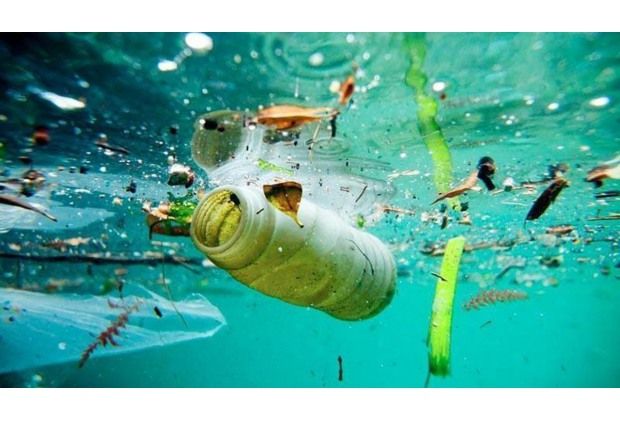
More than 80 percent of marine litter is plastic. It is estimated that by 2050, more plastic could be in the ocean than fish.
Specific challenge
Urgent action is needed both for the prevention and for the removal of existing marine litter, notably plastics and microplastics. For this topic, a demonstration of the removal of marine litter and research is being proposed, highlighting how the environment is impacted by the removal, and the corresponding impacts in terms of ecosystem and economic recovery.
Scope
The overall goal of this topic is the demonstration of approaches or technologies to improve marine spatial planning and conservation (or even restoration) of coastal ecosystems. More specifically, this topic is for the demonstration of technologies to clean the seafloor and the surface of nearshore waters, and possibly the water column, from historically accumulated plastics and micro-plastics as well as from other accumulated marine litter and the assessment of effectiveness and impact. Accompanying research will have to address impacts on coastal ecosystems’ food chains, biodiversity and functioning, fisheries, aquaculture, Marine Protected Areas, wild life and local economies 6, 12, 18 and 24 months after the (start of the) cleaning. At the end of the project, the consortium is expected to identify a way to a future potentially automated removal of historically accumulated marine litter (legacy), in particular at hot-spots of accumulated marine litter.
Projects shall demonstrate the effectiveness of one or several automatic or remotely controlled wireless device capable of collecting plastics and other marine litter of reasonable size (larger micro-litter and macro-litter up to a meter or so). The proposed solution must be able to work at the sea surface and on the seafloor/beach. The demonstration has to be for longer periods of time . The marine litter must be sorted and reused in line with the circular economy and the plastics strategy .
The Commission considers that proposals requesting a contribution from the EU in the range of EUR 6 million would allow this challenge to be addressed appropriately. This does not preclude the submission and selection of proposals requesting other amounts.
Expected impact
In the short-term
- Achieve a removal of 90% of macro-plastic litter and a substantial fraction of micro-litter in the demonstration areas reducing the clean-up cost to the local blue economy.
- Increase availability of efficient and environmentally sustainable technologies to remove existing marine litter.
- Contribute to awareness rising of citizens about the importance of prevention to avoid environmental damage and high costs (for the community and the tax payer instead of the polluter).
- Contribute to the sustainable management and protection of marine and coastal ecosystems to avoid significant adverse impacts (UN SDG 14).
In the medium-term
- Achieve 80% reduction of micro-plastics in shellfish in treated areas (or other locally important small marine animals).
- Increase scientific knowledge, develop research capacity and transfer marine technology.
- Ensure that collected marine plastics are reused or reconverted in line with the European Strategy for Plastics in a Circular Economy.
- Shorten the time span between research and innovation and foster economic value in the blue economy.
- Improve the professional skills and competences of those working and being trained to work within the blue economy and in the context of open data sharing.
- Increase data sharing and increase integration of data.
- Contribute to determining the distribution and fate of marine litter and microplastics.
In the long-term
- Achieve 80% reduction of micro-plastics and plastics in non-migratory birds species in the areas where cleaning technologies are being used.
- Achieve substantial reduction of micro-plastics originating from macro-plastics locally.
Deadline
22 January 2020 at 17:00 Brussels time
More information
Publicaciones relacionadas:
 H2020. Nanotechnologies, Advanced Materials, Biotechnology and Advanced Manufacturing and Processing: Upcycling Bio Plastics of food and drinks packaging
 H2020. Micro- and nano-plastics in our environment: Understanding exposures and impacts on human health
 United Nations Alliance of Civilizations Fellowship programme
 International Essay Contest for Young People
 Call for the Salvador de Madariaga Journalistic Prize
Leave a Reply