
00As of December 2025, craft and industrial products will fully benefit from an EU-wide Geographical indications (GIs) protection under Regulation (EU) 2023/2411. Geographical indications are an intellectual property protection that links specific products, which are European, local, and authentic, to their geographical origin, ensuring that these products possess qualities, reputation, or characteristics that are inherently tied to that location.

Following the adoption of Regulation (EU) 2023/2411 on 18 October 2023, craft and industrial goods can fully benefit from an EU-wide GI protection scheme. This regulation establishes a unified EU title to protect the names of craft and industrial products across all EU countries. It allows producers to prevent the use of these names for similar products made outside the designated geographical areas, helping them fight counterfeits both online and offline. Additionally, the GI scheme enables EU producers to seek international protection for their GIs, and it allows non-EU producers to apply for protection if they meet EU requirements.
Before starting the GI registration process, producers will have to agree on product specifications. They will next submit them to their national authority, except in certain countries where the Commission has granted a derogation.
Unlike the system for agricultural products, the EU Intellectual Property Office (EUIPO) will oversee the national and EU-level phases of the examination and registration. In specific cases, the Commission retains the authority to decide on GI application approvals.
Once registered by the EUIPO, public authorities at national level will conduct market controls and checks to ensure compliance with product specifications and detect fraudulent or counterfeited products. Producers can self-declare their compliance. Regional authorities will provide strong support and may act as applicants in exceptional cases.
Existing national craft and industrial product GIs will expire 1 year after the new regulation comes into effect, in December 2026. The EU, its member countries, the EUIPO, the Commission, and stakeholders have a preparation period before the new system fully applies on 1 December 2025.
How to file a geographical indication for craft and industrial products
Any association of producers mainly producing the same product may file for geographical indication (GI) registration. Under certain conditions, a single producer or a local or regional authority can also exceptionally apply.
For non-EU products, non-EU producers or their competent authorities can file applications, depending on the legislation applicable in their country.
To file a GI application, EU producers must address the national competent authority of the EU country where the product originates.
In exceptional cases where an EU country has not appointed a national competent authority, EU producers must submit their application directly to the EUIPO.
Non-EU producers applying for GI protection for craft and industrial products should submit their applications directly to the EUIPO.
Applications must include a product specification detailing the conditions that the products must meet to bear the geographical indication including their link to the geographical area, a single document summarising the product specification, and certain accompanying documentation (e.g., contact details of the applicant).
The registration procedure has 2 phases. The national competent authority reviews the application and conducts a national opposition procedure if it meets the requirements. If this phase is completed successfully, the application is forwarded to the EUIPO, which manages the opposition procedure at the EU level and ultimately approves or denies registration.
In cases where an EU country lacks a national competent authority, the EUIPO will carry out the national phase of the procedure with support from a single contact point in the EU country.
Once registered, any producer located in the geographical area that complies with the conditions set out in the product specification will be entitled to use the registered GI.
Once registration of the geographical indication is published in the Union register, producers can put the following Union symbol on the product and its labelling.
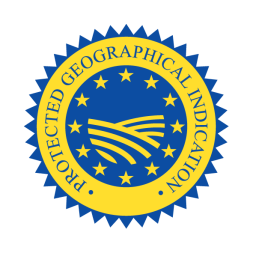
More information: European Commission.
Publicaciones relacionadas:
 Long-term vision for rural areas: stronger, connected, resilient, and prosperous
 AU-EU agrifood platform: reinforcing the link between the EU and African private sectors
 Commission prepares new initiatives to boost the organic farming sector
 Meet the winners of the second edition of the EU Organic Awards
 10 ways EU Space helps fight global hunger
Leave a Reply