
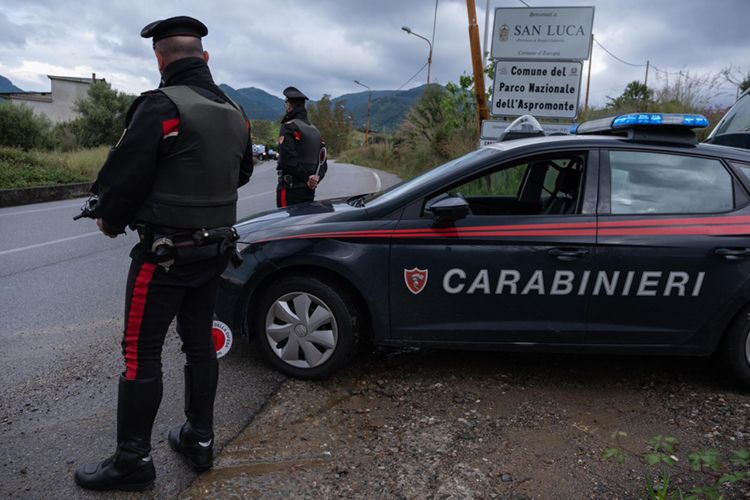
132 members of one of the most prominent criminal networks in the world were apprehended during an action day that was carried out by ten nations. Authorities from Belgium, Germany, Italy, France, Portugal, Slovenia, Spain, Romania, Brazil, and Panama conducted raids at several sites and confiscated a number of businesses early on May 3. On-the-ground participation totaled around 2,770 cops on the action day.
This worldwide operation against the ‘Ndrangheta, which is now the largest hit against the Italian poly-criminal syndicate to date, was assisted by Eurojust and Europol. The mafia-style organisation, which also engages in systematic money laundering, bribery, and violence, is in charge of a large portion of the cocaine trade in Europe.
The criminal network under investigation was led by several powerful ‘Ndrangheta families based mainly in the town of San Luca, which is in the Italian province of Reggio Calabria. Some of these families have been involved in decades-long clan violence known as San Luca feud, culminating in massive shootings in Italy and abroad, such as the Duisburg massacre in Germany in 2007.
Members of the criminal network were engaged in criminal conspiracy not only by being part of a mafia-style organisation, but also by being responsible for drug trafficking, firearms trafficking, illegal firearms possession, money laundering, fraudulent asset registration, tax fraud and tax evasion, as well as the aiding and abetting of fugitives (who have since been arrested). Two of these fugitives had been on the EU Most Wanted list.
Europol helps arrest 50 people for trafficking hashish and cocaine via African route |
Staggering list of criminal activities
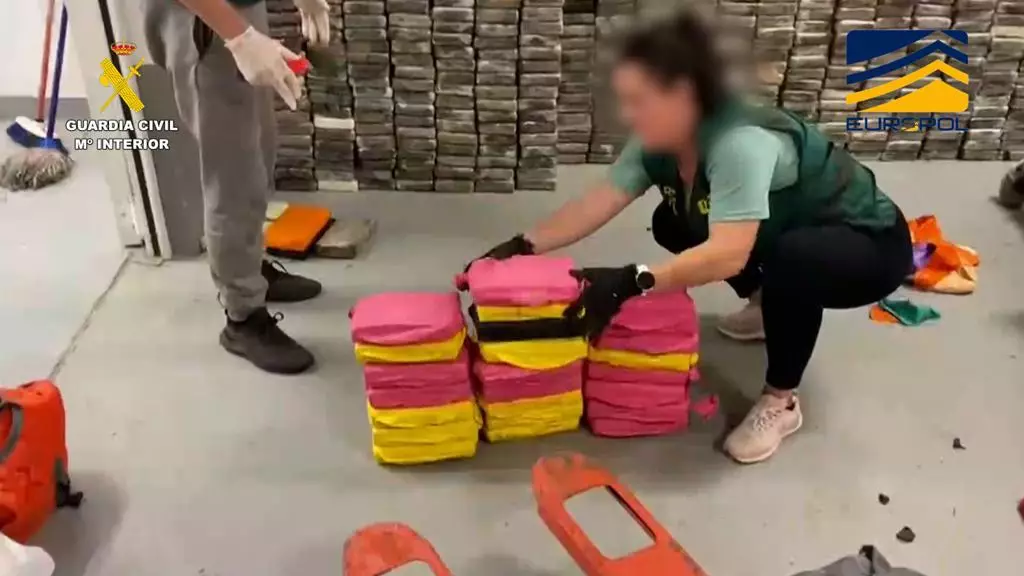
The Italian criminal network was mainly devoted to international drug trafficking from South America to Europe, as well as Australia. Authorities uncovered that the network was working in partnership with the Colombian organised crime group ‘Gulf Clan’ and an Albanian-speaking crime group operating in Ecuador and multiple European Countries. Furthermore, the ‘Ndrangheta clans were involved in international firearms trafficking from Pakistan to South America, providing weapons to the notorious criminal group PCC (Primeiro Comando da Capital) in exchange for cocaine shipments. Investigators tracked the flow of money in an extensive global money laundering system, with massive investments in Belgium, Germany, Italy, Portugal, Argentina, Uruguay and Brazil. The criminal group was investing its profits in real estate, restaurants, hotels, car wash companies, supermarkets, and other commercial activities. In order to pay for cocaine or to transfer illicit assets, the criminals often relied on facilitators using the hawala system.
Police and judicial authorities in lockstep
Eurojust supported the involved authorities by establishing and funding two joint investigation teams. The agency also hosted ten coordination meetings and set up a coordination centre to enable rapid cooperation between the judicial authorities involved in the action day. Three linked cases were opened at Eurojust at the request of the Italian, German and Belgian authorities. Eurojust also facilitated the transmission and execution of European Investigation Orders.
Europol’s Analysis Project on Italian Organised Crime supported the investigation as a priority case. It provided intelligence packages and cross-match reports to the national investigative units involved. In total, more than 200 SIENA messages were exchanged among the countries involved. Besides supporting the investigation itself, the Analysis Project also supported the searches for the three fugitives. The agency also hosted case officers appointed by national investigative units, in order to analyse the encrypted communication that had been gathered. On the action day itself, Europol deployed specialists with mobile offices on the spot in all three countries.
This case falls under the EMPACT Operational Action 2.3 on ‘Ndrangheta and the Sicilian mafia, the first EMPACT action led by the National Antimafia Directorate (Direzione Nazionale Antimafia) in which Europol and Eurojust are co-leaders.
The investigation and the Action Day itself have been supported by the @ON Network funded by the EU (Project ISF4@ON) led by the Italian Antimafia Investigation Directorate (DIA).
The following authorities took part in this investigation:
- Italy: PPO Reggio Calabria, National Antimafia and Counterterrorism Directorate, Carabinieri in Locri
- Germany: PPO Düsseldorf, PPO Koblenz, PPO Munich, PPO Saarbrücken, State Criminal Police Office North Rhine-Westphalia, State Criminal Police Office Rhineland-Palatinate, Bavarian State Criminal Police Office, State Criminal Police Office Saarland, Federal Criminal Police Office Wiesbaden (for analysis)
- Belgium: Federal PPO in close collaboration with PPO Limburg, Investigating judge Court 1ste Instance Limburg/section Tongeren, Federal Judicial Police of Limburg
- Portugal: Departamento Central de Investigação e Ação Penal (Central PPO), Polícia Judiciária- UNCT and Gabinete de Recuperação de Ativos (ARO)
- France: GPO Aix-en-Provence, PPO Nice Directorate for Investigating Organized Crime and Terrorism, Prosecutor’s Office attached to Court of Appeal Aix-en-Provence, Prosecutor’s office of tribunal of Nice, and the attached Police Directorate for Criminal Investigation (DCPJ)
- Romania: Directorate for Investigating Organized Crime and Terrorism, Prosecutor’s Office attached to Court of Appeal Timisoara, Police Directorate for Criminal Investigation, Arad Police Service for Criminal Investigation
- Slovenia: Investigative Judge Nova Gorica, PPO Nova Gorica and National Police, Central Directorate for Criminal Police
- Spain: Investigative Court in Torremolinos (num 4), Central Court num 3 at Audiencia Nacional; International Cooperation Sections of the Spanish Prosecution Service in Málaga and Antidrug PPO
More information
Publicaciones relacionadas:
 Rapid action via Eurojust leads to arrest of 10 human traffickers
 Intensified judicial response to serious cross-border crimes
 Statements by European leaders condemning the Vienna attacks
 Eurojust supports multi-country action against steroid trafficking ring
 EU agencies present first full overview of actions to detect and protect victims of human trafficking
Leave a Reply