• Skip to primary navigation
  • Skip to main content
  • Skip to primary sidebar
  • Skip to footer
  • Bluesky
  • Facebook
  • Instagram
  • Twitter
  • YouTube
CDE Almería – Centro de Documentación Europea – Universidad de Almería

CDE Almería - Centro de Documentación Europea - Universidad de Almería

Centro de Documentación Europea de la Universidad de Almería

  • HOME
  • WHAT´S ON
    • EU NEWS
    • Activities
    • EU Calls and Awards
    • Radio Program «Europe with You»
  • DOCUMENTATION
    • EU Media Collection
      • Web Space
      • MEDIATHEQUE REPOSITORY
  • Europe on the net
    • Institutions
    • EU Representation in Spain
    • European information network of Andalusia
  • ABOUT US
    • Presentation
    • Services
    • People
    • Contact
  • Spanish
  • English

EU-New Zealand trade agreement enters into force, opening up new opportunities for EU exporters

Inicio » Noticias UE » Mercado » International Trade » EU-New Zealand trade agreement enters into force, opening up new opportunities for EU exporters

6 de May de 2024

EU businesses, producers and farmers are now able to take advantage of a host of new export opportunities with the entry into force of the EU-New Zealand trade agreement today. The deal is expected to cut €140 million a year in duties for EU companies.
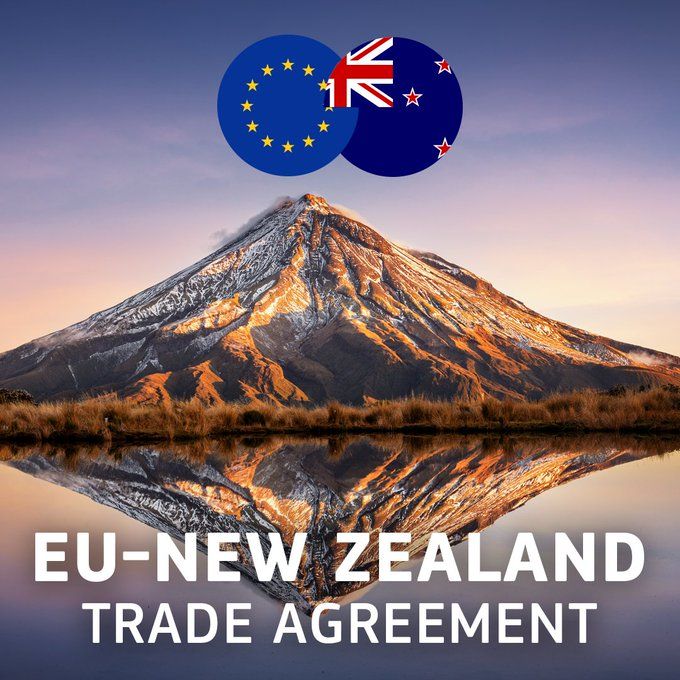
Thanks to this deal, EU-New Zealand trade is expected to grow by up to 30% within a decade, with EU exports potentially growing by up to €4.5 billion annually. EU investment into New Zealand has the potential to grow by up to 80%. This landmark agreement also includes unprecedented sustainability commitments, including respect of the Paris Climate Agreement and core labour rights.

EU farmers will benefit from the elimination of tariffs on key EU exports such as pig meat, wine and sparkling wine, chocolate, sugar confectionary and biscuits. Moreover, the agreement protects the full list of EU wines and spirits (close to 2,000 names), such as Prosecco and Champagne, as well as 163 of the most renowned traditional EU products (Geographical Indications), such as Feta cheese, Istarski pršut ham and Lübecker Marzipan.  Meanwhile, sensitive EU agricultural products such as beef, sheepmeat and dairy products are protected with carefully designed tariff rate quotas.

EU business can now take advantage of benefits such as:

  • Zero tariffs on EU exports to New Zealand.
  • A more open New Zealand services market in key sectors such as financial services, telecommunications, maritime transport and delivery services.
  • Non-discriminatory treatment of EU investors in New Zealand.
  • Improved access for EU companies to New Zealand government procurement contracts for goods, services, works and works concessions.
  • A dedicated chapter to help small business exports.
  • Significantly reduced compliance requirements and procedures.

Practical information to help EU exporters take advantage of these new opportunities can be found on the Commission’s Access2Markets page.

Background

Negotiations for a trade agreement with New Zealand started in June 2018 and were concluded on 30 June 2022, when the deal was announced by President von der Leyen and then New Zealand Prime Minister Ardern. The agreement was signed by both parties on 9 July 2023. The European Parliament adopted it on 22 November 2023, followed by the adoption of a decision to conclude the agreement by the Council on 27 November 2023. New Zealand completed its ratification procedure on 25 March 2024.
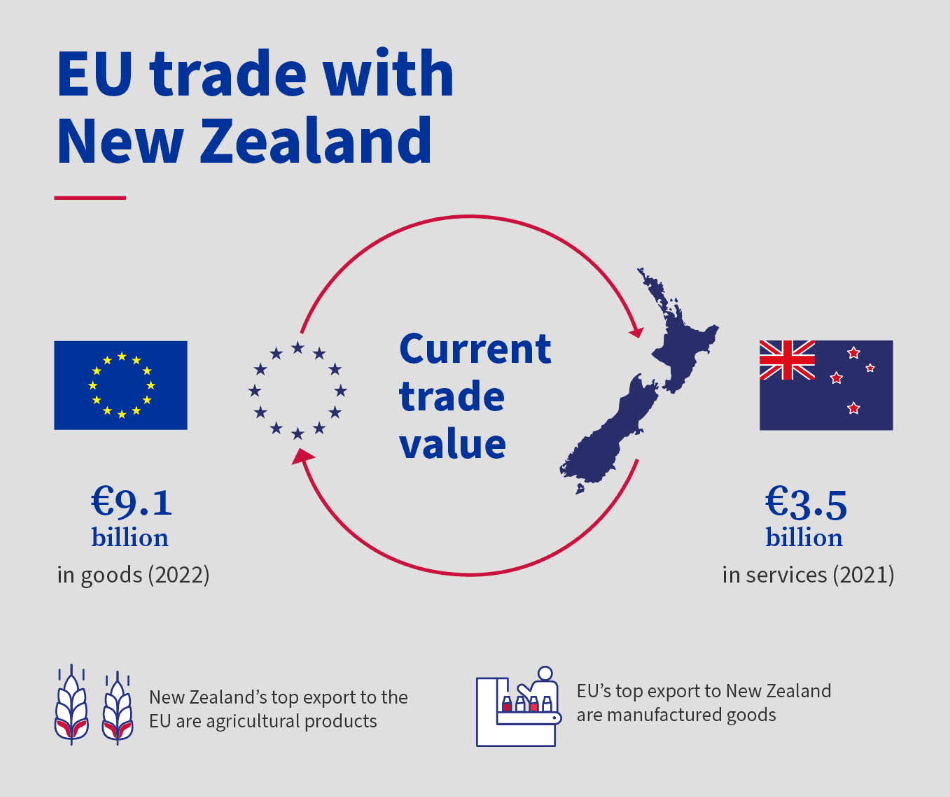
The European Union’s leading-edge trade agreement with New Zealand

More information: European Commission

Publicaciones relacionadas:

barco pescaEU requests consultations under the Trade and Cooperation Agreement on UK permanent closure of sandeel fisheries New VAT rules for e-commerce in the EU Negotiations on the future EU-Mexico trade agreement EU exports under Free Trade Agreements surpass €1 trillion Bandera Unión Europea ondeandoCommission adopts rules for implementing the Foreign Subsidies Regulation

Agriculture, Livestock Farming and Fisheries,  EU News,  Farming activity,  Institutional Affairs,  International Politics and Cooperation,  International Trade,  Market EU,  European Commission,  international trade,  New Zealand

“This is a space for debate. All comments, for or against publication, that are respectful and do not contain expressions that are discriminatory, defamatory or contrary to current legislation will be published”.

Reader Interactions

Leave a Reply Cancel reply

Your email address will not be published. Required fields are marked *

This site uses Akismet to reduce spam. Learn how your comment data is processed.

Primary Sidebar

Footer

  • CDE Almería
  • Biblioteca Nicolás Salmerón – Universidad de Almería
  • Planta: 1ª, Despacho: 1.05.0B.
  • Ctra. Sacramento s/n. Almería (Spain)
  • Teléfono: (+34) 950 015266

HOME
NEWS
DOCUMENTATION
EUROPE ON THE NET
ABOUT US

  • LEGAL NOTICE
  • PRIVACY POLICY
  • COOKIE POLICY
  • ACCESSIBILITY
  • SITEMAP

Copyright © 2026 CDE Almería · Creative Commons LicenseThis work is licensed under a Creative Commons Attribution-NonCommercial 4.0 International License.

<p>El Centro de Documentación Europea de la Universidad de Almería utiliza cookies propias y de terceros para facilitar al usuario la navegación en su página Web y el acceso a los distintos contenidos alojados en la misma. Asimismo, se utilizan cookies analíticas de terceros para medir la interacción de los usuarios con el sitio Web. Pinche el siguiente enlace si desea información sobre el uso de cookies y como deshabilitarlas. </p>

Politica de privacidad

El Centro de Documentación Europea de la Universidad de Almería utiliza cookies propias y de terceros para facilitar al usuario la navegación en su página Web y el acceso a los distintos contenidos alojados en la misma. Asimismo, se utilizan cookies analíticas de terceros para medir la interacción de los usuarios con el sitio Web. Pinche el siguiente enlace si desea información sobre el uso de cookies y como deshabilitarlas. <a href="/politica-de-cookies" rel="noopener" target="_blank">Más información</a>

Cookies estrictamente necesarias

Las cookies estrictamente necesarias tiene que activarse siempre para que podamos guardar tus preferencias de ajustes de cookies.

Básicamente la web no funcionara bien si no las activas.

Estas cookies son:

  • Comprobación de inicio de sesión.
  • Cookies de seguridad.
  • Aceptación/rechazo previo de cookies.
Cookies de terceros

Esta web utiliza Google Analytics, Google Tag Manager y Yandex Metrika para recopilar información anónima tal como el número de visitantes del sitio, o las páginas más populares.

Dejar estas cookies activas nos permite mejorar nuestra web.

Política de cookies

Pinche el siguiente enlace si desea información sobre el uso de cookies y como deshabilitarlas. Más información