• Skip to primary navigation
  • Skip to main content
  • Skip to primary sidebar
  • Skip to footer
  • Bluesky
  • Facebook
  • Instagram
  • Twitter
  • YouTube
CDE Almería – Centro de Documentación Europea – Universidad de Almería

CDE Almería - Centro de Documentación Europea - Universidad de Almería

Centro de Documentación Europea de la Universidad de Almería

  • HOME
  • WHAT´S ON
    • EU NEWS
    • Activities
    • EU Calls and Awards
    • Radio Program «Europe with You»
  • DOCUMENTATION
    • EU Media Collection
      • Web Space
      • MEDIATHEQUE REPOSITORY
  • Europe on the net
    • Institutions
    • EU Representation in Spain
    • European information network of Andalusia
  • ABOUT US
    • Presentation
    • Services
    • People
    • Contact
  • Spanish
  • English

EU introduces new rules on transparency and targeting of political advertising

Inicio » Noticias UE » Institutional Affairs » EU introduces new rules on transparency and targeting of political advertising

13 de March de 2024

The Council adopted a new regulation on the transparency and targeting of political advertising, aimed at countering information manipulation and foreign interference in elections.

The regulation will make it easy for citizens to recognise political advertisements, understand who is behind them and know whether they have received a targeted advertisement, so that they are better placed to make informed choices. It will also ensure that political advertising takes place in full respect of the right to privacy and that the freedom of opinion and freedom of speech are protected.

Main elements of the new regulation

The new rules cover the transparency and targeting of political advertising in relation to an election, referendum, or a legislative process at EU level or in a member state. They do not affect the content of political advertisements nor other aspects of political advertising, such as the conduct of political campaigns, which remain subject to the specific national rules of member states.

Content under editorial responsibility, as well as views expressed in a personal capacity, are not covered.
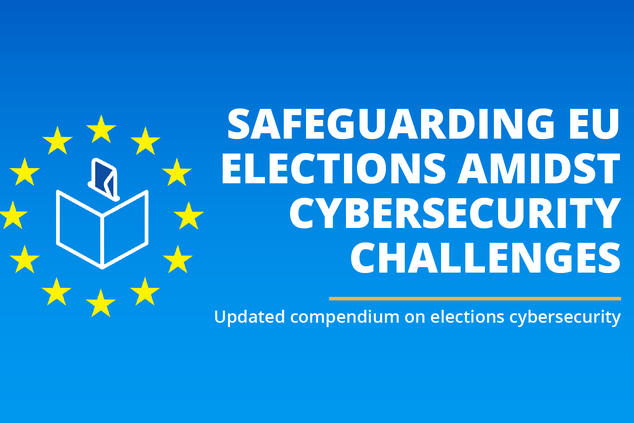
 

Safeguarding EU elections amidst cybersecurity challenges

According to the rules:

  • Political advertisements must be made available with a transparency label and an easily retrievable transparency notice. These must clearly identify political advertisements as such and provide some key information about them, including their sponsor, the election or referendum to which they are linked, the amounts paid, and any use of targeting techniques.
  • Targeting political advertising online will be permitted only under strict conditions. The data has to be collected from the data subject and it can be used only after the data subject have given explicit and separate consent for its use for political advertising. Special categories of personal data, such as data revealing racial or ethnic origin or political opinions, cannot be used for profiling.
  • To prevent foreign interference, there will be a ban on the provision of advertising services to third country sponsors three months before an election or referendum.

Next steps

The regulation will now be signed, published in the EU’s Official Journal and enter into force 20 days later. Most of its provisions will start to apply 18 months after the regulation’s entry into force, i.e. in autumn 2025.

More information: Council of the EU

Regulation on the transparency and targeting of political advertising

Publicaciones relacionadas:

Banderas UE y GuatemalaEuropean Union deploys an Election Observation Mission in Guatemala European Union Election Experts Mission to accompany elections in Ecuador Banderas UE y GuatemalaGuatemala: European Parliament condemns coup attempt and calls for Arévalo to be sworn in in January Get involved in the State of the European Union – 16 September 2020 SOTEU Ursula Von der Leyen EuropaSOTEU 2020: President Von der Leyen sets the course for Europe


EU News,  Institutional Affairs Elections,  European Union,  Political advertising

“This is a space for debate. All comments, for or against publication, that are respectful and do not contain expressions that are discriminatory, defamatory or contrary to current legislation will be published”.

Reader Interactions

Leave a Reply Cancel reply

Your email address will not be published. Required fields are marked *

This site uses Akismet to reduce spam. Learn how your comment data is processed.

Primary Sidebar

Footer

  • CDE Almería
  • Biblioteca Nicolás Salmerón – Universidad de Almería
  • Planta: 1ª, Despacho: 1.05.0B.
  • Ctra. Sacramento s/n. Almería (Spain)
  • Teléfono: (+34) 950 015266

HOME
NEWS
DOCUMENTATION
EUROPE ON THE NET
ABOUT US

  • LEGAL NOTICE
  • PRIVACY POLICY
  • COOKIE POLICY
  • ACCESSIBILITY
  • SITEMAP

Copyright © 2026 CDE Almería · Creative Commons LicenseThis work is licensed under a Creative Commons Attribution-NonCommercial 4.0 International License.

<p>El Centro de Documentación Europea de la Universidad de Almería utiliza cookies propias y de terceros para facilitar al usuario la navegación en su página Web y el acceso a los distintos contenidos alojados en la misma. Asimismo, se utilizan cookies analíticas de terceros para medir la interacción de los usuarios con el sitio Web. Pinche el siguiente enlace si desea información sobre el uso de cookies y como deshabilitarlas. </p>

Politica de privacidad

El Centro de Documentación Europea de la Universidad de Almería utiliza cookies propias y de terceros para facilitar al usuario la navegación en su página Web y el acceso a los distintos contenidos alojados en la misma. Asimismo, se utilizan cookies analíticas de terceros para medir la interacción de los usuarios con el sitio Web. Pinche el siguiente enlace si desea información sobre el uso de cookies y como deshabilitarlas. <a href="/politica-de-cookies" rel="noopener" target="_blank">Más información</a>

Cookies estrictamente necesarias

Las cookies estrictamente necesarias tiene que activarse siempre para que podamos guardar tus preferencias de ajustes de cookies.

Básicamente la web no funcionara bien si no las activas.

Estas cookies son:

  • Comprobación de inicio de sesión.
  • Cookies de seguridad.
  • Aceptación/rechazo previo de cookies.
Cookies de terceros

Esta web utiliza Google Analytics, Google Tag Manager y Yandex Metrika para recopilar información anónima tal como el número de visitantes del sitio, o las páginas más populares.

Dejar estas cookies activas nos permite mejorar nuestra web.

Política de cookies

Pinche el siguiente enlace si desea información sobre el uso de cookies y como deshabilitarlas. Más información