• Skip to primary navigation
  • Skip to main content
  • Skip to primary sidebar
  • Skip to footer
  • Bluesky
  • Facebook
  • Instagram
  • Twitter
  • YouTube
CDE Almería – Centro de Documentación Europea – Universidad de Almería

CDE Almería - Centro de Documentación Europea - Universidad de Almería

Centro de Documentación Europea de la Universidad de Almería

  • HOME
  • WHAT´S ON
    • EU NEWS
    • Activities
    • EU Calls and Awards
    • Radio Program «Europe with You»
  • DOCUMENTATION
    • EU Media Collection
      • Web Space
      • MEDIATHEQUE REPOSITORY
  • Europe on the net
    • Institutions
    • EU Representation in Spain
    • European information network of Andalusia
  • ABOUT US
    • Presentation
    • Services
    • People
    • Contact
  • Spanish
  • English

EU-funded project demonstrates feasibility of assembling spacecraft in orbit

Inicio » Noticias UE » Research and Innovation » EU-funded project demonstrates feasibility of assembling spacecraft in orbit

22 de May de 2023

When one thinks about how satellites and spacecraft are currently built, the picture that usually springs to mind is of a huge clean room with lots of white-coated scientists and experts milling around. After being meticulously constructed, these expensive pieces of equipment then need to be launched into space.
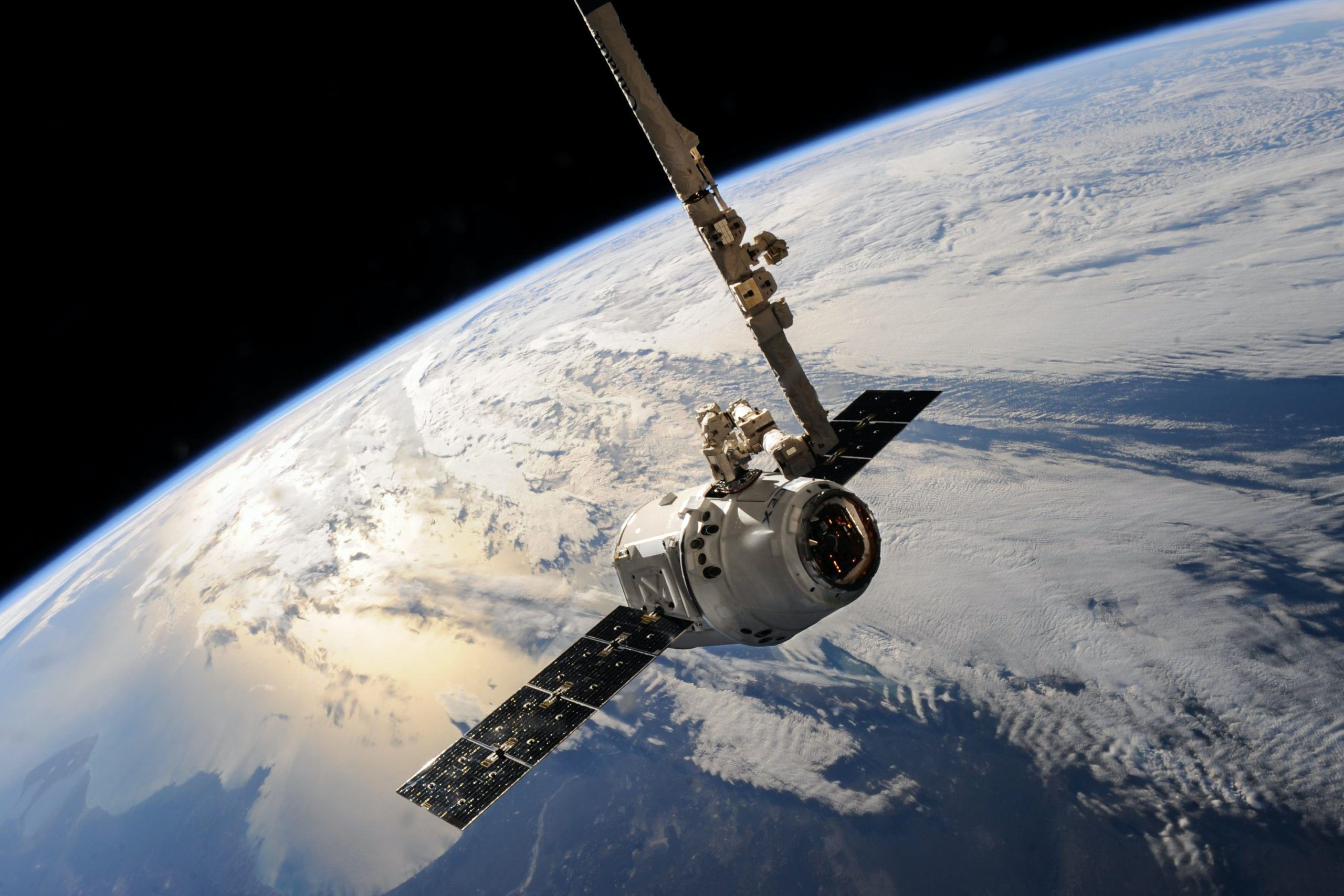
This work is incredibly costly, as well as highly labour-intensive. This is one reason why the EU-funded PERIOD project was launched, to see if an alternative to current approaches to manufacturing and assembling space hardware on the ground could be found.

This work is incredibly costly, as well as highly labour-intensive. This is one reason why the EU-funded PERIOD project was launched, to see if an alternative to current approaches to manufacturing and assembling space hardware on the ground could be found.

Robotics and automation in space

In particular, the project sought to examine in-depth the possibility of direct in-orbit manufacturing and assembly, using robotics and automation. “The advantages of this would be multiple,” explains PERIOD project coordinator Stéphane Estable from Airbus Defence and Space in Germany. “These include no more constraints on the overall volume and design of large-scale satellite antennae, and opportunities to construct larger space infrastructures, such as modular space stations.” On top of this, robotic-based in-space manufacturing and assembly technologies could allow for the upgrade and repair of existing spacecraft and satellites. A key barrier to date, however, has been an inability to demonstrate the maturity and integrability of such technology. In other words, could it actually work?

Validating in-orbit manufacturing

The main motivation for PERIOD therefore was to further develop and validate promising in-space service technologies. These innovations – such as a robot operating control system, a sensor data fusion framework, an autonomy goal-oriented framework and an integrated 3D sensors suite – were developed in the framework of the EU’s PERASPERA Strategic Research Cluster. The project team also tested and benchmarked ‘standard interconnects’, which would enable modular robotic systems to be combined. “To achieve this, a lab demonstrator was prepared, which gradually integrated all these technologies together in increments with increasing complexity,” adds Estable. “We were also able to carry out a robotised assembly sequence of a satellite mock-up, made of two main segments both equipped with a ‘standard interconnect’.” This work enabled the team to define in detail how robotic technologies could be used together for antenna manufacturing, satellite assembly and satellite refuelling, in orbit.

European Commission invites industry to submit proposals to deploy the new EU secure connectivity satellite constellation

Advancing cutting-edge technologies

PERIOD was successful in further developing and validating these technologies, and in carrying out a highly detailed benchmarking of three European standard interconnects. In doing so, the project team was able to demonstrate, in the lab, how a robotic-based satellite assembly operation could be carried out, in space. The project also contributed to defining the standards and regulations for in-space services, manufacturing and assembly, which will be important in moving forward. More focused work on this is envisaged in the future. Critically, many of the project outcomes are now available for future activities within the space community. “The lab demonstrations – and in-orbit demonstration concept we developed – will also enable the space community to build the business case for how space systems are designed and operated in the future,” says Estable. “We will continue developing these technologies, and also continue to carry out lab demonstrations of in-space services with increasing complexity. Our aim is to eventually implement an in-orbit demonstration to fully validate the overall operations and technologies, before the deployment of commercial applications.”

Source: CORDIS

Publicaciones relacionadas:

New satellite connectivity system and space traffic management measures International Day of Human Space Flight: The challenges of long-term space travel Building a sustainable future with the power of #EUSpace Galileo satellites given green light for launch Europe and Spain bet on space development

EU News,  Research and Innovation in-orbit,  PERASPERA,  PERIOD,  robotic,  satellite,  Space,  spacecraft

“This is a space for debate. All comments, for or against publication, that are respectful and do not contain expressions that are discriminatory, defamatory or contrary to current legislation will be published”.

Reader Interactions

Leave a Reply Cancel reply

Your email address will not be published. Required fields are marked *

This site uses Akismet to reduce spam. Learn how your comment data is processed.

Primary Sidebar

Footer

  • CDE Almería
  • Biblioteca Nicolás Salmerón – Universidad de Almería
  • Planta: 1ª, Despacho: 1.05.0B.
  • Ctra. Sacramento s/n. Almería (Spain)
  • Teléfono: (+34) 950 015266

HOME
NEWS
DOCUMENTATION
EUROPE ON THE NET
ABOUT US

  • LEGAL NOTICE
  • PRIVACY POLICY
  • COOKIE POLICY
  • ACCESSIBILITY
  • SITEMAP

Copyright © 2026 CDE Almería · Creative Commons LicenseThis work is licensed under a Creative Commons Attribution-NonCommercial 4.0 International License.

<p>El Centro de Documentación Europea de la Universidad de Almería utiliza cookies propias y de terceros para facilitar al usuario la navegación en su página Web y el acceso a los distintos contenidos alojados en la misma. Asimismo, se utilizan cookies analíticas de terceros para medir la interacción de los usuarios con el sitio Web. Pinche el siguiente enlace si desea información sobre el uso de cookies y como deshabilitarlas. </p>

Politica de privacidad

El Centro de Documentación Europea de la Universidad de Almería utiliza cookies propias y de terceros para facilitar al usuario la navegación en su página Web y el acceso a los distintos contenidos alojados en la misma. Asimismo, se utilizan cookies analíticas de terceros para medir la interacción de los usuarios con el sitio Web. Pinche el siguiente enlace si desea información sobre el uso de cookies y como deshabilitarlas. <a href="/politica-de-cookies" rel="noopener" target="_blank">Más información</a>

Cookies estrictamente necesarias

Las cookies estrictamente necesarias tiene que activarse siempre para que podamos guardar tus preferencias de ajustes de cookies.

Básicamente la web no funcionara bien si no las activas.

Estas cookies son:

  • Comprobación de inicio de sesión.
  • Cookies de seguridad.
  • Aceptación/rechazo previo de cookies.
Cookies de terceros

Esta web utiliza Google Analytics, Google Tag Manager y Yandex Metrika para recopilar información anónima tal como el número de visitantes del sitio, o las páginas más populares.

Dejar estas cookies activas nos permite mejorar nuestra web.

Política de cookies

Pinche el siguiente enlace si desea información sobre el uso de cookies y como deshabilitarlas. Más información