
Health and Food Safety Commissioner Stella Kyriakides and US Department of Health and Human Services (HHS) Secretary Xavier Becerra met yesterday in Brussels to launch the EU-US Health Working Group.
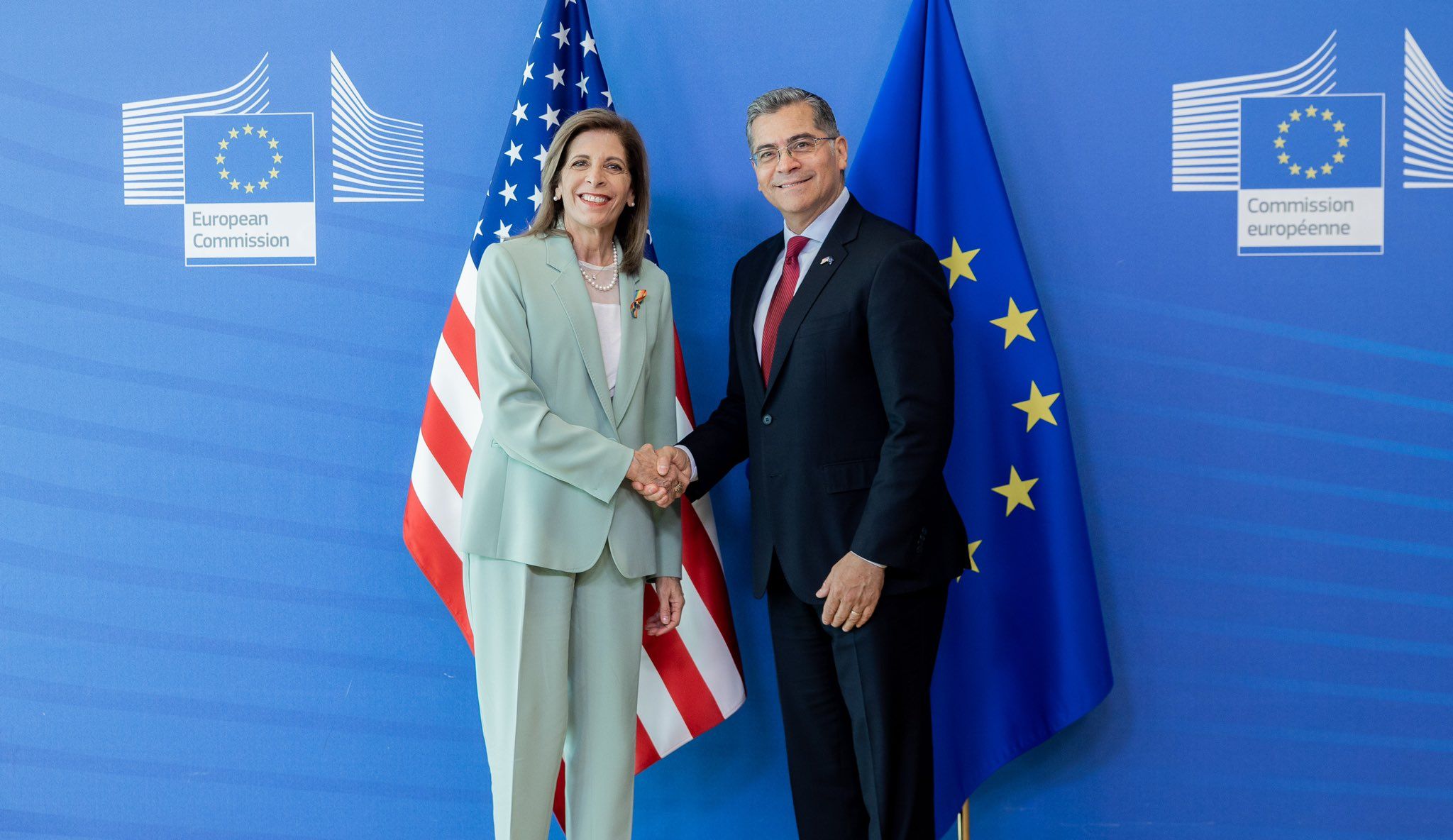
The Task Force, set up to expand the EU-US partnership in the area of health, will focus on cooperation under three strands: priorities in the area of cancer, global health threats, and strengthening the global health architecture. Technical working groups on these priority areas are being established. The discussion also included an exchange on Ukraine, where the EU and US reaffirmed their solidarity in the face of the Russian aggression and committed to continue supporting Ukraine for as long as it takes.
Advancing cooperation between Europe’s Beating Cancer Plan and US Cancer Moonshot
The EU and the US share a prioritised focus on improving cancer prevention, detection and care for everyone facing cancer. That is why the Task Force has established two expert-level working groups focused on childhood/young adult cancer and lung cancer in the context of Europe’s Beating Cancer Plan and the US Cancer Moonshot. This collaboration aims to facilitate peer-learning, exchange best practices, and advise on the development of possible joint initiatives to improve cancer outcomes across the globe. The goal is to promote the establishment of a new structured dialogue on cancer, addressing both cancer policies and research collaborations. This will be done by finding common ground between the US Cancer Moonshot Initiative and Europe’s Beating Cancer Plan, the EU Cancer Mission, and US National Cancer Plan.
The first virtual meeting of the EU and US chairs of the childhood/young adult cancer and lung cancer working groups took place on 10 May.

European Cancer Plan: EU countries spent almost €170 billion on cancer care |
Reinforced cooperation on global health threats and health architecture
Discussions also focused on current and emerging health threats such as avian influenza, Marburg disease, and antimicrobial resistance. Both sides also underlined the importance to improve the understanding of post COVID-19 conditions and their impact on health, societies and economies.
Cooperation between the European Health Emergency Preparedness and Response Authority (HERA) and HHS’s Administration for Strategic Preparedness and Response (ASPR), secure supply chains and vaccination programmes were also discussed. Both parties underlined that the world needs to be better prepared to respond to future pandemics, as the COVID-19 pandemic made very clear.
They are committed to work together for the success of the Pandemic Agreement currently under negotiation at the WHO and they shared vision of an agreement that creates a healthier, safer, and fairer world for all people. Both sides reiterated their strong commitment to a successful outcome of negotiations on the Pandemic Agreement and amendments to the International Health Regulations by May 2024. Both parties agreed that comprehensive commitments are needed to improve pandemic prevention, preparedness, and response, that deliver tangible results on the ground and enhance equity.
Both parties support concrete steps toward establishing durable global mechanisms for access to medical countermeasures in health emergencies that will be a cornerstone of pandemic prevention, preparedness and response. This work is an important part of the negotiations of the pandemic agreement and must build on lessons learned from the global ACT-Accelerator mechanism. Both parties noted that an ambitious agreement is within reach, but that it will require political will, creativity, and a focus on practical solutions.
The EU and the US welcome the success of the first call for proposals of the Pandemic Fund, calling for the expansion of its donor base to support the Fund’s continued success in addressing gaps in prevention and preparedness.

EU Global Health Strategy |
Addressing health challenges of girls, women and the most vulnerable
Both sides stressed that strong women’s rights are core values of democracies. They are an achievement to be proud of and to nurture. The EU and the US remain committed to promoting sexual and reproductive health and rights, addressing the specific health challenges faced by women and making tangible contribution to regaining the lost ground in the achievement of sustainable development goals as stressed in the EU Global Health Strategy.
More information: European Commission


Leave a Reply