• Skip to primary navigation
  • Skip to main content
  • Skip to primary sidebar
  • Skip to footer
  • Bluesky
  • Facebook
  • Instagram
  • Twitter
  • YouTube
CDE Almería – Centro de Documentación Europea – Universidad de Almería

CDE Almería - Centro de Documentación Europea - Universidad de Almería

Centro de Documentación Europea de la Universidad de Almería

  • HOME
  • WHAT´S ON
    • EU NEWS
    • Activities
    • EU Calls and Awards
    • Radio Program «Europe with You»
  • DOCUMENTATION
    • EU Media Collection
      • Web Space
      • MEDIATHEQUE REPOSITORY
  • Europe on the net
    • Institutions
    • EU Representation in Spain
    • European information network of Andalusia
  • ABOUT US
    • Presentation
    • Services
    • People
    • Contact
  • Spanish
  • English

EU and Japan step up cooperation on hydrogen

Inicio » Noticias UE » Medio Ambiente » Energy » EU and Japan step up cooperation on hydrogen

5 de December de 2022

The EU and Japan have intensified their cooperation on hydrogen with the signature of a Memorandum of Cooperation (MoC) to spur innovation and develop an international hydrogen market. 
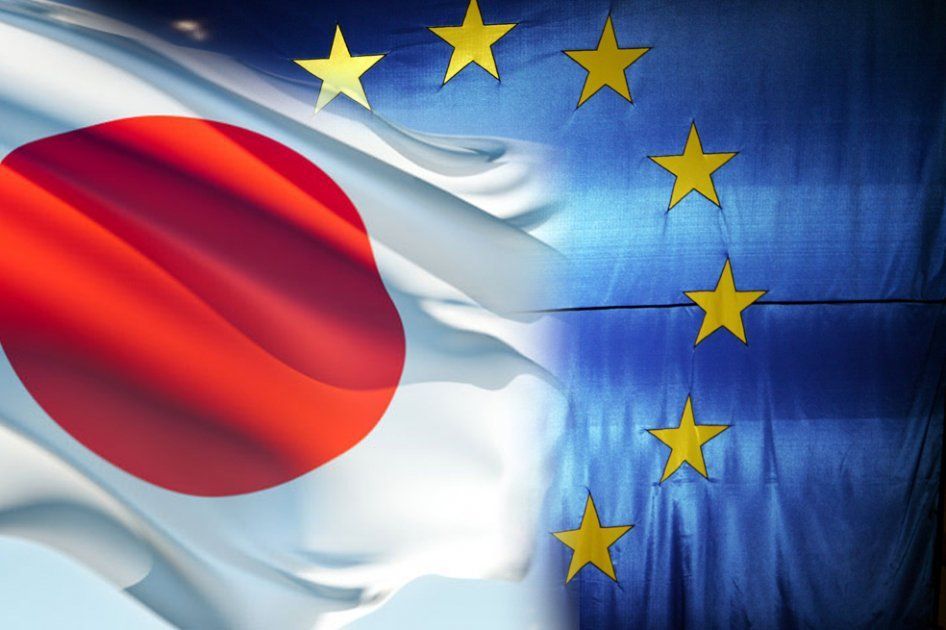
bandera UE-Japón

As frontrunners in hydrogen technology, the EU and Japan will work together for sustainable and affordable production, trade, transport, storage, distribution and use of renewable and low-carbon hydrogen.

The cooperation will help to establish a rules-based and transparent global hydrogen market without distortions to trade and investment. The Memorandum was signed in Tokyo by Commissioner for Energy Kadri Simson and Japanese Minister of Economy, Trade and Industry, Yasutoshi Nishimura.

Both parties have already committed to achieve climate neutrality by 2050 and to accelerate the clean energy transition, as outlined in the EU-Japan Green Alliance. Hydrogen can make a crucial contribution to both the green transition and energy security. The Memorandum identifies a set of areas in which governments, industrial players, research institutions and local authorities in the EU and Japan will be encouraged to cooperate, such as:

  • Policies, regulations, incentives and subsidies, including at the international level to work towards common standards and certification;
  • Best practices and lessons learnt in renewable and low-carbon hydrogen research, development, applications and demonstration projects;
  • Project development including in the context of multilateral cooperation initiatives, including with a view to supporting other countries around the world;
  • Education, upskilling, reskilling and vocational education and training, including via exchanges.
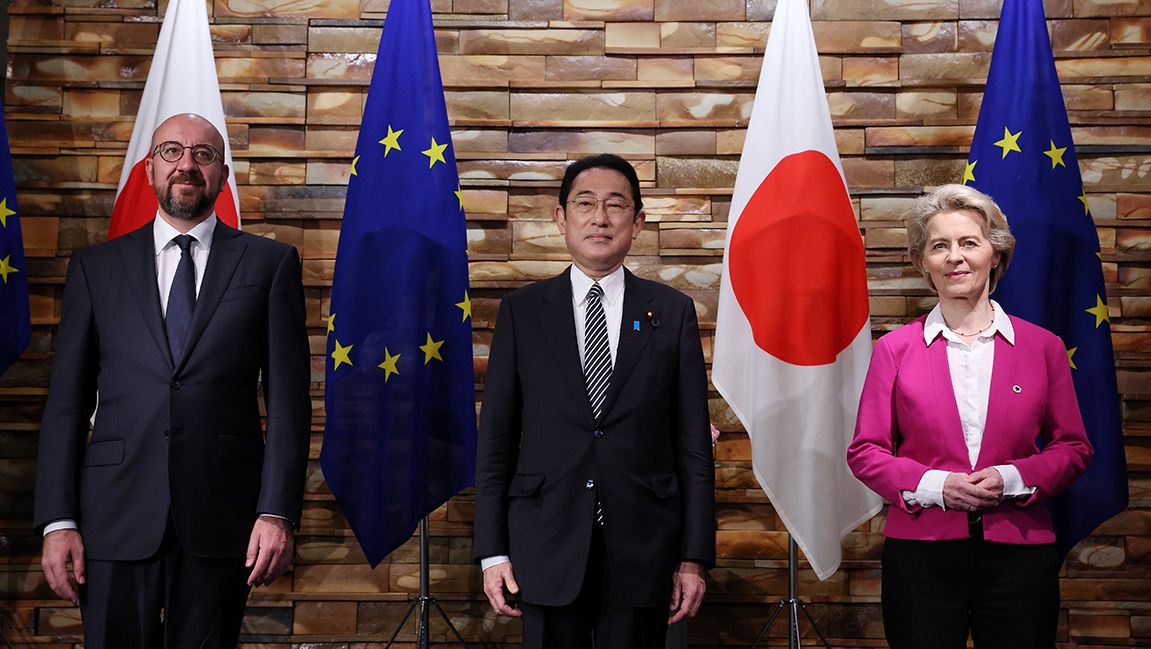
Deeper cooperation between EU and Japan is a vital necessity

Background

The EU and Japan have a well-developed energy dialogue which covers topics such as energy security, offshore wind energy, liquefied natural gas (LNG), electricity market design, energy technologies and nuclear energy. Both sides have set the long-term ambition of being climate-neutral by 2050, and closer cooperation on methane emissions is also under discussion. At the EU-Japan Summit in May 2021, a Green Alliance was established where hydrogen was highlighted as a key area of future cooperation.

Source: European Commission
Publicaciones relacionadas:

BSO – Tracking energy in our buildings La Comisión Europea aprueba la medida española y portuguesa para reducir el precio de la electricidadEnergy security in the EU In a first, the EU produced more energy from renewables than fossil fuels in 2020 Default ThumbnailJRC launches new tool to explore the future of European energy Simpler EU energy labels for lighting products

Energy,  Environmental Affairs,  EU News Cooperation,  Energy,  hydrogen,  Japan

“This is a space for debate. All comments, for or against publication, that are respectful and do not contain expressions that are discriminatory, defamatory or contrary to current legislation will be published”.

Reader Interactions

Leave a Reply Cancel reply

Your email address will not be published. Required fields are marked *

This site uses Akismet to reduce spam. Learn how your comment data is processed.

Primary Sidebar

Footer

  • CDE Almería
  • Biblioteca Nicolás Salmerón – Universidad de Almería
  • Planta: 1ª, Despacho: 1.05.0B.
  • Ctra. Sacramento s/n. Almería (Spain)
  • Teléfono: (+34) 950 015266

HOME
NEWS
DOCUMENTATION
EUROPE ON THE NET
ABOUT US

  • LEGAL NOTICE
  • PRIVACY POLICY
  • COOKIE POLICY
  • ACCESSIBILITY
  • SITEMAP

Copyright © 2026 CDE Almería · Creative Commons LicenseThis work is licensed under a Creative Commons Attribution-NonCommercial 4.0 International License.

<p>El Centro de Documentación Europea de la Universidad de Almería utiliza cookies propias y de terceros para facilitar al usuario la navegación en su página Web y el acceso a los distintos contenidos alojados en la misma. Asimismo, se utilizan cookies analíticas de terceros para medir la interacción de los usuarios con el sitio Web. Pinche el siguiente enlace si desea información sobre el uso de cookies y como deshabilitarlas. </p>

Politica de privacidad

El Centro de Documentación Europea de la Universidad de Almería utiliza cookies propias y de terceros para facilitar al usuario la navegación en su página Web y el acceso a los distintos contenidos alojados en la misma. Asimismo, se utilizan cookies analíticas de terceros para medir la interacción de los usuarios con el sitio Web. Pinche el siguiente enlace si desea información sobre el uso de cookies y como deshabilitarlas. <a href="/politica-de-cookies" rel="noopener" target="_blank">Más información</a>

Cookies estrictamente necesarias

Las cookies estrictamente necesarias tiene que activarse siempre para que podamos guardar tus preferencias de ajustes de cookies.

Básicamente la web no funcionara bien si no las activas.

Estas cookies son:

  • Comprobación de inicio de sesión.
  • Cookies de seguridad.
  • Aceptación/rechazo previo de cookies.
Cookies de terceros

Esta web utiliza Google Analytics, Google Tag Manager y Yandex Metrika para recopilar información anónima tal como el número de visitantes del sitio, o las páginas más populares.

Dejar estas cookies activas nos permite mejorar nuestra web.

Política de cookies

Pinche el siguiente enlace si desea información sobre el uso de cookies y como deshabilitarlas. Más información