
Against the backdrop of ongoing farmers’ protests and based on information from the Belgian presidency and a non-paper on simplification prepared by the European Commission, agriculture ministers discussed the current crisis and challenges in the sector.

The Council confirmed its political will to respond effectively to the concerns of farmers and, as a first step, agreed on a set of concrete measures that should be a priority for the short-term response to the current crisis, and offered political guidance for the way forward and for a structural approach in the medium and long term.
Ministers took note that the European Council, in its conclusions on 1 February 2024, recalled the essential role of the Common Agricultural Policy (CAP) in addressing the concerns expressed by farmers, and mandated the Council and the Commission to take work forward.
During its meeting, the Council welcomed recent decisions announced by the Commission in this context, such as the partial exemption from rules on land lying fallow, the so-called good agricultural and environmental condition standard 8 (GAEC 8), the withdrawal of the proposal for a regulation on the sustainable use of pesticides (SUR), and the additional safeguards in the proposed renewal of the autonomous trade measures for imports from Ukraine.
As part of their exchange of views the Council discussed thes hort-term measures aimed at simplification and reducing the administrative burden farmers are facing and stressed that the EU should react to the farmers’ concerns.
The Council based this discussion on suggestions made by member states ahead of today’s meeting, as well as on a document containing simplification measures transmitted by the Commission.
The short-term actions proposed by the Commission and endorsed by the Council today take into account contributions made by EU farming organisations, as well as input from the agricultural committee of the European Parliament.
They focus on reducing the administrative burden and red tape for farmers and national administrations alike.
One of the actions the Council agreed on regards changes to the rules on the GAEC 1 standard, which imposes a requirement to keep areas of permanent grassland stable compared to the reference year 2018.
Under GAEC 1, former livestock farmers with large areas of grassland who had been forced by market disturbances in the meat and dairy sector to shift to arable crop production could be asked to reconvert their arable land into permanent grassland. This could lead to a loss of income for those farmers. Therefore, the Council welcomed the proposal by the Commission to amend the GAEC 1 rules by mid-March to ensure that structural changes caused by a reduction in livestock are taken into account and that farmers without livestock are not obliged to reconvert arable land to pasture or grassland.
As far as GAEC 6 is concerned, the Council invited the Commission to review the practices that are possible to cover soils, in order to take into account regional characteristics, so that farmers can benefit from increased flexibility. The Commission will review this possibility and submit guidelines in April.
Another measure welcomed by ministers is the upcoming review by the Commission of the methodology for assessing the quality of the Area Monitoring System (AMS). The AMS is a system based on the automated analysis of satellite imagery from Copernicus. This revision, due in March 2024, will significantly help reduce the number of on-farm visits by national administrations, in some cases by 50% or more.
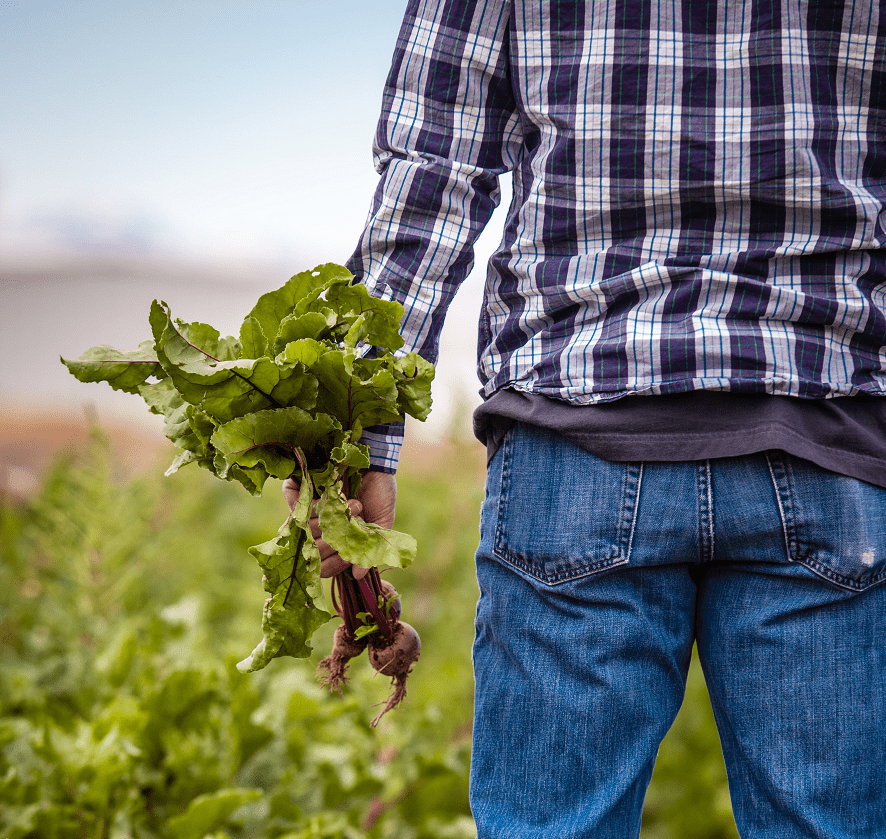
The European Commission presents options for simplification to reduce the burden for EU farmers |
Additionally, the Council welcomed the fact that the Commission will publish an explanatory note to explain and clarify the use of the so-called force majeure or exceptional circumstances concept.
This concept ensures that farmers who cannot fulfil all their CAP requirements due to exceptional and unforeseeable events outside of their control (such as in cases of severe droughts or floods) do not have penalties imposed on them. The publication of this note was well-received by agriculture ministers, who had previously stressed the importance of improving communication with farmers and ensuring that they have adequate information about CAP support.
As requested by member states, the Commission committed to work together with them in order to determine possible ways of rationalising controls, with the goal of reducing administrative burden for farmers.
The Council also welcomed the upcoming survey addressed at farmers that the Commission will launch in March, in order to ensure farmers’ voices are heard. Agriculture ministers highlighted the importance of this process, aimed at identifying the main sources of concern for farmers and understanding which elements stemming from CAP rules lead to greater administrative burden. The results of the survey, along with a detailed analysis, are due to be published by the Commission in the autumn of 2024.
Furthermore, the Council agreed that the process of amending CAP strategic plans should be simplified. To this end, the Commission committed to work together with member states to help them simplify their interventions and facilitate amendments to the strategic plans.
Aside from these short-term actions aimed at simplifying the day-to-day life of farmers and reducing the administrative burden for farmers and national administrations alike, ministers stressed that a long-term approach is also necessary. The Council therefore insisted to examine ways of improving the situation of farmers in the mid- to long-term, including their position in the food supply chain.
The Council also insisted that a review of the basic acts of the Common Agricultural Policy is necessary. This review should be initiated as soon as possible.
In this regard, the Council stressed its determination and political will to give an effective response to the concerns raised by farmers.
With this overarching goal in mind, agriculture ministers provided political guidance on improving the role of farmers as guarantors of our food security, while ensuring that our environmental sustainability commitments are respected. This would require targeted modifications of the CAP basic acts, ensuring balance in the effects of trade agreements and helping Ukrainian agricultural exports to reach their traditional markets.
The Council invited the Special Committee on Agriculture to continue to examine the suggestions and proposals discussed by ministers, in line with the political guidance provided by ministers, and to report back to the Council.
In parallel, the strategic dialogue on the future of agriculture launched by the Commission will continue to run, to identify ways of improving the CAP in the long-term. The presidency stressed the importance of ensuring member states’ voices are heard in this process.
Finally, the presidency concluded that it would report the outcome of the Council meeting to the European Council.
More information: EU Council
Publicaciones relacionadas:
 Needs of farmers and agri-food companies are significant, also in light of the COVID-19 crisis
 The Commission proposes to mobilise additional EU funding for EU farmers impacted by adverse climatic events
 Informal ministerial meeting on agriculture 3 – 5 September 2023
 Meet the winners of the second edition of the EU Organic Awards
 The Spanish presidency wants to promote the extension of the PRIMA program for scientific cooperation in the Mediterranean
Leave a Reply