• Skip to primary navigation
  • Skip to main content
  • Skip to primary sidebar
  • Skip to footer
  • Bluesky
  • Facebook
  • Instagram
  • Twitter
  • YouTube
CDE Almería – Centro de Documentación Europea – Universidad de Almería

CDE Almería - Centro de Documentación Europea - Universidad de Almería

Centro de Documentación Europea de la Universidad de Almería

  • HOME
  • WHAT´S ON
    • EU NEWS
    • Activities
    • EU Calls and Awards
    • Radio Program «Europe with You»
  • DOCUMENTATION
    • EU Media Collection
      • Web Space
      • MEDIATHEQUE REPOSITORY
  • Europe on the net
    • Institutions
    • EU Representation in Spain
    • European information network of Andalusia
  • ABOUT US
    • Presentation
    • Services
    • People
    • Contact
  • Spanish
  • English

Deal on boosting the production of ammunition and missiles in the EU

Inicio » EU News » Defence & Security » International Safety and Defence Politics » Deal on boosting the production of ammunition and missiles in the EU

7 de July de 2023

The Council presidency has reached a provisional agreement with the European Parliament representatives on the Act in Support of Ammunition Production (ASAP).
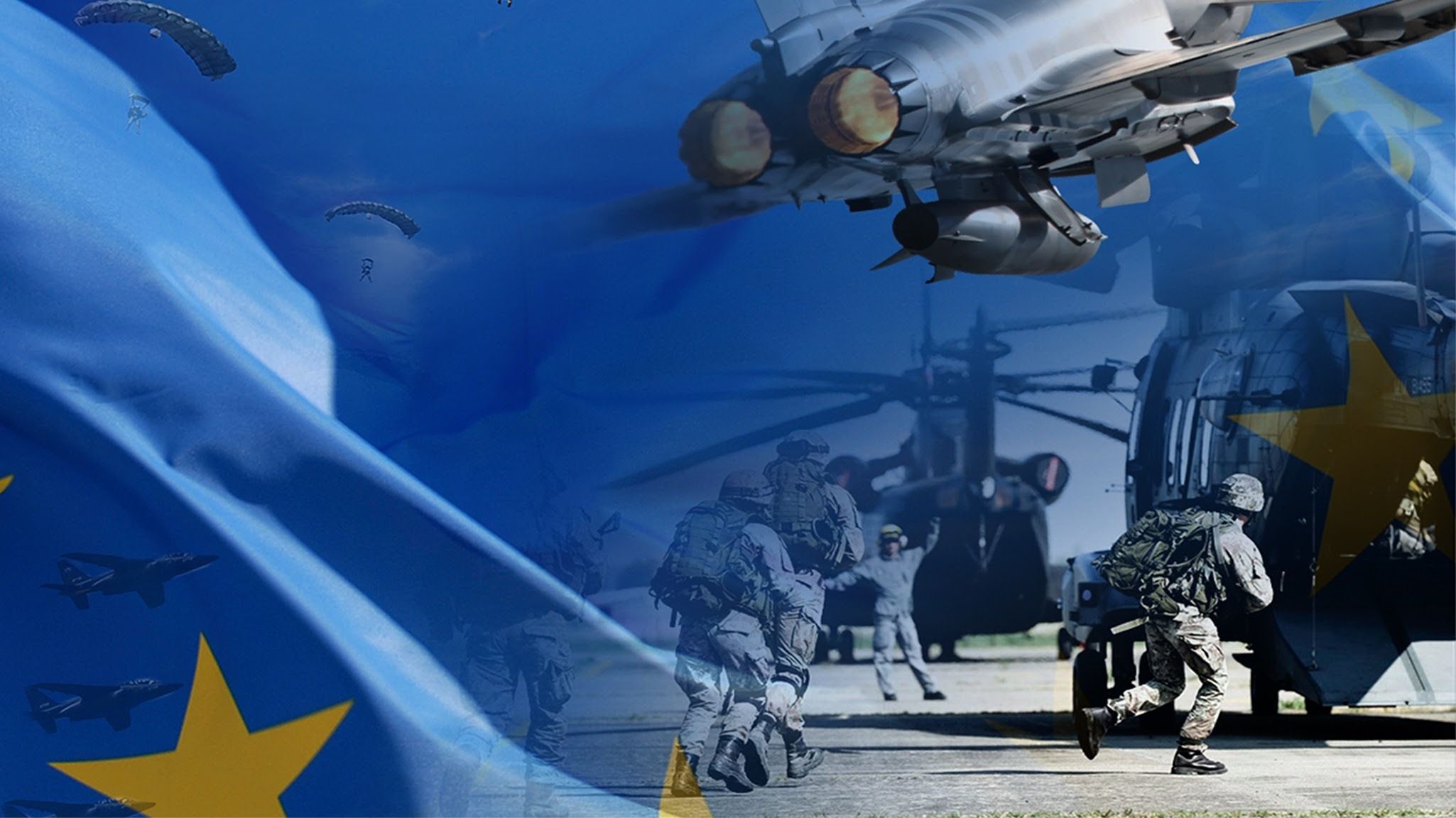
defensa UE

The agreed regulation will urgently mobilise €500 million from the EU budget (in current prices) to support the ramp-up of the manufacturing capacities for the production of ground-to-ground and artillery ammunition as well as missiles.

In doing so, it will implement the third track of the plan agreed by the Council in March 2023 to secure the long-term increase in European ammunition production to the benefit of Ukraine and EU member states.

The agreed rules introduce an ‘Instrument’ through which the EU will financially support the reinforcement of the EU industrial production capacities for ammunition and missiles throughout the supply and value chains. Such financial support will be provided in the form of grants to various types of actions contributing to the efforts of the European defence industry to increase their production capacities, and tackle identified bottlenecks.

Furthermore, the new rules will facilitate access to finance for EU companies in the ammunition and missile field, potentially through the so-called ‘Ramp-up Fund’. This fund is intended to make it easier for companies manufacturing ammunition and missiles across the value chain to access both public and private financing, to speed up investments needed to increase manufacturing capacities.
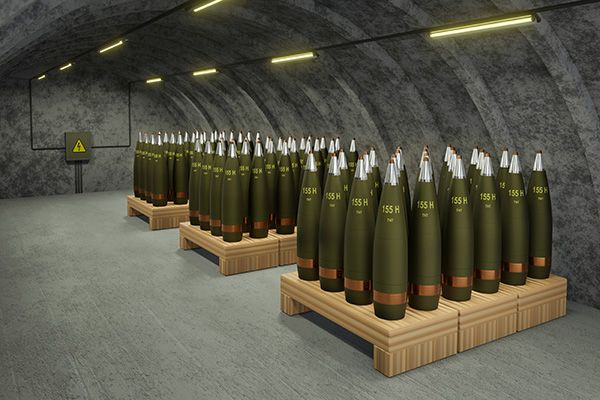
 

The European Commission has adopted the Act in Support of Ammunition Production

Next steps

The provisional agreement must now be endorsed by the Council and the Parliament. It will then be formally adopted by both institutions following legal-linguistic revision. Signature and entry into force is foreseen to take place before the end of July.

Background

The 2022 Joint Communication on Defence Investment Gaps highlighted that continued underinvestment in defence has resulted in both capability and industrial gaps in the EU.

The Russian war of aggression against Ukraine has exposed the European defence and equipment market to even bigger challenges, as the EU and its member states have stepped up their efforts to meet Ukraine’s pressing defence needs.

On 20 March 2023, the Council agreed on a three-track approach, aiming to provide one million rounds of artillery ammunition for Ukraine in a joint effort within the next twelve months. It agreed to urgently deliver ground-to-ground and artillery ammunition to Ukraine and, if requested, missiles from existing stocks or the reprioritisation of existing orders (track one). It further called on member states to jointly procure ammunition and, if requested, missiles from the European defence industry and Norway; this would happen in the context of an existing project coordinated by the European Defence Agency or through complementary member state-led acquisition projects, in order to refill their stocks while continuing to support Ukraine (track two).

The Council also invited the Commission to present concrete proposals to urgently support the ramp-up of manufacturing capacities of the European defence industry, secure supply chains, facilitate efficient procurement procedures, address shortfalls in production capacities and promote investments, including, where appropriate, mobilising the Union budget (track three).

More information: Council of the EU

Publicaciones relacionadas:

EU maritime security: from strategy to action Feasibility of a future European army Foreign Affairs Council Main Results, 24 January 2022 EU ministers confirm unity in support for Ukraine Main results of the Foreign Affairs Council - 16 May 2022Main results of the Foreign Affairs Council – 16 May 2022

Defence & Security,  EU News,  International Safety and Defence Politics ASAP,  Council,  defence,  EU,  European Parliament,  missiles,  production of ammunition

“This is a space for debate. All comments, for or against publication, that are respectful and do not contain expressions that are discriminatory, defamatory or contrary to current legislation will be published”.

Reader Interactions

Leave a Reply Cancel reply

Your email address will not be published. Required fields are marked *

This site uses Akismet to reduce spam. Learn how your comment data is processed.

Primary Sidebar

Footer

  • CDE Almería
  • Biblioteca Nicolás Salmerón – Universidad de Almería
  • Planta: 1ª, Despacho: 1.05.0B.
  • Ctra. Sacramento s/n. Almería (Spain)
  • Teléfono: (+34) 950 015266

HOME
NEWS
DOCUMENTATION
EUROPE ON THE NET
ABOUT US

  • LEGAL NOTICE
  • PRIVACY POLICY
  • COOKIE POLICY
  • ACCESSIBILITY
  • SITEMAP

Copyright © 2026 CDE Almería · Creative Commons LicenseThis work is licensed under a Creative Commons Attribution-NonCommercial 4.0 International License.

<p>El Centro de Documentación Europea de la Universidad de Almería utiliza cookies propias y de terceros para facilitar al usuario la navegación en su página Web y el acceso a los distintos contenidos alojados en la misma. Asimismo, se utilizan cookies analíticas de terceros para medir la interacción de los usuarios con el sitio Web. Pinche el siguiente enlace si desea información sobre el uso de cookies y como deshabilitarlas. </p>

Politica de privacidad

El Centro de Documentación Europea de la Universidad de Almería utiliza cookies propias y de terceros para facilitar al usuario la navegación en su página Web y el acceso a los distintos contenidos alojados en la misma. Asimismo, se utilizan cookies analíticas de terceros para medir la interacción de los usuarios con el sitio Web. Pinche el siguiente enlace si desea información sobre el uso de cookies y como deshabilitarlas. <a href="/politica-de-cookies" rel="noopener" target="_blank">Más información</a>

Cookies estrictamente necesarias

Las cookies estrictamente necesarias tiene que activarse siempre para que podamos guardar tus preferencias de ajustes de cookies.

Básicamente la web no funcionara bien si no las activas.

Estas cookies son:

  • Comprobación de inicio de sesión.
  • Cookies de seguridad.
  • Aceptación/rechazo previo de cookies.
Cookies de terceros

Esta web utiliza Google Analytics, Google Tag Manager y Yandex Metrika para recopilar información anónima tal como el número de visitantes del sitio, o las páginas más populares.

Dejar estas cookies activas nos permite mejorar nuestra web.

Política de cookies

Pinche el siguiente enlace si desea información sobre el uso de cookies y como deshabilitarlas. Más información