• Skip to primary navigation
  • Skip to main content
  • Skip to primary sidebar
  • Skip to footer
  • Bluesky
  • Facebook
  • Instagram
  • Twitter
  • YouTube
CDE Almería – Centro de Documentación Europea – Universidad de Almería

CDE Almería - Centro de Documentación Europea - Universidad de Almería

Centro de Documentación Europea de la Universidad de Almería

  • HOME
  • WHAT´S ON
    • EU NEWS
    • Activities
    • EU Calls and Awards
    • Radio Program «Europe with You»
  • DOCUMENTATION
    • EU Media Collection
      • Web Space
      • MEDIATHEQUE REPOSITORY
  • Europe on the net
    • Institutions
    • EU Representation in Spain
    • European information network of Andalusia
  • ABOUT US
    • Presentation
    • Services
    • People
    • Contact
  • Spanish
  • English

Wildfires: EU provides crucial assistance to the Mediterranean region

Inicio » EU News » Environmental Affairs » Wildfires: EU provides crucial assistance to the Mediterranean region

27 de July de 2023

As several countries grapple with rapidly spreading wildfires, the EU steps in to reinforce firefighting efforts and provide much-needed support to the affected communities with over 490 firefighters and 9 firefighting planes deployed to Greece and Tunisia since 18 July.
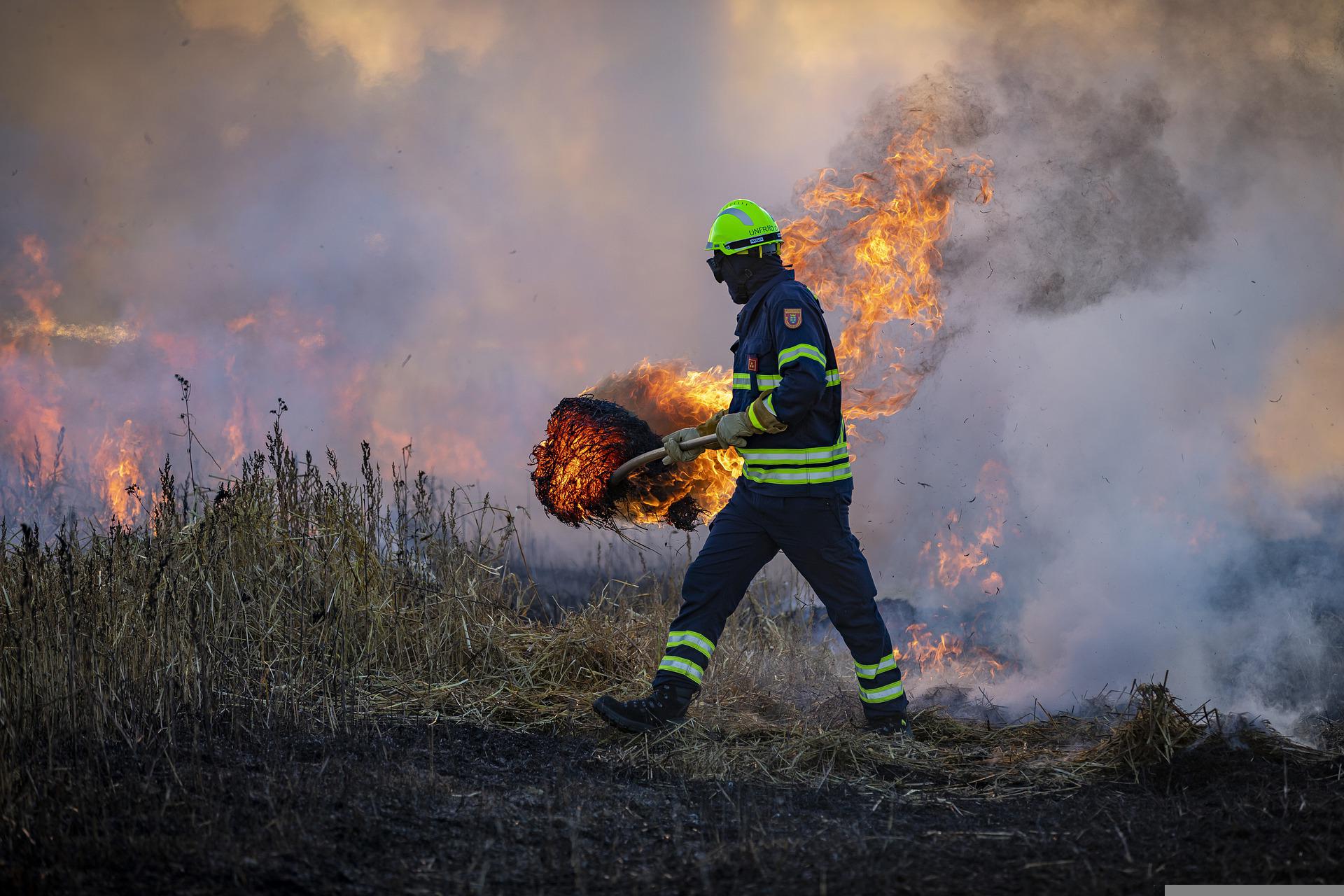
The two Mediterranean countries have activated the EU Civil Protection Mechanism and the EU has swiftly replied:

  • 10 countries (Bulgaria, Croatia, Cyprus, France, Italy, Malta, Poland, Romania, Slovakia and Serbia) are contributing to the EU Civil Protection Mechanism’s response to the wildfires in Greece. In total, over 490 firefighters and 7 planes have been deployed to different areas of the country. One EU Liaison Officer is supporting the coordination of operations in Greece and the EU’s Copernicus satellite mapping is providing damage assessment on several areas in the Attica region and Rhodes.
  • 2 Canadairs from the rescEU reserve hosted by Spain are being deployed to northwest Tunisia.

The wildfires, fuelled by dry weather conditions and high temperatures are posing a severe threat to lives, livelihoods, and ecosystems across the Mediterranean. In response, the EU Civil Protection Mechanism shows once again that it is a key instrument of solidarity and cooperation among EU Member States and beyond during emergencies.
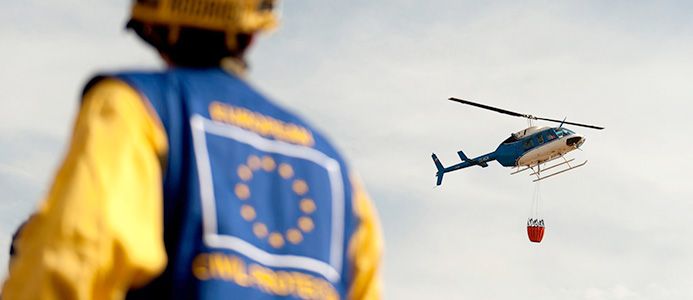
 

EU doubles rescEU firefighting fleet for summer 2023

The EU’s wildfire response

The rescEU transitional fleet includes: 10 medium amphibious aircraft (Canadair type), 14 lighter aircraft (air tractor/fireboss type) and 4 medium/heavy lift helicopters.

rescEU comes as a complement to the EU Civil Protection Pool, which counts today with 4 medium amphibious aircraft (Canadair type), 5 ground forest firefighting teams without vehicles and 7 with vehicles, and 2 assessment / advisory teams.

In addition, there are more than 400 prepositioned firefighters throughout the summer.

To be better prepared to support Member States this wildfire season, the EU has also reinforced its Emergency Response Coordination Centre with a dedicated Wildfire support team to monitor, anticipate and early act.

Member States can activate the EU Civil Protection Mechanism to request assistance for fighting forest fires. rescEU strengthens the EU’s Civil Protection response by having a reserve in place which is mobilised when no other national means are available.

Background

Wildfire prevention, preparedness and response actions work hand in hand to save lives, livelihoods and protect the environment. Having experienced wildfire experts, well-trained firefighters, information technology and sufficient response assets available makes a difference.

The EU ensures a coordinated approach to preventing, preparing and responding to wildfires when those overwhelm national response capacities. When the scale of a wildfire overwhelms the response capabilities of a country, it can request assistance via the EU Civil Protection Mechanism. Once activated, the EU’s Emergency Response Coordination Centre coordinates and finances assistance made available by EU Member States and nine additional Participating States through spontaneous offers. In addition, the EU has created the European Civil Protection Pool to have a critical number of readily available civil protection capacities allowing for a stronger and coherent collective response. Should the emergency require additional, life-saving assistance, the rescEU firefighting reserve steps in to provide additional capacities to confront disasters in Europe. The Emergency Response Coordination Centre also monitors the evolution of wildfires with the support of early warning systems such as the European Forest Fire Information System, while the EU’s Copernicus emergency satellite mapping service complements operations with detailed information from space.

More information: European Commission
Publicaciones relacionadas:

How the EU is preparing for the 2023 wildfire season campo con generadores eólicosEU agrees stronger rules to boost energy efficiency 10th EU-US Energy Council vista de la copa de unos árboles desde el sueloEU, Latin America and Caribbean step up cooperation on environment 15 EU-funded projects showcase renewable fuel technologies

Environmental Affairs,  EU News EU,  European Union,  Mediterranean region,  wildfire

“This is a space for debate. All comments, for or against publication, that are respectful and do not contain expressions that are discriminatory, defamatory or contrary to current legislation will be published”.

Reader Interactions

Leave a Reply Cancel reply

Your email address will not be published. Required fields are marked *

This site uses Akismet to reduce spam. Learn how your comment data is processed.

Primary Sidebar

Footer

  • CDE Almería
  • Biblioteca Nicolás Salmerón – Universidad de Almería
  • Planta: 1ª, Despacho: 1.05.0B.
  • Ctra. Sacramento s/n. Almería (Spain)
  • Teléfono: (+34) 950 015266

HOME
NEWS
DOCUMENTATION
EUROPE ON THE NET
ABOUT US

  • LEGAL NOTICE
  • PRIVACY POLICY
  • COOKIE POLICY
  • ACCESSIBILITY
  • SITEMAP

Copyright © 2026 CDE Almería · Creative Commons LicenseThis work is licensed under a Creative Commons Attribution-NonCommercial 4.0 International License.

<p>El Centro de Documentación Europea de la Universidad de Almería utiliza cookies propias y de terceros para facilitar al usuario la navegación en su página Web y el acceso a los distintos contenidos alojados en la misma. Asimismo, se utilizan cookies analíticas de terceros para medir la interacción de los usuarios con el sitio Web. Pinche el siguiente enlace si desea información sobre el uso de cookies y como deshabilitarlas. </p>

Politica de privacidad

El Centro de Documentación Europea de la Universidad de Almería utiliza cookies propias y de terceros para facilitar al usuario la navegación en su página Web y el acceso a los distintos contenidos alojados en la misma. Asimismo, se utilizan cookies analíticas de terceros para medir la interacción de los usuarios con el sitio Web. Pinche el siguiente enlace si desea información sobre el uso de cookies y como deshabilitarlas. <a href="/politica-de-cookies" rel="noopener" target="_blank">Más información</a>

Cookies estrictamente necesarias

Las cookies estrictamente necesarias tiene que activarse siempre para que podamos guardar tus preferencias de ajustes de cookies.

Básicamente la web no funcionara bien si no las activas.

Estas cookies son:

  • Comprobación de inicio de sesión.
  • Cookies de seguridad.
  • Aceptación/rechazo previo de cookies.
Cookies de terceros

Esta web utiliza Google Analytics, Google Tag Manager y Yandex Metrika para recopilar información anónima tal como el número de visitantes del sitio, o las páginas más populares.

Dejar estas cookies activas nos permite mejorar nuestra web.

Política de cookies

Pinche el siguiente enlace si desea información sobre el uso de cookies y como deshabilitarlas. Más información