
Ministers held an exchange of views on the state of play of security of supply and preparations for winter 2024-2025. Among other things, they addressed ways to avoid, both individually and collectively, new price shocks and to strengthen energy security, while achieving the established targets on decarbonisation and on phasing out Russian fossil fuels.
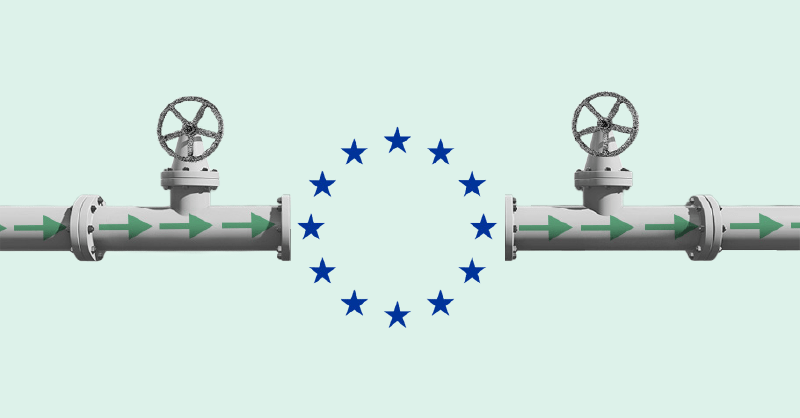
Different member states insisted that interconnections and well interconnected energy networks were an essential building block to ensure security of supply during the crisis and will be even more so in the years to come. In that respect, many insisted on the need to allocate sufficient resources to ensure the development of cross-border energy networks.
Many ministers called for phasing out the import of Russian gas, the diversification of supply routes, increasing energy efficiency, continuing sobriety efforts and speeding up electrification as important ways of increasing resilience and ensuring security of supply.
In that context, they reached a political agreement on Council recommendation on continuing coordinated demand-reduction measures for gas. This non-binding instrument encourages member states to continue their efforts of reducing their gas demand by 15% (compared to the reference period of 1 April 2017 to 31 March 2022), while acknowledging specific circumstances.
Flexibility as a tool for energy transition
Ministers also had an exchange of views on flexibility as an essential tool for energy transition and to allow the decoupling of Russian fossil fuels.
They identified the most important bottlenecks in terms of leveraging flexibility, as well as possible incentives through support schemes. They discussed technical, regulatory and economic barriers to unlocking flexibility at the level of individual household consumers.
EU leads global initiative at COP28 to triple renewable energy capacity and double energy efficiency measures |
Furthermore, they identified electrification of industries and cross-border interconnection as large-scale means of flexibility. To conclude, they also exchanged views on any possible changes to national tariff systems for transmission and distribution grid operators, following the recent electricity market reform, as a way to incentivise flexibility.
Solar power sector in Europe
Over lunch, ministers discussed the state of the solar power sector in Europe. They discussed the important contribution that solar photovoltaics can bring to the decoupling of Russian fossil fuels by 2027 (under the REPowerEU plan, it is expected that it could replace 9bcm of gas).
Ministers took well note of the explanations by the invited guests from Solar Power Europe and the European Solar Manufacturing Council. They commented the impressive acceleration that took place in the deployment of solar photovoltaics all over Europe, while also taking note that the Commission considers that more needs to be done.
Ministers also broadly supported the development and implementation of actions to support and scale up the European solar manufacturing, inter alia through a focus on innovation and targeted auctions, while many warned against restrictive measures on solar imports.
Other business
Under any other business, the Commission informed ministers about the progress made by member states with a view to achieving the 2030 objectives for energy and climate.
Ministers were also informed about the energy situation in Ukraine by Ukrainian Energy Minister German Galushchenko (via VTC).
The Lithuanian delegation called on the European Commission to explore any urgent action and put forward the necessary legislative proposals to enforce the deadline of 1 January 2027 at the latest for phasing out gas imports, including LNG from Russia, while insisting that such legislation should empower member states to take the necessary measures at national level to meet such a deadline.
The Austrian, Czech, Hungarian and Slovakian energy ministers provided information about the impacts of the gas storage neutrality charge and the need for better coordination at European level.
The Council also adopted without discussion the items on the lists of legislative and non-legislative A items.
More information: Council of the EU

Leave a Reply