
In the last decades, the expansion of human activities into the marine environment has caused the introduction of artificial sounds which interfere with the acoustic conditions of the environment. The maritime traffic of the Cartagena Port (Murcia, Spain) has exponentially increased in recent years, and it has become the main source of continuous noise in the local marine environment, being identified as an underwater noise pollution area in the Marine Strategy of the Levantine-Balearic Demarcation.
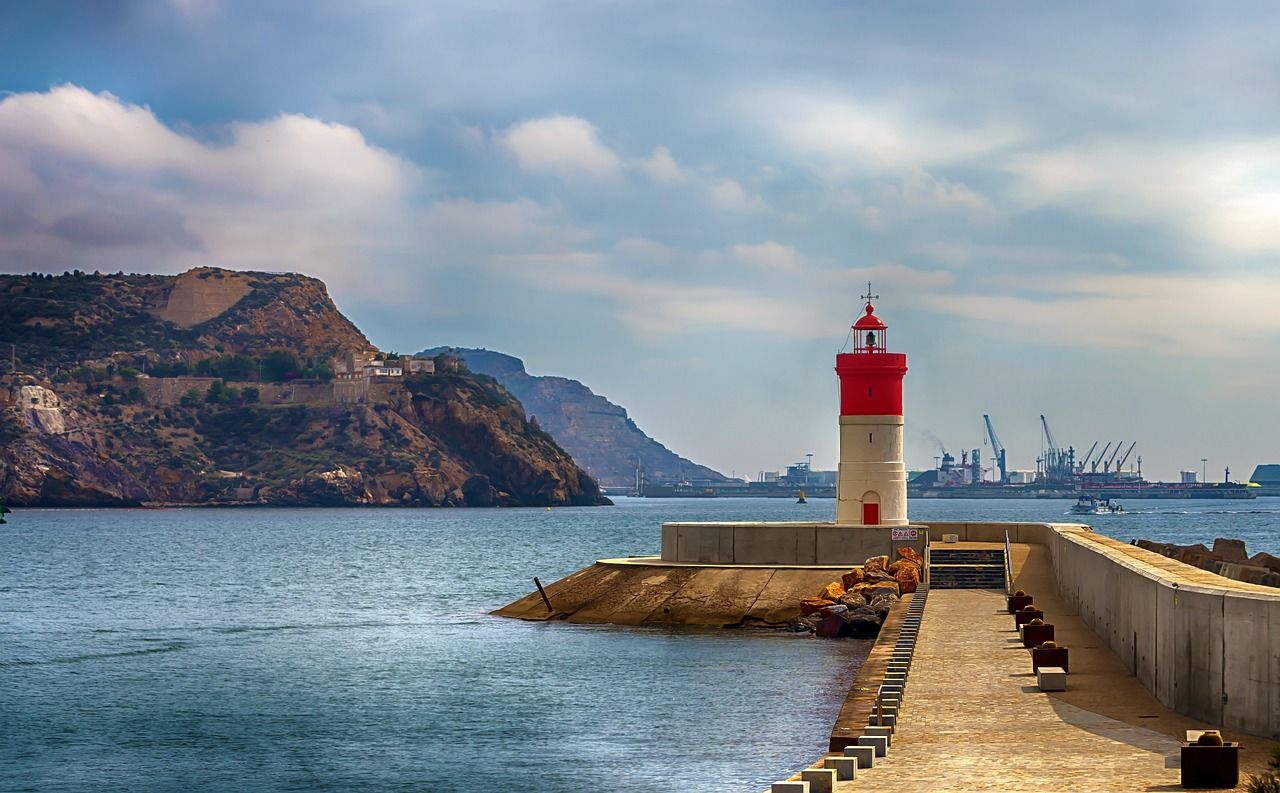
All this maritime traffic produces underwater noise with the potential to cause negative impacts on marine life. In addition, part of this shipping traffic crosses a Special Area of Conservation ¨Underwater valleys of the Mazarrón scarp” (SAC ES6200048), covering a total area of 154 082 ha, with corresponding disturbance to protected habitats (sandbanks, reefs and Posidonia meadows) and species, such as the bottlenose dolphin (Tursiops truncatus), included in Annex II of the Habitats Directive.
The effect of noise pollution on the marine ecosystem has direct repercussions on different groups of animals, but especially on those, like cetaceans, which use sound to communicate with each other, to explore their path, and even to catch their prey. Therefore, anthropogenic sounds, such as those generated by maritime traffic, has the potential to mask biological signals and to cause behavioural reactions, physiological effects, injuries and even mortality in marine fauna.
OBJECTIVES
The main objective of the LIFE PortSounds project is to reduce the impact of underwater noise on the marine environment of the Port of Cartagena.
To achieve this aim, the project has the following specific objectives:
- Identification and characterisation of underwater noise sources;
- Mapping and assessment of the influence of marine traffic;
- Mapping and assessment of the impact of underwater noise on biodiversity, by monitoring the abundance, distribution and physiological state of three cetacean species, bottlenose dolphin (Tursiops truncates), striped dolphin (Stenella coeruleoalba) and long-finned pilot whale (Globicephala melas), catalogued as species of Community interest in the annexes of the EU Habitats Directive;
- Development and implementation of noise mitigation measures;
- Development of a noise management tool (Decision Support System, DSS);
- Creation of governance mechanisms (technical working group) to agree and assess the mitigation measures needed to prevent the impact of underwater noise in marine ecosystems; and
- Assessment of the feasibility and transfer potential of applying the project’s mitigation measures and the noise management tool to other Port Authorities.
The project will contribute to the implementation of the EU Marine Strategy Framework Directive (MSFD) (2008/56/EC) and the development of a programme of measures under the second cycle of Marine Strategies. Regarding biodiversity conservation, the project will improve data collection and provide indicators of the status of cetacean reference species in the marine protected area (MPA).
Fit for 55: deal on new EU rules for cleaner maritime fuels |
RESULTS
Expected results:
- Establishment of the primary criteria for anthropogenic continuous sound of the MSFD by determining underwater noise levels in Cartagena´s Port and, at least, in 75% of the SAC (115 561 ha);
- Improvement of the conservation status of targeted cetacean species in the SAC;
- Increase of 5% in the area of occupancy of cetacean populations at the end of the project and 10% five years after the end of the project;
- Increased density of the populations (Tursiops truncates 0.04 to 0.045 ind/km2; Globicephala melas0.037 to 0.04 ind/km2; Stenellacoeruleoalba 0.22 to 0.24 ind/km2) at the end of the project, and 8-9% five years after the end of the project;
- Increased reproductive rates, by 5-7% at the end of the project and 15% five years after the end of the project;
- Reduction of levels of corticosteroids (stress) hormones in cetaceans in the Impact Zones similar to levels of the Conservation Zone;
- Management tool for monitoring of underwater noise that provides continuous near real-time data through fixed hydrophones, and data used to generate predictive scenarios associated with different traffic intensities;
- Definition of implementation measures to ensure that continuous noise level could be reduced by 5% in 2030 with respect to present levels;
- Reduction of between 5 and 10 dB of SPL (Sound Pressure Level) by reducing the average speed of large ships from 20 to 10 knots and reducing average continuous noise to levels within the 1/3 octave bands 63 and 125 Hz, to a level that does not produce any impact in the three cetacean species (< 120 dB re 1μPa);
- Application of 2-4 mitigation measures by at least a 10% of the total port traffic per year (about 200 boats);
- Reduction of 105.3 tons of C02 (8.8% change) due to speed limitation by 10% of port traffic, with a similar expected reduction of 8.8% in SOx (1.38 tons) and NOx emission;
- A feasibility study for the wider application of the tool in another 3-5 Port Authorities, and replication of underwater noise mitigation measures by at least one Port Authority; and
- Generation of valuable knowledge on the characteristics, intensity and spatial distribution of underwater noise and its impacts on marine wildlife.
More information: European Commission




Leave a Reply