• Skip to primary navigation
  • Skip to main content
  • Skip to primary sidebar
  • Skip to footer
  • Bluesky
  • Facebook
  • Instagram
  • Twitter
  • YouTube
CDE Almería – Centro de Documentación Europea – Universidad de Almería

CDE Almería - Centro de Documentación Europea - Universidad de Almería

Centro de Documentación Europea de la Universidad de Almería

  • HOME
  • WHAT´S ON
    • EU NEWS
    • Activities
    • EU Calls and Awards
    • Radio Program «Europe with You»
  • DOCUMENTATION
    • EU Media Collection
      • Web Space
      • MEDIATHEQUE REPOSITORY
  • Europe on the net
    • Institutions
    • EU Representation in Spain
    • European information network of Andalusia
  • ABOUT US
    • Presentation
    • Services
    • People
    • Contact
  • Spanish
  • English

The European Parliament begins its tenth term

Inicio » EU News » Institutional Affairs » The European Parliament begins its tenth term

16 de July de 2024

The European Parliament was officially constituted on Tuesday in Strasbourg, following the European elections on 6-9 June.
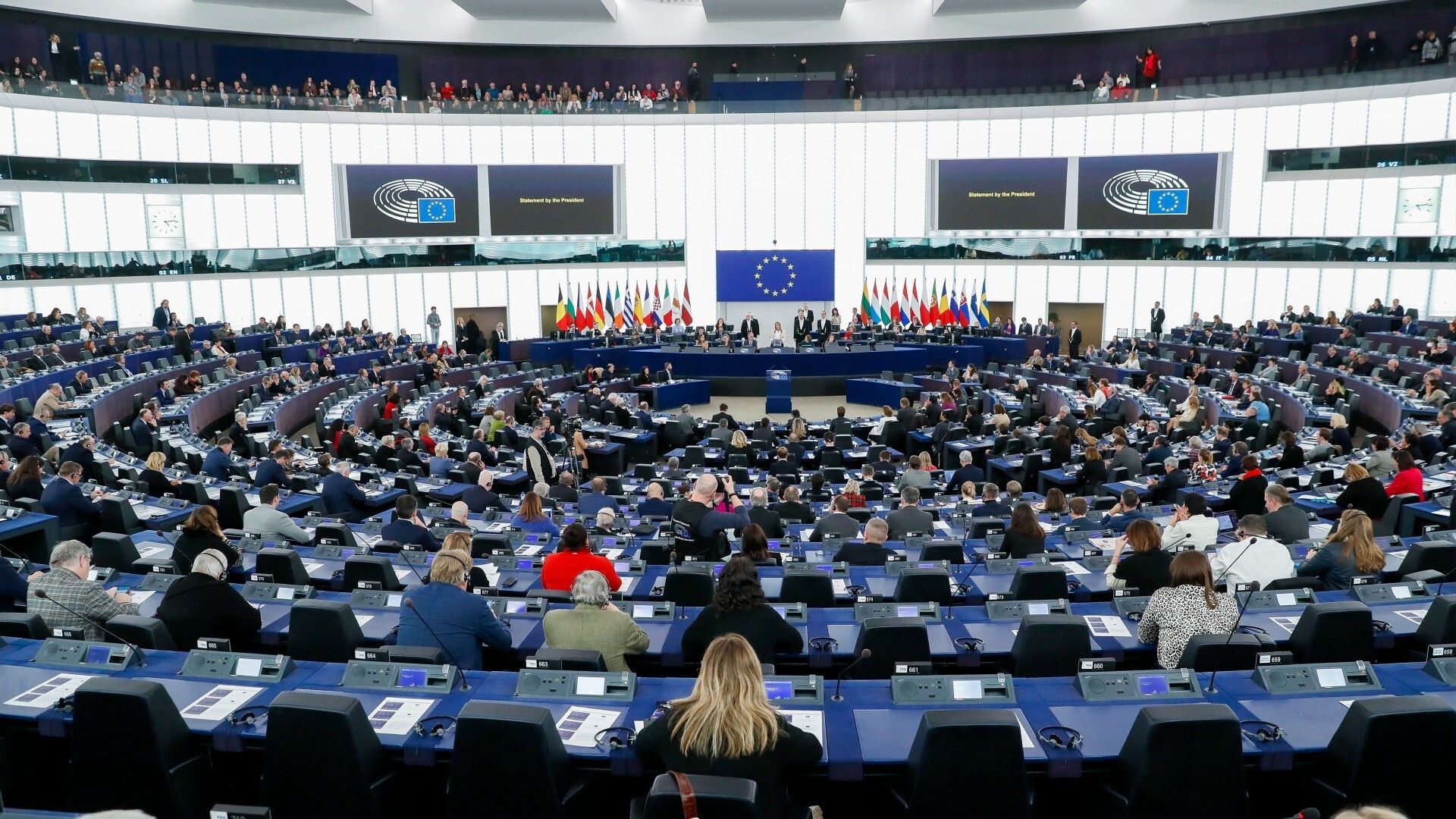
parlamento europeo

Roberta Metsola (EPP, MT), outgoing EP President, presided over the opening of the session. Following a musical interlude, Pina Picierno (S&D, IT), second Vice-President in the outgoing Parliament, announced the candidates for the Presidency of the Parliament. The vote, a secret paper ballot, is taking place immediately after the opening. Eight MEPs elected by lot will oversee the process.

The candidates are Roberta Metsola (EPP, MT) and Irene Montero (The Left, ES). Ahead of the vote, both delivered brief statements to plenary.

To be elected, a candidate needs an absolute majority of valid votes cast, i.e. 50% plus one. If no candidate is elected in the first round of voting, the same or other candidates can be nominated for a second round under the same conditions. A third round may take place if necessary, again with the same rules. If none of the candidates are elected in the third round of voting, the two candidates with the most votes in the third round would proceed to a fourth and final round of voting, in which the candidate receiving the most votes wins.

Once elected, the new President will take the chair and may deliver an opening address.

New MEP intake

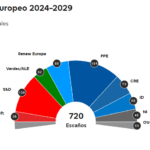
In its tenth term, the European Parliament will have 720 seats, 15 more than at the end of the previous legislature. 54% of MEPs are newly-elected (in 2019 the share of newcomers was 61%) and the share of women is 39% (it was 40% in 2019).

Lena Schilling (Greens/EFA) from Austria (23 years old) is the youngest MEP, while Leoluca Orlando (Greens/EFA) from Italy (77 years old) is the oldest. The average age of MEPs is 50.

At the beginning of the tenth term, there are eight political groups, one more than in the previous legislature. 33 MEPs remain non-attached.

Source: European Parliament

Publicaciones relacionadas:
European Parliament convenes grants to inform 2024 European elections votacionesEuropean Parliament calls for coordinated strategy to protect 2024 European elections against foreign interference European elections 2024: people eligible to vote Commission publishes guidelines for the mitigation of systemic risks online for elections Election 2024: Seat projection for new European Parliament

EU News,  Institutional Affairs European elections,  European Parliament,  New MEP intake

“This is a space for debate. All comments, for or against publication, that are respectful and do not contain expressions that are discriminatory, defamatory or contrary to current legislation will be published”.

Reader Interactions

Leave a Reply Cancel reply

Your email address will not be published. Required fields are marked *

This site uses Akismet to reduce spam. Learn how your comment data is processed.

Primary Sidebar

Footer

  • CDE Almería
  • Biblioteca Nicolás Salmerón – Universidad de Almería
  • Planta: 1ª, Despacho: 1.05.0B.
  • Ctra. Sacramento s/n. Almería (Spain)
  • Teléfono: (+34) 950 015266

HOME
NEWS
DOCUMENTATION
EUROPE ON THE NET
ABOUT US

  • LEGAL NOTICE
  • PRIVACY POLICY
  • COOKIE POLICY
  • ACCESSIBILITY
  • SITEMAP

Copyright © 2026 CDE Almería · Creative Commons LicenseThis work is licensed under a Creative Commons Attribution-NonCommercial 4.0 International License.

<p>El Centro de Documentación Europea de la Universidad de Almería utiliza cookies propias y de terceros para facilitar al usuario la navegación en su página Web y el acceso a los distintos contenidos alojados en la misma. Asimismo, se utilizan cookies analíticas de terceros para medir la interacción de los usuarios con el sitio Web. Pinche el siguiente enlace si desea información sobre el uso de cookies y como deshabilitarlas. </p>

Politica de privacidad

El Centro de Documentación Europea de la Universidad de Almería utiliza cookies propias y de terceros para facilitar al usuario la navegación en su página Web y el acceso a los distintos contenidos alojados en la misma. Asimismo, se utilizan cookies analíticas de terceros para medir la interacción de los usuarios con el sitio Web. Pinche el siguiente enlace si desea información sobre el uso de cookies y como deshabilitarlas. <a href="/politica-de-cookies" rel="noopener" target="_blank">Más información</a>

Cookies estrictamente necesarias

Las cookies estrictamente necesarias tiene que activarse siempre para que podamos guardar tus preferencias de ajustes de cookies.

Básicamente la web no funcionara bien si no las activas.

Estas cookies son:

  • Comprobación de inicio de sesión.
  • Cookies de seguridad.
  • Aceptación/rechazo previo de cookies.
Cookies de terceros

Esta web utiliza Google Analytics, Google Tag Manager y Yandex Metrika para recopilar información anónima tal como el número de visitantes del sitio, o las páginas más populares.

Dejar estas cookies activas nos permite mejorar nuestra web.

Política de cookies

Pinche el siguiente enlace si desea información sobre el uso de cookies y como deshabilitarlas. Más información