• Skip to primary navigation
  • Skip to main content
  • Skip to primary sidebar
  • Skip to footer
  • Bluesky
  • Facebook
  • Instagram
  • Twitter
  • YouTube
CDE Almería – Centro de Documentación Europea – Universidad de Almería

CDE Almería - Centro de Documentación Europea - Universidad de Almería

Centro de Documentación Europea de la Universidad de Almería

  • HOME
  • WHAT´S ON
    • EU NEWS
    • Activities
    • EU Calls and Awards
    • Radio Program «Europe with You»
  • DOCUMENTATION
    • EU Media Collection
      • Web Space
      • MEDIATHEQUE REPOSITORY
  • Europe on the net
    • Institutions
    • EU Representation in Spain
    • European information network of Andalusia
  • ABOUT US
    • Presentation
    • Services
    • People
    • Contact
  • Spanish
  • English

European elections 2024: people eligible to vote

Inicio » Noticias UE » Research and Innovation » European elections 2024: people eligible to vote

5 de April de 2024

The 2024 elections for the European Parliament are set for 6-9 June 2024. Eurostat has asked the National Statistical Institutes of the EU Member States for a dedicated data collection on the number of people eligible to vote.
 

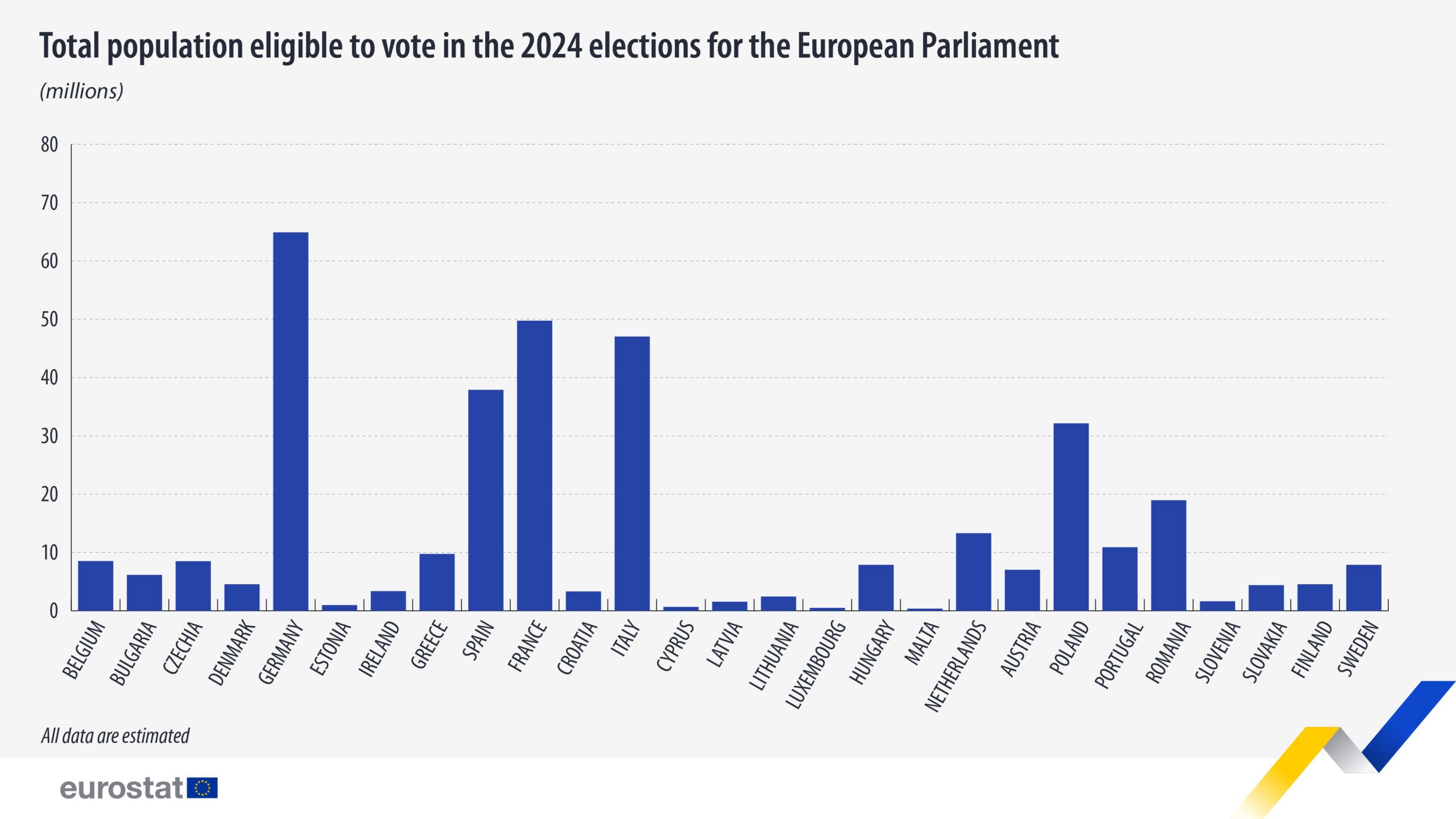
National estimates show that, on the election dates, the highest numbers of eligible voters are expected in Germany (64.9 million persons), France (49.7 million) and Italy (47 million).  The lowest numbers are expected in Malta (0.4 million), Luxembourg (0.5 million) and Cyprus (0.7 million).
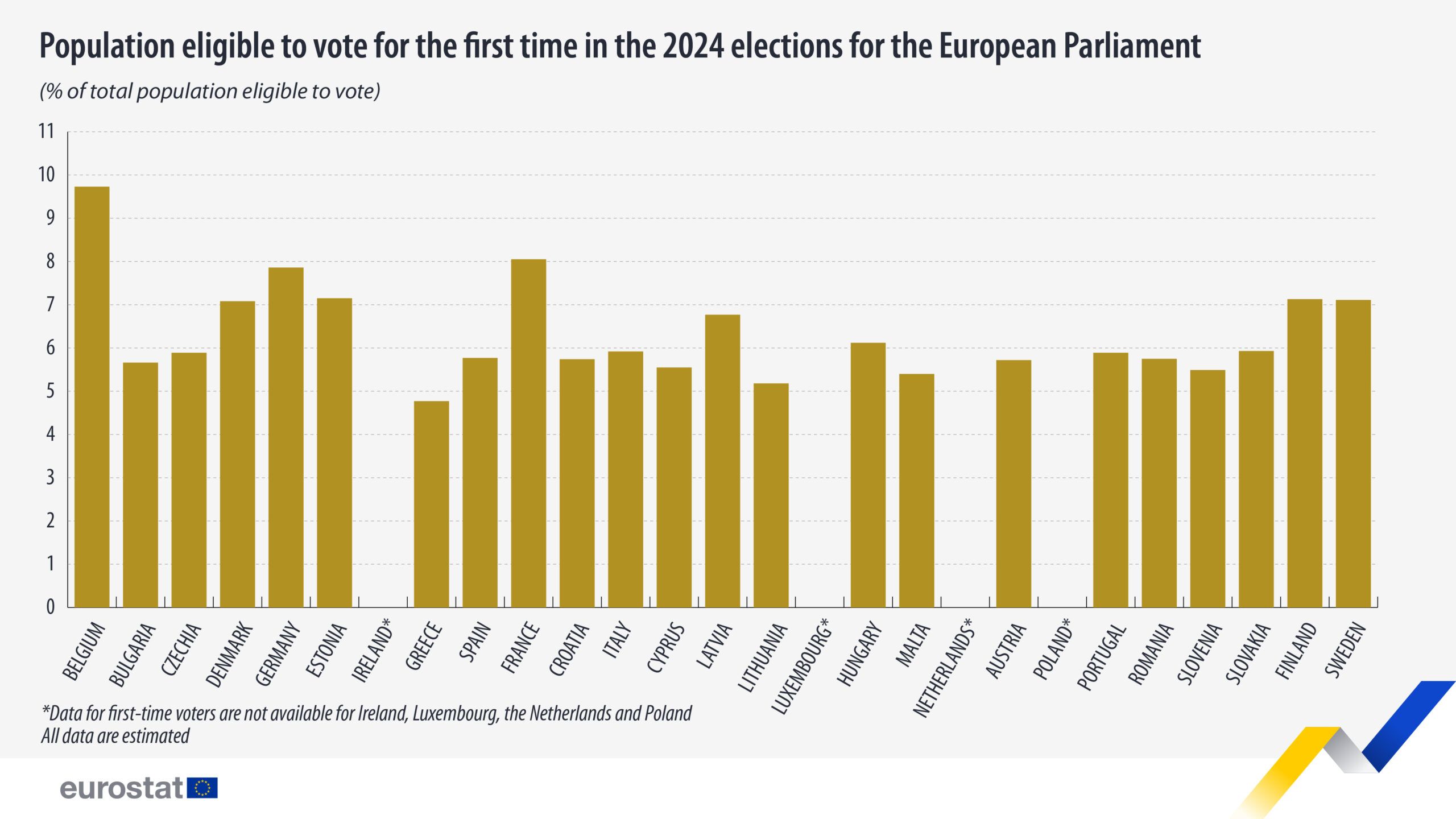
When it comes to first-time voters (persons who have reached voting age since the last European elections in 2019), the highest numbers are expected in Germany (5.1 million persons), France (4 million) and Italy (2.8 million). The lowest numbers are expected in Malta (20 000 persons), Cyprus (37 000) and Estonia (70 000). The highest shares of first-time voters are expected in Belgium, France and Germany with 9.7%, 8.0% and 7.9% of all eligible voters, respectively.
 

Five key aspects you should know about the European elections


More information: Eurostat

Publicaciones relacionadas:

Joint statement by the co-chairs of the EU-UK Joint Committee bandera Canadá EuropaEU and Canada launch formal negotiations for association to Horizon Europe data protectionMEPs back creation of an EU-wide digital purse logo presidencia consejo de la ue españaPresident von der Leyen and the College of Commissioners will participate in the inauguration of the Spanish Presidency of the Council of the EU in Madrid New Zealand joins Horizon Europe Research and Innovation Programme


EU News,  Institutional Affairs,  International Politics and Cooperation,  Research and Innovation,  State Members EU,  European elections,  European elections 2024,  European Parliament,  Eurostat,  National Statistical Institute,  vote

“This is a space for debate. All comments, for or against publication, that are respectful and do not contain expressions that are discriminatory, defamatory or contrary to current legislation will be published”.

Reader Interactions

Leave a Reply Cancel reply

Your email address will not be published. Required fields are marked *

This site uses Akismet to reduce spam. Learn how your comment data is processed.

Primary Sidebar

Footer

  • CDE Almería
  • Biblioteca Nicolás Salmerón – Universidad de Almería
  • Planta: 1ª, Despacho: 1.05.0B.
  • Ctra. Sacramento s/n. Almería (Spain)
  • Teléfono: (+34) 950 015266

HOME
NEWS
DOCUMENTATION
EUROPE ON THE NET
ABOUT US

  • LEGAL NOTICE
  • PRIVACY POLICY
  • COOKIE POLICY
  • ACCESSIBILITY
  • SITEMAP

Copyright © 2026 CDE Almería · Creative Commons LicenseThis work is licensed under a Creative Commons Attribution-NonCommercial 4.0 International License.

<p>El Centro de Documentación Europea de la Universidad de Almería utiliza cookies propias y de terceros para facilitar al usuario la navegación en su página Web y el acceso a los distintos contenidos alojados en la misma. Asimismo, se utilizan cookies analíticas de terceros para medir la interacción de los usuarios con el sitio Web. Pinche el siguiente enlace si desea información sobre el uso de cookies y como deshabilitarlas. </p>

Politica de privacidad

El Centro de Documentación Europea de la Universidad de Almería utiliza cookies propias y de terceros para facilitar al usuario la navegación en su página Web y el acceso a los distintos contenidos alojados en la misma. Asimismo, se utilizan cookies analíticas de terceros para medir la interacción de los usuarios con el sitio Web. Pinche el siguiente enlace si desea información sobre el uso de cookies y como deshabilitarlas. <a href="/politica-de-cookies" rel="noopener" target="_blank">Más información</a>

Cookies estrictamente necesarias

Las cookies estrictamente necesarias tiene que activarse siempre para que podamos guardar tus preferencias de ajustes de cookies.

Básicamente la web no funcionara bien si no las activas.

Estas cookies son:

  • Comprobación de inicio de sesión.
  • Cookies de seguridad.
  • Aceptación/rechazo previo de cookies.
Cookies de terceros

Esta web utiliza Google Analytics, Google Tag Manager y Yandex Metrika para recopilar información anónima tal como el número de visitantes del sitio, o las páginas más populares.

Dejar estas cookies activas nos permite mejorar nuestra web.

Política de cookies

Pinche el siguiente enlace si desea información sobre el uso de cookies y como deshabilitarlas. Más información