
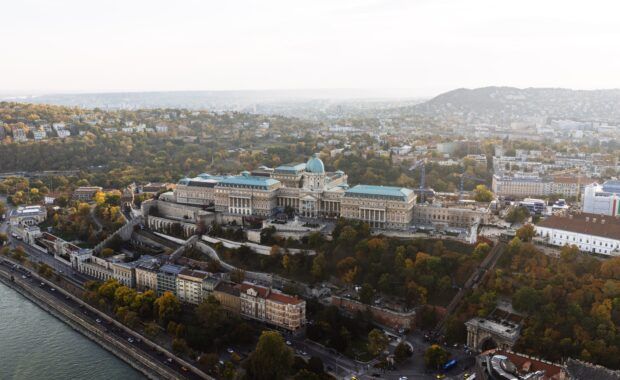
The European Institute of Innovation and Technology (EIT) has launched a call for applications for work placements aimed at recent graduates and young professionals. Trainees will provide support for the day-to-day operations of one of the EIT’s units in Budapest, where the EIT’s headquarters are located: Management and Administration; Innovation, Education and Communication; Knowledge and […]

Scholarships – Young Talent Programme
The LUX Audience Award Cinema Young Professionals programme offers 27 professionals under the age of 35 who work in cinemas the opportunity to attend training and networking events, and to promote the LUX Audience Award at national and European level. What is it? The fully funded programme will kick off in Strasbourg, France, between Monday […]

Internships – Training in people management and communication (ECB) – Germany
The European Central Bank is inviting applications for an internship to join the Communication and Staff Engagement team within the Human Resources Digitalisation and Labour Relations Division of the Directorate General for Human Resources. The Division is responsible for stakeholder and staff relations, staff communication and engagement, legal and data protection oversight, human resources systems […]
Internships – Facilities services, environmental management and internal communications (ECB) – Germany
The European Central Bank is inviting applications for an internship within the Administration Directorate, which forms part of the ECB’s Directorate General Corporate Services. This directorate comprises three divisions offering a wide range of services, including technical management of facilities and buildings, logistics and infrastructure services, as well as security services. It works to reduce […]

The European Parliament advocates protecting copyright and creators against AI
The use of copyright-protected works by artificial intelligence requires transparency and fair remuneration, according to Parliament. On Tuesday, the plenary approved a series of recommendations to protect creative work covered by copyright from use by artificial intelligence, with 460 votes in favour, 71 against and 88 abstentions. MEPs believe that EU copyright law should apply […]
Internships – Public Communications (BCE) – Germany
You will be part of the Public Communication Division of the Directorate General Communications. The Directorate has approximately 250 staff members responsible for communicating the ECB’s work and mission to the public and the media. It manages digital and public communication, as well as media relations, and also leads the ECB’s initiatives to interact effectively […]

Participation – Summer School for Journalists and Media Professionals – Italy
The Media, Pluralism and Press Freedom Centre’s summer school will provide 24 journalists and media professionals with the opportunity to learn about the future of the information sphere and journalistic intelligence. The summer school will take place from 15 to 19 June 2026 in Florence, Italy. The programme focuses on a fundamental question: Who is […]

Improving Europe’s responsiveness: preparing the European Critical Communication System
From terrorist attacks, border incidents and large-scale accidents to floods and fires: responding to cross-border emergencies requires agile and fluid teamwork and reliable communication. The European Union Critical Communications System (EUCCS) is a key initiative for achieving a safer and better-connected Europe in emergency situations. It will integrate the communication systems used by emergency services […]

Workshop for organisations and institutions “Integrity and trust: how to respond to disinformation”
Misinformation poses a growing risk to organisations and institutions, as it can affect both their work and the trust they have built with the communities they work with. In response to this challenge, the European Parliament is launching a practical course aimed at communication teams and professionals from organisations and institutions, taught by experts from […]