• Skip to primary navigation
  • Skip to main content
  • Skip to primary sidebar
  • Skip to footer
  • Bluesky
  • Facebook
  • Instagram
  • Twitter
  • YouTube
CDE Almería – Centro de Documentación Europea – Universidad de Almería

CDE Almería - Centro de Documentación Europea - Universidad de Almería

Centro de Documentación Europea de la Universidad de Almería

  • HOME
  • WHAT´S ON
    • EU NEWS
    • Activities
    • EU Calls and Awards
    • Radio Program «Europe with You»
  • DOCUMENTATION
    • EU Media Collection
      • Web Space
      • MEDIATHEQUE REPOSITORY
  • Europe on the net
    • Institutions
    • EU Representation in Spain
    • European information network of Andalusia
  • ABOUT US
    • Presentation
    • Services
    • People
    • Contact
  • Spanish
  • English

Is it in our DNA to be vegetarian? CORDIS answers

Inicio » Noticias UE » Research and Innovation » Is it in our DNA to be vegetarian? CORDIS answers

23 de October de 2023

The dietary choice to go vegetarian may be influenced by genes. Whether it’s for health, moral or religious reasons, Europeans are shifting away from traditional meat to plant-based alternatives. For many, that means adopting a vegetarian diet.
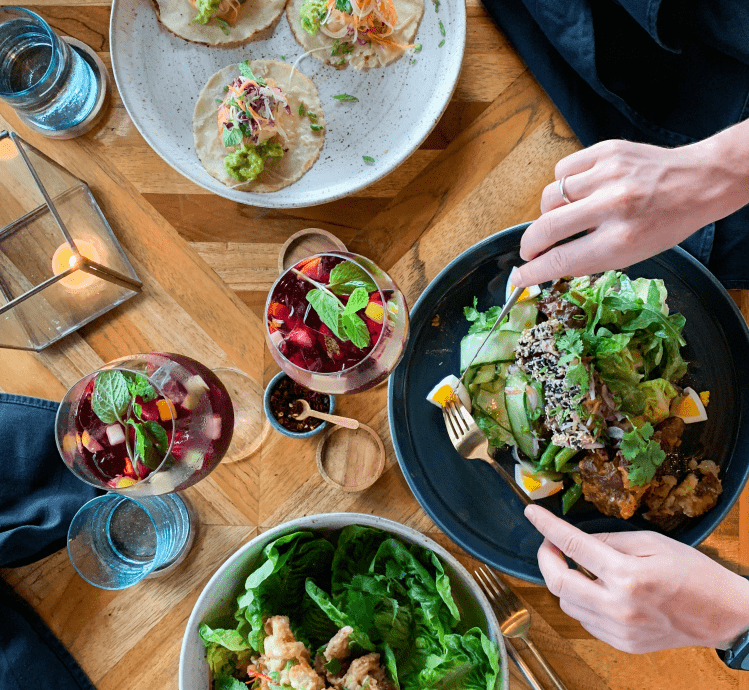
But it’s easier for some than others. Science may now know why we choose the food we put on our plates.

Going meatless

A study published in ‘PLoS ONE’ claims that we can blame our genes for not being able to stick to a vegetarian diet. “At this time we can say is [sic] that genetics plays a significant role in vegetarianism and that some people may be genetically better suited for a vegetarian diet than others,” lead author Dr Nabeel Yaseen, professor emeritus of pathology at Northwestern University in the United States that led the study, told ‘CNN’.

Researchers analysed and compared genetic data from about 5 300 vegetarians and 329 000 meat-eaters. They also used questionnaires that asked respondents to recount their food intake over the past year and over 24-hour periods. Vegetarians were defined as people who didn’t eat animal flesh or products derived from it. “A large proportion of self-described vegetarians actually report consuming meat products when responding to detailed questionnaires,” explained Dr Yaseen. “This suggests that many people who would like to be vegetarian are not able to do so, and our data suggest that genetics is at least part of the reason.”

The research team identified three genes that are associated with the choice of going vegetarian and sticking to it. These genes are found on a chromosome that includes genes involved in brain function and lipid metabolism – a complex process where fats are broken down to produce energy.

The study is the first ever to uncover a link between vegetarianism and genetics. “Are all humans capable of subsisting long term on a strict vegetarian diet? This is a question that has not been seriously studied,” commented Dr Yaseen in a Northwestern University news release. “It seems there are more people who would like to be vegetarian than actually are, and we think it’s because there is something hard-wired here that people may be missing.”

At what age are we happiest? CORDIS answers

Vegetarians and meat-eaters

Why do so many people still eat meat? “I think with meat, there’s something similar,” he added. “Perhaps you have a certain component — I’m speculating a lipid component — that makes you need it and crave it.”

Interestingly, Dr Yaseen has attempted to become vegetarian a few times. “The question is,” he told ‘The Washington Post’, “‘Is there something there that is hard-wired that not everyone can do?’”

More information: CORDIS

Publicaciones relacionadas:

We’re not much different than Neanderthals, new study shows Cuatros cestas llenas de fruta: manzana, papaya, piña y plátanoA biodegradable food packaging solution that also promises to increase food shelf life Seaweed and solar energy join hands at sea Smart tech for more sustainable seas Genetics and their role in small and large birth weight

EU News,  Research and Innovation CORDIS,  diet,  Food,  gene,  Genetics,  meat,  meat-eater,  vegetarian,  vegetarianism

“This is a space for debate. All comments, for or against publication, that are respectful and do not contain expressions that are discriminatory, defamatory or contrary to current legislation will be published”.

Reader Interactions

Leave a Reply Cancel reply

Your email address will not be published. Required fields are marked *

This site uses Akismet to reduce spam. Learn how your comment data is processed.

Primary Sidebar

Footer

  • CDE Almería
  • Biblioteca Nicolás Salmerón – Universidad de Almería
  • Planta: 1ª, Despacho: 1.05.0B.
  • Ctra. Sacramento s/n. Almería (Spain)
  • Teléfono: (+34) 950 015266

HOME
NEWS
DOCUMENTATION
EUROPE ON THE NET
ABOUT US

  • LEGAL NOTICE
  • PRIVACY POLICY
  • COOKIE POLICY
  • ACCESSIBILITY
  • SITEMAP

Copyright © 2026 CDE Almería · Creative Commons LicenseThis work is licensed under a Creative Commons Attribution-NonCommercial 4.0 International License.

<p>El Centro de Documentación Europea de la Universidad de Almería utiliza cookies propias y de terceros para facilitar al usuario la navegación en su página Web y el acceso a los distintos contenidos alojados en la misma. Asimismo, se utilizan cookies analíticas de terceros para medir la interacción de los usuarios con el sitio Web. Pinche el siguiente enlace si desea información sobre el uso de cookies y como deshabilitarlas. </p>

Politica de privacidad

El Centro de Documentación Europea de la Universidad de Almería utiliza cookies propias y de terceros para facilitar al usuario la navegación en su página Web y el acceso a los distintos contenidos alojados en la misma. Asimismo, se utilizan cookies analíticas de terceros para medir la interacción de los usuarios con el sitio Web. Pinche el siguiente enlace si desea información sobre el uso de cookies y como deshabilitarlas. <a href="/politica-de-cookies" rel="noopener" target="_blank">Más información</a>

Cookies estrictamente necesarias

Las cookies estrictamente necesarias tiene que activarse siempre para que podamos guardar tus preferencias de ajustes de cookies.

Básicamente la web no funcionara bien si no las activas.

Estas cookies son:

  • Comprobación de inicio de sesión.
  • Cookies de seguridad.
  • Aceptación/rechazo previo de cookies.
Cookies de terceros

Esta web utiliza Google Analytics, Google Tag Manager y Yandex Metrika para recopilar información anónima tal como el número de visitantes del sitio, o las páginas más populares.

Dejar estas cookies activas nos permite mejorar nuestra web.

Política de cookies

Pinche el siguiente enlace si desea información sobre el uso de cookies y como deshabilitarlas. Más información