
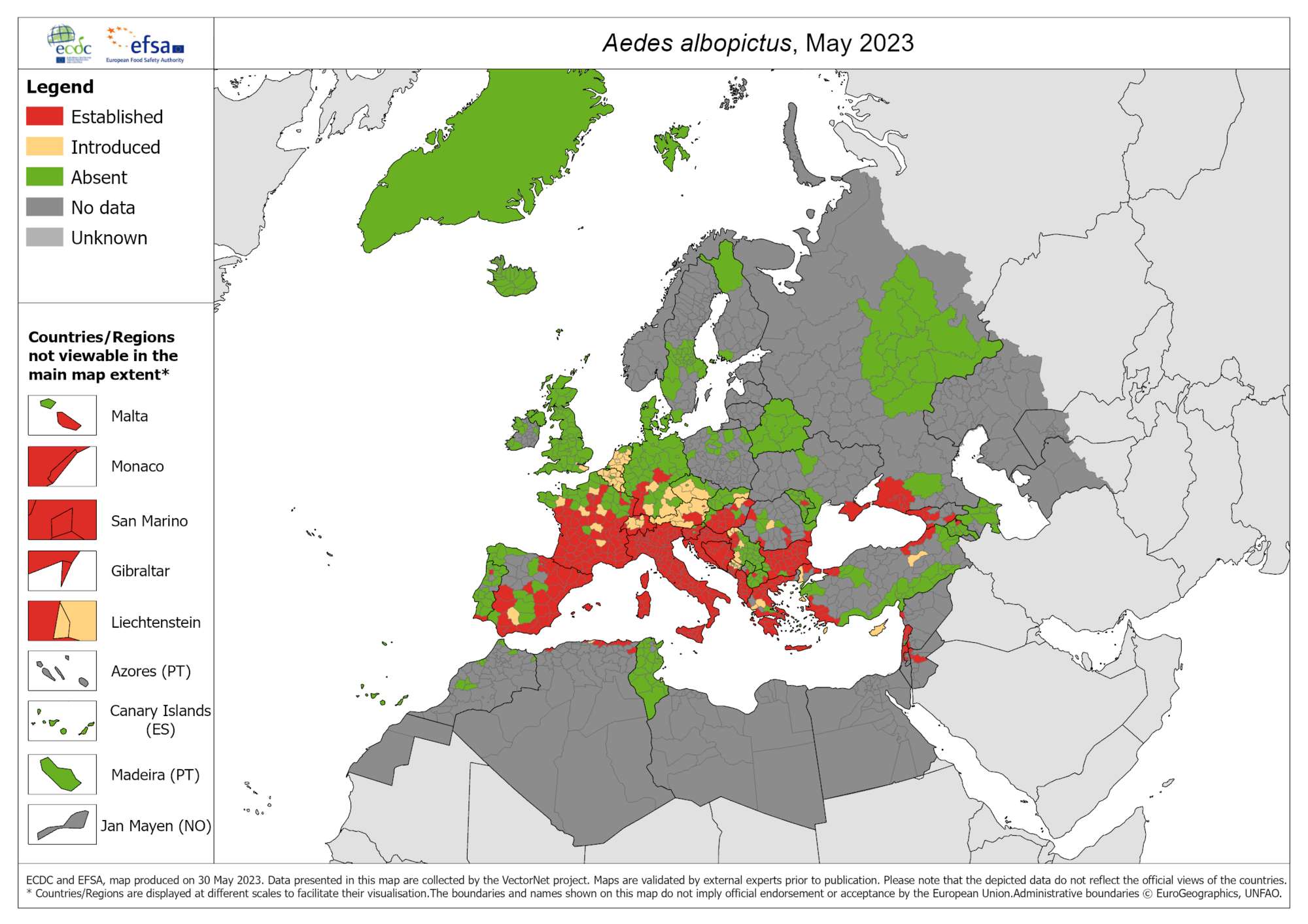
The mosquito species Aedes albopictus, a known vector of chikungunya and dengue viruses, is establishing itself further northwards and westwards in Europe, according to the latest data from ECDC. Also, Aedes aegypti, known to transmit dengue, yellow fever, chikungunya, zika and West Nile viruses, has been established in Cyprus since 2022 and may continue to spread to other European countries.
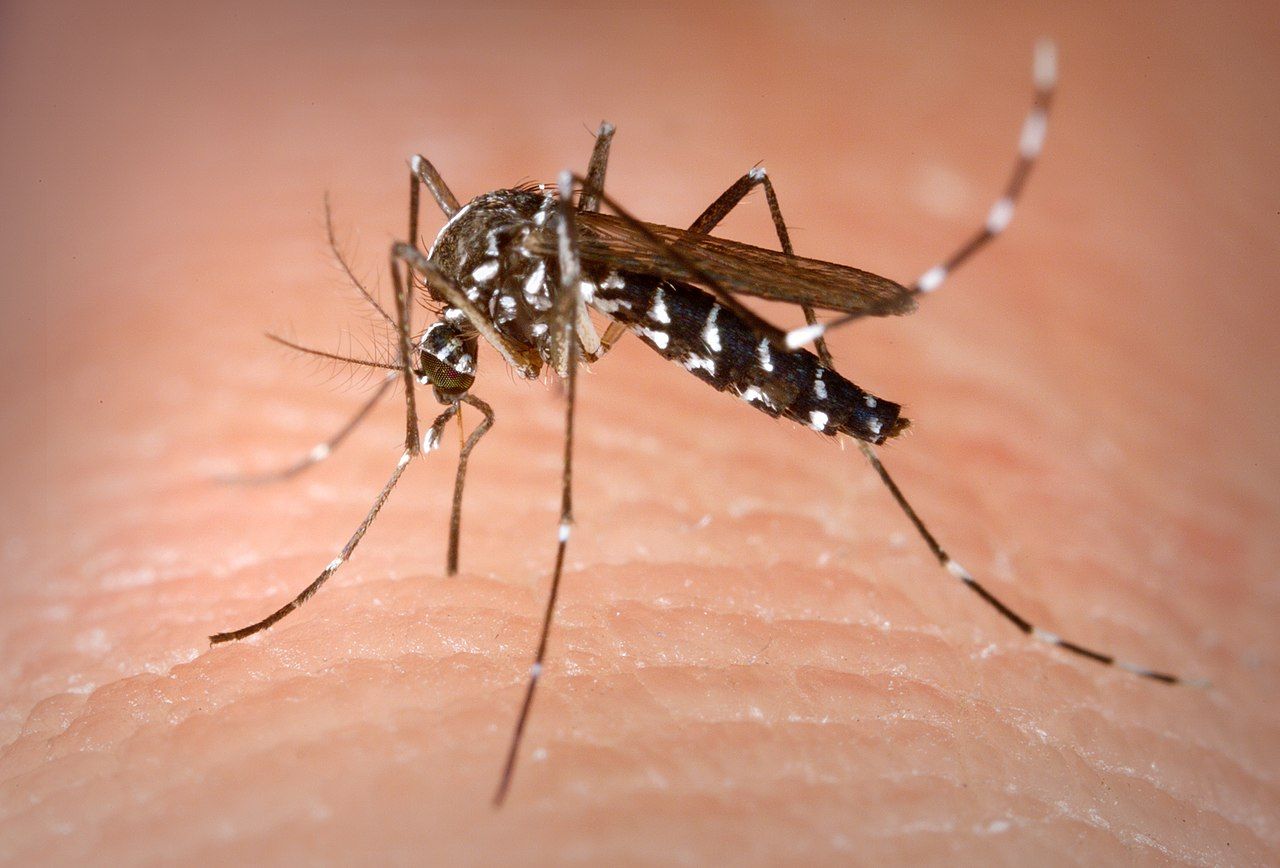
Europe is experiencing a warming trend where heat waves and flooding are becoming more frequent and severe, and summers are getting longer and warmer. This creates more favourable conditions for invasive mosquito species such as Aedes albopictus and Aedes aegypti. Ten years ago, in 2013, the Aedes albopictus mosquito was established in 8 EU/EEA countries, with 114 regions being affected. Now in 2023, the mosquito is established in 13 countries and 337 regions.
In 2022, 1 133 human cases and 92 deaths of West Nile virus infection were reported in the EU/EEA, of which 1 112 were locally acquired in 11 countries, the highest number of cases since the peak epidemic year in 2018. Locally acquired cases were reported by Italy (723), Greece (286), Romania (47), Germany (16), Hungary (14), Croatia (8), Austria (6), France (6), Spain (4), Slovakia (1) and Bulgaria (1).
In 2022, 71 cases of locally acquired dengue were recorded in mainland EU/EEA, which is equivalent to the total number of cases reported between 2010 and 2021. Locally acquired dengue cases were reported by France (65 cases) and Spain (6 cases).
Sustainable ways to control mosquito populations include eliminating standing water sources where mosquitoes breed, using eco-friendly larvicides, and promoting community awareness about mosquito control.
Personal protective measures include the use of mosquito bed nets (preferably insecticide-treated nets) or sleeping or resting in screened or air-conditioned rooms, using window screens, wearing of clothes that cover most of the body, and the use of mosquito repellent.
Raising awareness among the general public, healthcare professionals, and travellers about diseases transmitted by mosquitoes is also essential.
Facts
The establishment of mosquito species is defined as having self-sustained mosquito populations that are overwintering and reproducing in a given administrative region.
Dengue is a viral infection caused by the dengue virus, transmitted to humans through the bite of infected mosquitoes. The disease is transmitted by Aedes mosquitoes (especially Aedes aegypti globally and Aedes albopictus in Europe), which breed in or around human habitats. Dengue is endemic in more than 100 countries in Africa, the Americas, South and South East Asia, and the Western Pacific region. The incidence of dengue has grown dramatically around the world in recent decades.
West Nile virus is transmitted among birds via the bite of infected Culex mosquitoes and, incidentally, humans and other mammals (e.g. horses) may become infected. About 80% of West Nile Virus infections in humans are asymptomatic. West Nile fever is the most common clinical presentation and is characterised by a sudden onset of symptoms that may include headache, malaise, fever, myalgia, vomiting, rash, fatigue and eye pain. Elderly and immunocompromised persons are at higher risk of developing West Nile neuroinvasive disease which can be fatal. No specific prophylaxis or treatment exists against the disease in humans.
More information: European Centre for Disease Prevention and Control
Publicaciones relacionadas:
 Antimicrobial resistance remains a health threat in Europe
 COVID-19 research and public health, EU priorities
 EMA and ECDC recommend fourth dose vaccination for those over 60 years of age
 COVID-19: ECDC updates case definition for EU surveillance
 The European Commission will address the issue of Coronavirus at its meeting on 5th March
Leave a Reply