

In 2020, 137 800 non-EU citizens were refused entry into the EU territory while 557 500 were found to be illegally present in one of the EU Member States. The number of non-EU citizens issued with an order to leave an EU Member State was 396 400 people.
Following an order to leave, 99 300 non-EU citizens were returned to another country (including other EU Member States): of these 70 200 were returned outside the EU.
Compared with 2019, downturns are observed for all these main indicators and reflect the impact of the COVID-19 pandemic including temporary closures of the national authorities and travelling restrictions.
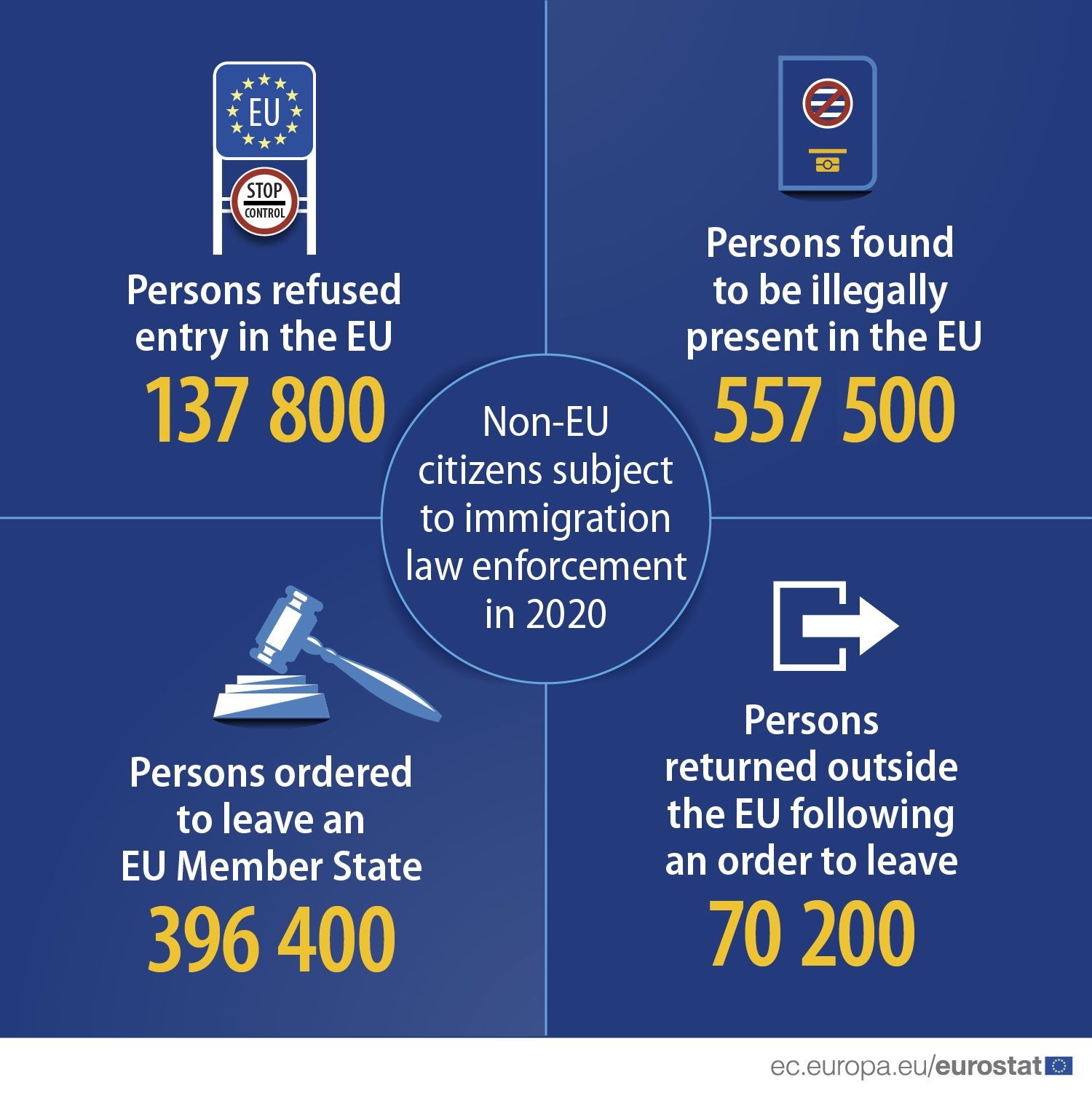
79% fewer non-EU citizens refused entry in the EU in 2020 compared with 2019
In 2020, some 137 800 non-EU citizens were refused entry into the EU at one of its external borders, down 79% compared with 670 800 in the previous year. Among the 21 EU Member States where the number of refusals decreased between 2019 and 2020, by far the largest fall was observed in Spain, from 493 500 in 2019 to 3 500 in 2020.
Spain’s share of the EU total fell from 74% in 2019 to 3% in 2020. This can be explained by the closing of the Spanish borders during the Covid-19 pandemic. This drop concerned almost entirely citizens of Morocco, as the number of Moroccans refused entry into Spain fell from 484 800 in 2019 to 500 in 2020.
The largest number of refusals of entry in 2020 were reported by Hungary (36 500), followed by Poland (28 100), Croatia (14 700) and Romania (12 600).
The highest number of non-EU citizens refused entry into the EU in 2020 was observed among Ukrainians (56 400), followed by citizens of Albania (13 300) and Moldova (10 200).
11% fewer non-EU citizens found to be illegally present in the EU in 2020 compared with 2019
In 2020, 557 500 non-EU citizens were found to be illegally present in the EU. This was down 11% compared with 2019, and down 73% when compared with the levels of 2015 when the total number of non-EU citizens found to be illegally present stood at 2 085 500 – the highest number recorded since the beginning of data collection in 2008.
Germany reported the largest number of non-EU citizens found to be illegally present in 2020 (117 900), followed by France (103 900), Hungary (89 400) and Spain (72 300).
Ukrainian citizens accounted for the highest number of people found to be illegally present in the EU in 2020 (50 400). The next highest numbers were recorded for citizens of Syria (45 700) and Morocco (41 200).
19% fewer non-EU citizens ordered to leave the EU Member States’ territory in 2020 compared with 2019
In 2020, some 396 400 non-EU citizens were ordered to leave the territory of the EU Member States, down 19% compared with the previous year (491 200).
Among EU Member States, France reported the largest number of non-EU citizens ordered to leave its territory in 2020 (108 400), followed by Spain (50 300), Greece (38 500) and Germany (36 300).
In 2020, the highest number of people ordered to leave an EU Member State territory was observed among Algerians (34 000), Moroccans (33 600) and Albanians (23 200).
51% fewer non-EU citizens were returned outside EU in 2020 compared with 2019
In 2020, 70 200 non-EU citizens issued with an order to leave the territory of an EU Member State were returned outside of the EU; a reduction of 51% when compared with a year before (142 300).
Among the 23 EU Member States were returns decreased, the largest drop was observed in Poland, from 25 900 in 2019 to 900 in 2020. This decrease was driven by the fall of returns of Ukrainians, whose number dropped from 20 300 in 2019 to 600 in 2020.
Germany reported the largest number of non-EU citizens returned outside the EU (12 300) in 2020, followed by the Netherlands (8 700), Greece (7 000) and France (6 900).
Albanians (9 800) topped the list of non-EU citizens returned to a non-EU country in 2020, followed by Georgians (5 700) and Ukrainians (5 600).
More information
Publicaciones relacionadas:
 Commission launches debate on responding to the impact of an ageing population
 EASO operations expand to all major EU countries of first arrival
 2021 Rule of Law Report
 1 in 4 children in the EU at risk of poverty or social exclusion
 Operation against human trafficking in the agricultural sector in Europe
Leave a Reply