• Skip to primary navigation
  • Skip to main content
  • Skip to primary sidebar
  • Skip to footer
  • Bluesky
  • Facebook
  • Instagram
  • Twitter
  • YouTube
CDE Almería – Centro de Documentación Europea – Universidad de Almería

CDE Almería - Centro de Documentación Europea - Universidad de Almería

Centro de Documentación Europea de la Universidad de Almería

  • HOME
  • WHAT´S ON
    • EU NEWS
    • Activities
    • EU Calls and Awards
    • Radio Program «Europe with You»
  • DOCUMENTATION
    • EU Media Collection
      • Web Space
      • MEDIATHEQUE REPOSITORY
  • Europe on the net
    • Institutions
    • EU Representation in Spain
    • European information network of Andalusia
  • ABOUT US
    • Presentation
    • Services
    • People
    • Contact
  • Spanish
  • English

How data accelerates progress towards equality and narrows the gender gap

Inicio » EU News » Social Affairs » Equality » How data accelerates progress towards equality and narrows the gender gap

6 de March de 2023

símbolo que representa a un hombre y una mujer en blanco y negro

Violence against women is both a cause and a result of gender inequalities. EIGE’s new report for the Western Balkans and Turkey offers recommendations for combating violence against women.

Details in the data

Developing comprehensive data systems will bring us one step closer to permanently ending violence against women.

The current lack of comprehensive, disaggregated data on various forms of violence against women makes fully comprehending the scope and scale of the problem in each Member State or region difficult.

Disaggregated data assists response efforts in tailoring prevention support to the specific needs of victims.

Aside from data systems, another critical framework in place is the Istanbul Convention, which was established in 2011 and represents a significant step forward in combating violence against women.

Violence against women is recognised by the Convention as not only an extreme form of discrimination against women, but also a violation of human rights.

Violence against women: European Parliament insists on ratification of the Istanbul Convention

Paths to progress

Many EU candidate countries and a potential candidate were first in line to sign and ratify the Istanbul Convention – proving their will and commitment to end violence against women in the Western Balkans.

And while data collection is an established and common practice in the Western Balkans and Türkiye, there is a need to improve data collection methodologies in order to comply with international standards.

We need to ensure vulnerable groups do not fall through the cracks and remain outside the data systems which could ultimately save their lives.

Iris Luarasi,  PhD, President of the Group of Experts on Action against Violence against Women and Domestic Violence (GREVIO) Council of Europe and one of the authors behind this publication commends EIGE’s work in the Western Balkans and Türkiye:

GREVIO considers data collection a very important aspect of monitoring the implementation of the Convention by state parties. In our reports, data collected from EIGE on gender equality is an important source of information, for being high-quality and allowing an analysis of gender equality and gender mainstreaming in EU countries. Data collected from EIGE has also helped GREVIO to address intersecting inequalities in some of the baseline evaluation reports.

From EIGE’s new Guidance on strengthening data systems on violence against women in the Western Balkans and Türkiye, here are five concrete steps for building a stronger set of data systems.

  • Mapping data producers and users
  • Establishing coordination and a governance mechanism
  • Establishing standards for data collection: entry, validation and analysis
  • Establishing and implementing training
  • Reporting statistics

Beyond policy and legislative frameworks, data systems also present a crucial opportunity to address mindsets and attitudes that are allowing violence to exist in the first place.

This is not only a call to action for data experts in the aforementioned region, but for any country seeking to strengthen their data collection methodologies and comply with international standards to help prevent violence against women.
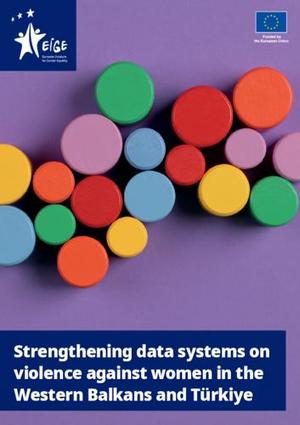
Strengthening data systems on violence against women in the Western Balkans and Türkiye

More information

European Institute for Gender Equality

Publicaciones relacionadas:
Women’s rights in the EU Femicide: Name it, count it, end it! How is gender-based violence addressed in the EU? Countries with legislated quotas could achieve gender balance in parliaments by 2026, those without may take close to 20 years Almost 1 in 2 women in the EU have experienced psychological violence


Equality,  EU News,  Social Affairs Equality,  EU,  feminism,  Gender,  Gender Gap,  women

“This is a space for debate. All comments, for or against publication, that are respectful and do not contain expressions that are discriminatory, defamatory or contrary to current legislation will be published”.

Reader Interactions

Leave a Reply Cancel reply

Your email address will not be published. Required fields are marked *

This site uses Akismet to reduce spam. Learn how your comment data is processed.

Primary Sidebar

Footer

  • CDE Almería
  • Biblioteca Nicolás Salmerón – Universidad de Almería
  • Planta: 1ª, Despacho: 1.05.0B.
  • Ctra. Sacramento s/n. Almería (Spain)
  • Teléfono: (+34) 950 015266

HOME
NEWS
DOCUMENTATION
EUROPE ON THE NET
ABOUT US

  • LEGAL NOTICE
  • PRIVACY POLICY
  • COOKIE POLICY
  • ACCESSIBILITY
  • SITEMAP

Copyright © 2026 CDE Almería · Creative Commons LicenseThis work is licensed under a Creative Commons Attribution-NonCommercial 4.0 International License.

<p>El Centro de Documentación Europea de la Universidad de Almería utiliza cookies propias y de terceros para facilitar al usuario la navegación en su página Web y el acceso a los distintos contenidos alojados en la misma. Asimismo, se utilizan cookies analíticas de terceros para medir la interacción de los usuarios con el sitio Web. Pinche el siguiente enlace si desea información sobre el uso de cookies y como deshabilitarlas. </p>

Politica de privacidad

El Centro de Documentación Europea de la Universidad de Almería utiliza cookies propias y de terceros para facilitar al usuario la navegación en su página Web y el acceso a los distintos contenidos alojados en la misma. Asimismo, se utilizan cookies analíticas de terceros para medir la interacción de los usuarios con el sitio Web. Pinche el siguiente enlace si desea información sobre el uso de cookies y como deshabilitarlas. <a href="/politica-de-cookies" rel="noopener" target="_blank">Más información</a>

Cookies estrictamente necesarias

Las cookies estrictamente necesarias tiene que activarse siempre para que podamos guardar tus preferencias de ajustes de cookies.

Básicamente la web no funcionara bien si no las activas.

Estas cookies son:

  • Comprobación de inicio de sesión.
  • Cookies de seguridad.
  • Aceptación/rechazo previo de cookies.
Cookies de terceros

Esta web utiliza Google Analytics, Google Tag Manager y Yandex Metrika para recopilar información anónima tal como el número de visitantes del sitio, o las páginas más populares.

Dejar estas cookies activas nos permite mejorar nuestra web.

Política de cookies

Pinche el siguiente enlace si desea información sobre el uso de cookies y como deshabilitarlas. Más información