• Skip to primary navigation
  • Skip to main content
  • Skip to primary sidebar
  • Skip to footer
  • Bluesky
  • Facebook
  • Instagram
  • Twitter
  • YouTube
CDE Almería – Centro de Documentación Europea – Universidad de Almería

CDE Almería - Centro de Documentación Europea - Universidad de Almería

Centro de Documentación Europea de la Universidad de Almería

  • HOME
  • WHAT´S ON
    • EU NEWS
    • Activities
    • EU Calls and Awards
    • Radio Program «Europe with You»
  • DOCUMENTATION
    • EU Media Collection
      • Web Space
      • MEDIATHEQUE REPOSITORY
  • Europe on the net
    • Institutions
    • EU Representation in Spain
    • European information network of Andalusia
  • ABOUT US
    • Presentation
    • Services
    • People
    • Contact
  • Spanish
  • English

Green transition: new EU rules to protect consumers

Inicio » EU News » Market » Economy and Finance » Green transition: new EU rules to protect consumers

21 de September de 2023

The Council and the Parliament have reached a provisional political agreement on the directive to empower consumers for the green transition. The proposal aims at enhancing consumers’ rights by amending the unfair commercial practices directive (UCPD) and the consumer rights directive (CRD) and adapting them for the green transition.
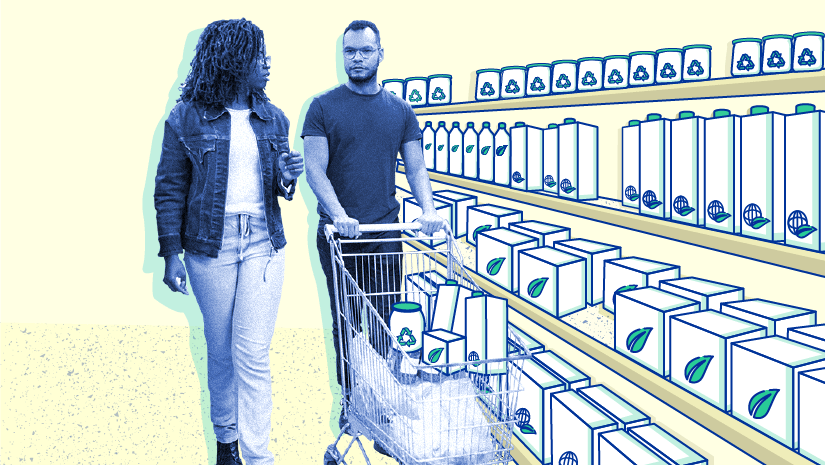
Today’s agreement maintains the main objectives of the directive but introduces some improvements, like the inclusion of unfair claims based on greenhouse emissions offsetting in the list of banned practices, stronger measures against early obsolescence, the clarification of traders’ liability in certain cases and the introduction of a harmonised format to increase the visibility of the voluntary commercial guarantee of durability, as well as improvements in the reminder on the legal guarantee of conformity.

Protecting against unfair practices

The directive to empower consumers for the green transition aims at fighting against unfair commercial practices that prevent consumers to make the right choices for greener or more circular products and services. Practices like misleading ‘greenwashing’ or false claims about products that last less than expected are among the practices that this legal text aims to address.

The provisional agreement maintains the main objectives of the directive but introduces important improvements. In particular:

  • improves the credibility of sustainability labels by defining the key elements of the certification scheme they have to be based on unless established by public authorities
  • increases the transparency and monitoring of claims related to future environmental performance

La Parlamento Europeo respalda los planes para impulsar el uso de energías renovables

  • includes unfair claims based on greenhouse gas emissions offsetting in the list of banned commercial practices. This means that traders will not be able to claim that a product has a neutral, reduced or improved environmental impact, based on unverified offsetting programmes
  • clarifies the traders’ liability in cases of information (or lack of information) on early obsolescence, unnecessary software updates or the unjustified obligation to buy spare parts from the original producer. These practices will be banned but the compromise text makes clear that the traders are only liable if there is information available about the design features leading to those situations
  • introduces a harmonised label with information on the commercial guarantee of durability that producers offer and which will include a reference to the legal guarantee of conformity. In addition, a harmonised notice will be displayed prominently in shops and websites to give information on the legal guarantee of conformity.
  • it will allow member states sufficient time to adapt to the changes in the legislation, with a transposition period of 24 months.

Next steps

The provisional agreement reached with the European Parliament now needs to be endorsed and formally adopted by both institutions.

Background

On 30 March 2022, the Commission submitted a proposal for a directive on empowering consumers for the green transition. The proposal is one of the initiatives set out in the Commission’s 2020 new consumer agenda and 2020 circular economy action plan and follows up the European Green Deal. It is part of a package of four proposals, together with the ecodesign regulation and the directive proposals on green claims and the right to repair.

More information: Council of the EU

Publicaciones relacionadas:

E-commerce: Council adopts new rules for exchange of VAT payment data Webinar “New situation, new opportunities in Europe New VAT rules for e-commerce in the EU 23 May 2022: Macroeconomic dialogue with the social partners Cryptocurrency dangers and the benefits of EU legislation

Economy and Finance,  EU News,  International Trade,  Market Consumers,  Consumption,  Council of the EU,  green transition,  unfair practices

“This is a space for debate. All comments, for or against publication, that are respectful and do not contain expressions that are discriminatory, defamatory or contrary to current legislation will be published”.

Reader Interactions

Leave a Reply Cancel reply

Your email address will not be published. Required fields are marked *

This site uses Akismet to reduce spam. Learn how your comment data is processed.

Primary Sidebar

Footer

  • CDE Almería
  • Biblioteca Nicolás Salmerón – Universidad de Almería
  • Planta: 1ª, Despacho: 1.05.0B.
  • Ctra. Sacramento s/n. Almería (Spain)
  • Teléfono: (+34) 950 015266

HOME
NEWS
DOCUMENTATION
EUROPE ON THE NET
ABOUT US

  • LEGAL NOTICE
  • PRIVACY POLICY
  • COOKIE POLICY
  • ACCESSIBILITY
  • SITEMAP

Copyright © 2026 CDE Almería · Creative Commons LicenseThis work is licensed under a Creative Commons Attribution-NonCommercial 4.0 International License.

<p>El Centro de Documentación Europea de la Universidad de Almería utiliza cookies propias y de terceros para facilitar al usuario la navegación en su página Web y el acceso a los distintos contenidos alojados en la misma. Asimismo, se utilizan cookies analíticas de terceros para medir la interacción de los usuarios con el sitio Web. Pinche el siguiente enlace si desea información sobre el uso de cookies y como deshabilitarlas. </p>

Politica de privacidad

El Centro de Documentación Europea de la Universidad de Almería utiliza cookies propias y de terceros para facilitar al usuario la navegación en su página Web y el acceso a los distintos contenidos alojados en la misma. Asimismo, se utilizan cookies analíticas de terceros para medir la interacción de los usuarios con el sitio Web. Pinche el siguiente enlace si desea información sobre el uso de cookies y como deshabilitarlas. <a href="/politica-de-cookies" rel="noopener" target="_blank">Más información</a>

Cookies estrictamente necesarias

Las cookies estrictamente necesarias tiene que activarse siempre para que podamos guardar tus preferencias de ajustes de cookies.

Básicamente la web no funcionara bien si no las activas.

Estas cookies son:

  • Comprobación de inicio de sesión.
  • Cookies de seguridad.
  • Aceptación/rechazo previo de cookies.
Cookies de terceros

Esta web utiliza Google Analytics, Google Tag Manager y Yandex Metrika para recopilar información anónima tal como el número de visitantes del sitio, o las páginas más populares.

Dejar estas cookies activas nos permite mejorar nuestra web.

Política de cookies

Pinche el siguiente enlace si desea información sobre el uso de cookies y como deshabilitarlas. Más información