
Fertilisers play a significant role for food security. Their production and their cost largely depend on natural gas. Following Russia’s invasion of Ukraine, a global mineral fertiliser and energy crisis is now weighing on global food security and food prices.
In this context, the European Commission presented a Communication on ensuring availability and affordability of fertilisers. This Communication presents a wide range of actions and guidance on how to tackle the challenges that EU farmers and industry, as well as developing countries, are currently facing. The need to reinforce the overall resilience and sustainability of our food systems in the medium and the long-term is also addressed, in line with the Communication on safeguarding food security adopted in March 2022, the Farm to Fork strategy and REPowerEU.
Actions to maintain a sustainable EU fertilisers’ production and reduce dependencies
The Communication outlines several best practices and ways ahead to help farmers optimise their fertiliser use and reduce their dependencies while securing yields:
- Critical sector: Member States may prioritise the continued and undisrupted access to natural gas for fertiliser producers in their national emergency plans in the event of gas rationing, in line with the Commission Communication “Save gas for a safe winter”.
- Targeted financial support: The amended Temporary Crisis Framework for State aid enables Member States to provide specific support to farmers and fertiliser producers. Funds generated by measures such as the cap on the market revenues of certain electricity generators and the solidarity contribution can also be used, subject to the applicable conditions, for purposes of national support schemes. Furthermore, the Commission will together with Member States examine the expediency of making use of the agricultural reserve worth €450 million for the financial year 2023 for farmers affected by high input costs.
- Improved market transparency: The Commission will launch a market observatory for fertilisers in 2023 to share data on production, use, prices and trade.
- Sustainable farming practices and training: The Commission will work with Member States to ensure that relevant interventions such as nutrient management plans, soil health improvement, precision farming, organic farming, use of leguminous crops in crop rotation schemes are widely adopted by farmers. The Commission will also invite Member States to look into further prioritisation and increasing the ambition of such interventions in future revisions of their CAP Strategic Plans.
- More organic fertilisers: The substitution, whenever possible, of mineral fertilisers by organic fertilisers will reduce EU’s dependence on gas as well as the carbon footprint of the sector. The Fertilising Products Regulation already ensures a better access in the market to fertilisers made from recovered waste and green and circular alternatives to natural gas. Horizon Europe has also invested €180 million in projects on optimisation of nutrient budget, alternative fertilising products and nature-based solutions for nutrient management. The Commission will also adopt in 2023 an Integrated Nutrient Management Action Plan to foster a more efficient use of nutrients, taking into account Member States’ starting points and the Zero Pollution Action Plan.
- Transition to greener fertilisers: The Commission will encourage Member States to support investments in renewable hydrogen and biomethane for ammonia production.
- Trade diversification: The Commission has reached out to alternative suppliers of fertilisers to compensate for previous supplies from Belarus and Russia. The Commission also proposed in July 2022 to suspend trade tariffs for ammonia and urea, used to produce nitrogen fertilisers.
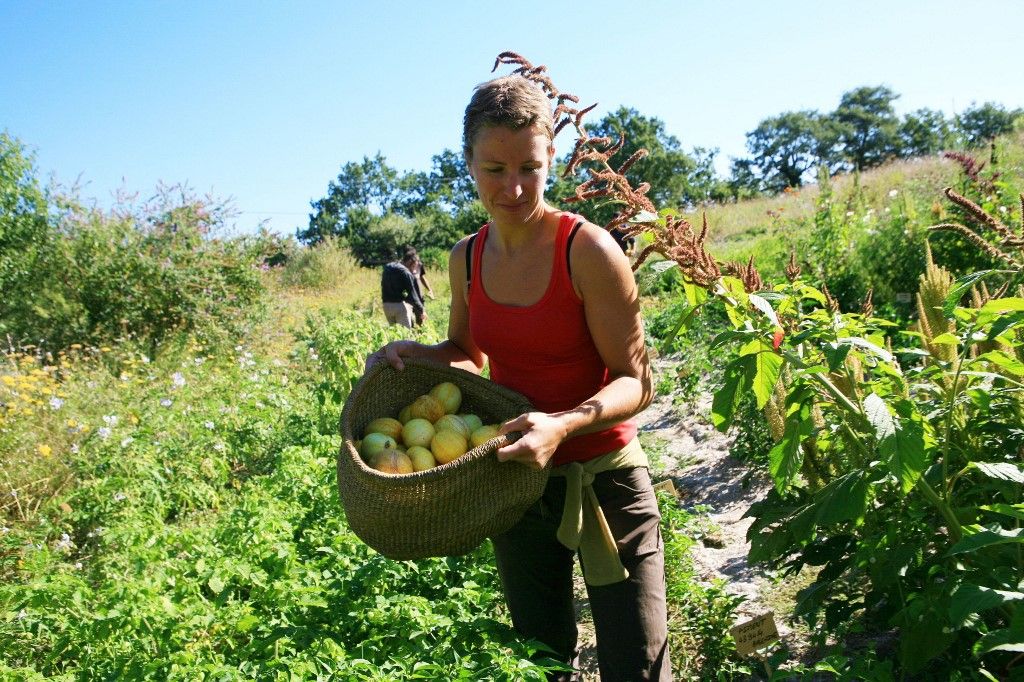
Council supports measures for low-carbon and sustainable agriculture
|
Actions to support vulnerable countries and improve global food security
Farmers worldwide and notably those in vulnerable countries acutely feel the impact of the tight fertiliser market. In the international field, the European Commission will continue its efforts to improve global food security by:
- Continuing to work with its Member States and European Financial Institutions, in a Team Europe approach towards the contribution to the four strands of the Team Europe Response to Global Food Insecurity (Solidarity, Production, Trade and Multilateralism).
- Cooperating with selected EU partner countries, including through the Global Fertilisers Challenge, to reduce their dependence and consumption on imported mineral fertilisers in improving nutrient management, increased fertiliser efficiency, and alternative agricultural practices, with a particular focus on extension and advisory services for farmers.
- Improving global market transparency in fertilisers, by contributing to relevant international initiatives concerning fertilisers, in particular the G20’s Agricultural Market Information System (AMIS).
- Stepping up the support to address balance of payments needs including through the IMF Poverty reduction and Growth Trust, and reinforce cooperation with international financial institutions (IFIs) under the Global Gateway to develop innovative and sustainable investments.
- Initiating discussions on transparency improvements, including the avoidance of export restrictions on fertiliser trade in the WTO, with the view to delivering on the commitments taken under the declaration on food insecurity agreed at the last Ministerial Conference.
- Continuing to work with Member States to ensure that global trade in agri-food products, including fertilisers, is able to proceed smoothly.
- Further strengthening EU humanitarian food assistance, which is already over EUR 900 million so far in 2022. This is around 55 percent more than last year, and almost 80 percent more than in 2020.
Beyond fertilisers’ availability, affordability and use, the EU will continue to address the root causes of hunger, including conflict and insecurity, climate change, and economic shocks. The EU will work with its international partners and Member States to support the enhancement of local production capacities and the creation of sustainable and resilient food systems in the most fragile contexts. While promoting this objective, the EU will pave the way for innovative approaches in support of integrated soil fertility management, applying a diverse set of site-specific soil fertility solutions conducive to sustainable yield gains.
Source: Press release – European Committe
Publicaciones relacionadas:
 Healthy Agricultural Soils: 24 EU countries coordinate unprecedented research programme
 Coronavirus: Commission announces further measures to support the agri-food sector
 EUROPEAN AGENDA: Agriculture, Livestock Farming and Fisheries
 Needs of farmers and agri-food companies are significant, also in light of the COVID-19 crisis
 University of Almeria advances in the research for obtaining quality compost
Leave a Reply