• Skip to primary navigation
  • Skip to main content
  • Skip to primary sidebar
  • Skip to footer
  • Bluesky
  • Facebook
  • Instagram
  • Twitter
  • YouTube
CDE Almería – Centro de Documentación Europea – Universidad de Almería

CDE Almería - Centro de Documentación Europea - Universidad de Almería

Centro de Documentación Europea de la Universidad de Almería

  • HOME
  • WHAT´S ON
    • EU NEWS
    • Activities
    • EU Calls and Awards
    • Radio Program «Europe with You»
  • DOCUMENTATION
    • EU Media Collection
      • Web Space
      • MEDIATHEQUE REPOSITORY
  • Europe on the net
    • Institutions
    • EU Representation in Spain
    • European information network of Andalusia
  • ABOUT US
    • Presentation
    • Services
    • People
    • Contact
  • Spanish
  • English

Feasibility analysis of a railway safety service based on EGNSS

Inicio » EU News » Feasibility analysis of a railway safety service based on EGNSS

19 de November de 2019

There are currently more than 20 rail signalling systems in Europe since each country has developed its own railway infrastructure, equipment and operational rules. This has led to increased costs and technical and operational complexity. Therefore, the European Rail Industry, supported by the EU Institutions, is working on the European Rail Traffic Management System (ERTMS), with an aim to implement a common signalling system for Europe.
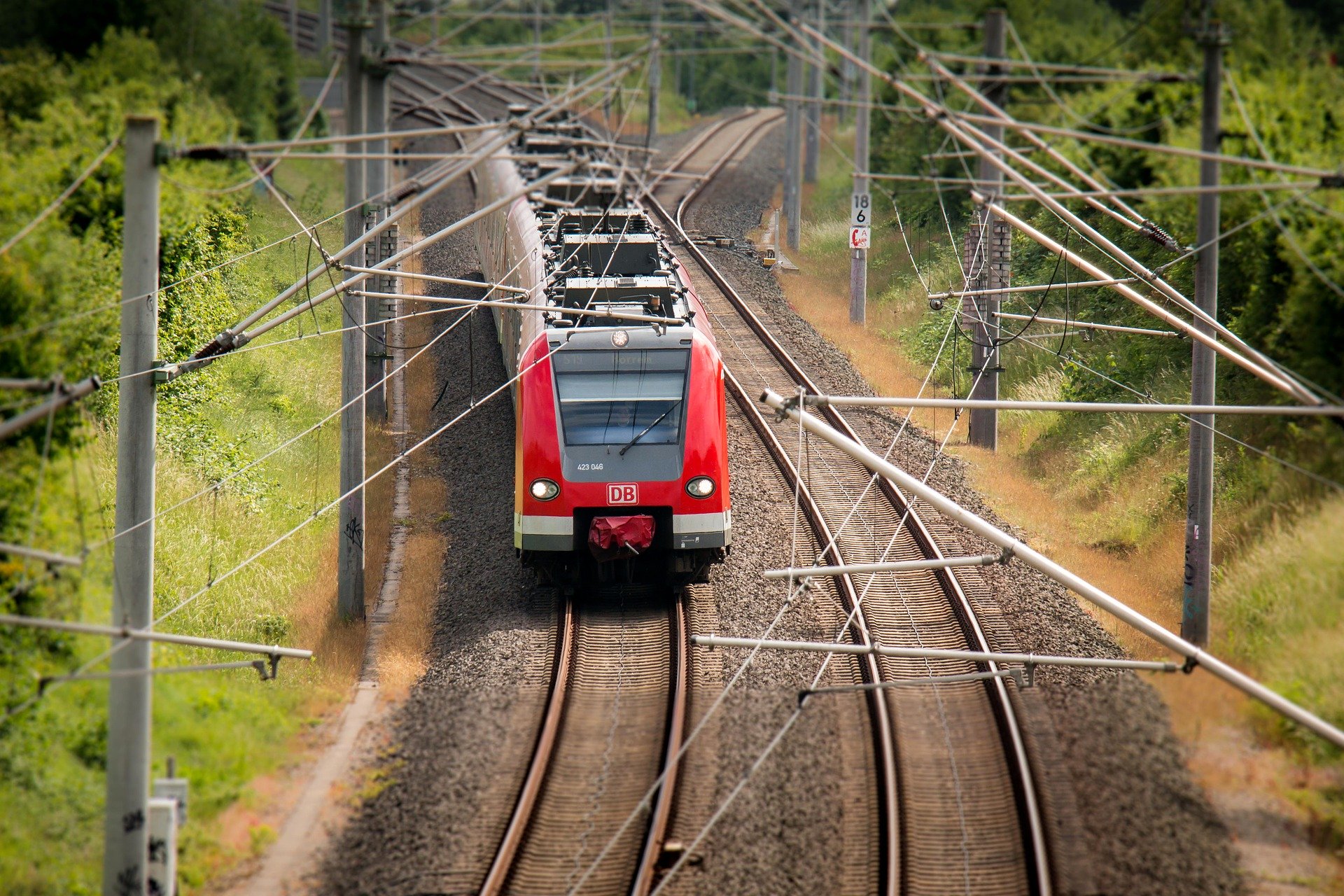
The European Commission’s Directorate-General for Internal Market, Industry, Entrepreneurship and SMEs (DG GROW) has issued a Prior Information Notice (PIN) for a planned call for a new service contract to assess the feasibility of an EGNSS-based safety service for the rail sector beyond 2022 which would make it possible to rationalise rail signalling infrastructure.

The first Space for Innovation in Rail conference in Vienna on 18 and 19 March brought together stakeholders from the rail and space sector in a unique event to discuss the important role of satellite-based positioning technology for the future of the European rail sector. The event highlighted a portfolio of research, innovation and deployment projects being funded by the GSA and the Shift2Rail Joint Undertaking that demonstrate how satellite technologies can provide scalable positioning solutions to increase rail safety, boost capacity and efficiency, and deliver global success for advanced European technologies.

Advantages

Rail signalling systems are used to safely control railway traffic in order to prevent train collisions. The European Commission (EC) is currently specifying the long-term evolution of the EGNSS programme, including new services for Galileo and EGNOS. The use of an EGNSS receiver in combination with other sensors could result in the provision of an accurate and reliable position which would translate into an overall improvement in the rail system.

Galileo is Europe’s Global Navigation Satellite System (GNSS), providing a highly accurate, guaranteed global positioning service under civilian control. Galileo is operational since the Initial Service declaration at the end of 2016. Full Operational Capability is expected to be reached in 2020.

EGNOS is the European SBAS and augments GPS L1 C/A civilian signal by providing corrections and integrity information for positioning and navigation applications over Europe. EGNOS Version 3, set to enter in service in the near future, will augment both GPS and Galileo constellations in the L1 and L5 bands and will extend the service area to the entire landmasse of EU Member States.

The contract notice will be published in the near future. More information can be found in the Prior Information Notice (PIN).
More information

Full news

PIN

Space4Rail conference

R+I Section

Publicaciones relacionadas:

Imminent anti-metastatic vaccine for prostate cancer New technology is recognising affective states New intraoperative probe for breast cancer tissue €2 billion to fast forward the creation of the European Innovation Council Epigenetic therapy! Switching off your own cancer genes

EU News Innovación,  innovation

“This is a space for debate. All comments, for or against publication, that are respectful and do not contain expressions that are discriminatory, defamatory or contrary to current legislation will be published”.

Reader Interactions

Leave a Reply Cancel reply

Your email address will not be published. Required fields are marked *

This site uses Akismet to reduce spam. Learn how your comment data is processed.

Primary Sidebar

Footer

  • CDE Almería
  • Biblioteca Nicolás Salmerón – Universidad de Almería
  • Planta: 1ª, Despacho: 1.05.0B.
  • Ctra. Sacramento s/n. Almería (Spain)
  • Teléfono: (+34) 950 015266

HOME
NEWS
DOCUMENTATION
EUROPE ON THE NET
ABOUT US

  • LEGAL NOTICE
  • PRIVACY POLICY
  • COOKIE POLICY
  • ACCESSIBILITY
  • SITEMAP

Copyright © 2026 CDE Almería · Creative Commons LicenseThis work is licensed under a Creative Commons Attribution-NonCommercial 4.0 International License.

<p>El Centro de Documentación Europea de la Universidad de Almería utiliza cookies propias y de terceros para facilitar al usuario la navegación en su página Web y el acceso a los distintos contenidos alojados en la misma. Asimismo, se utilizan cookies analíticas de terceros para medir la interacción de los usuarios con el sitio Web. Pinche el siguiente enlace si desea información sobre el uso de cookies y como deshabilitarlas. </p>

Politica de privacidad

El Centro de Documentación Europea de la Universidad de Almería utiliza cookies propias y de terceros para facilitar al usuario la navegación en su página Web y el acceso a los distintos contenidos alojados en la misma. Asimismo, se utilizan cookies analíticas de terceros para medir la interacción de los usuarios con el sitio Web. Pinche el siguiente enlace si desea información sobre el uso de cookies y como deshabilitarlas. <a href="/politica-de-cookies" rel="noopener" target="_blank">Más información</a>

Cookies estrictamente necesarias

Las cookies estrictamente necesarias tiene que activarse siempre para que podamos guardar tus preferencias de ajustes de cookies.

Básicamente la web no funcionara bien si no las activas.

Estas cookies son:

  • Comprobación de inicio de sesión.
  • Cookies de seguridad.
  • Aceptación/rechazo previo de cookies.
Cookies de terceros

Esta web utiliza Google Analytics, Google Tag Manager y Yandex Metrika para recopilar información anónima tal como el número de visitantes del sitio, o las páginas más populares.

Dejar estas cookies activas nos permite mejorar nuestra web.

Política de cookies

Pinche el siguiente enlace si desea información sobre el uso de cookies y como deshabilitarlas. Más información