
The European Commission and the High Representative adopted a Joint Communication on an enhanced EU Maritime Security Strategy to ensure a peaceful use of the seas and safeguard the maritime domain against new threats. They have also adopted an updated Action Plan through which the Strategy will be implemented.
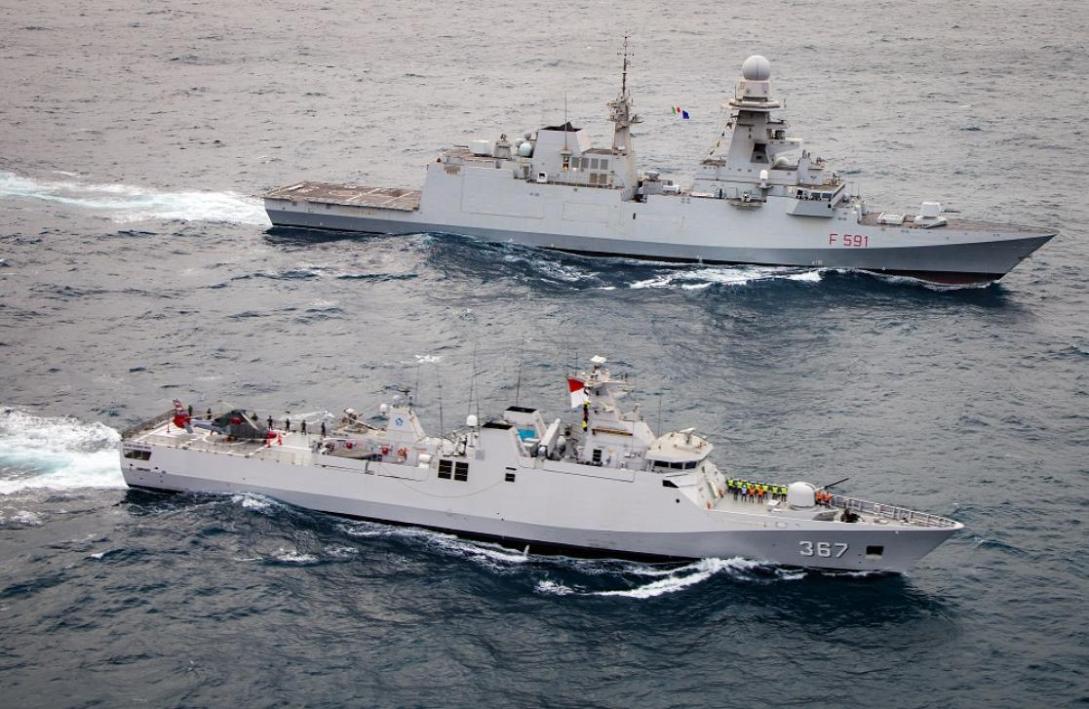
Maritime security is vital to the European Union and its Member States. Together, the EU’s Member States form the largest combined exclusive economic zone in the world. The EU economy depends greatly on a safe and secure ocean. Over 80% of global trade is seaborne and about two-thirds of the world’s oil and gas is either extracted at sea or transported by sea. Up to 99% of global data flows are transmitted through undersea cables. The global maritime domain must be secure to unlock the full potential of the oceans and the sustainable blue economy. The EU intends to reinforce the wide range of tools it has at its disposal to promote maritime security, both civilian and military.
Adapting to new threats
Security threats and challenges have multiplied since the adoption of the EU Maritime Security Strategy in 2014, requiring new and enhanced action. Long-standing illicit activities, such as piracy, armed robbery at sea, smuggling of migrants and trafficking of human beings, arms and narcotics, as well as terrorism remain critical challenges. But new and evolving threats must also be dealt with increasing geopolitical competition, climate change and degradation of the marine environment and hybrid and cyber-attacks.
This is an opportunity to drive forward sustainable solutions to the multiple maritime security issues the EU and the international community face. It is also an opportunity to enhance the EU’s role and credibility in the international arena. Recent geopolitical developments, such as Russia’s military aggression against Ukraine, are a forceful reminder that the EU needs to enhance its security and step up its capacity to act not only on its own territory and its own waters, but also in its neighbourhood and beyond.

Una Estrategia de Seguridad Marítima de la UE (ESMUE) actualizada
An updated European Maritime Security Strategy (EUMSS)
The updated EUMSS is a framework for the EU to take action to protect its interests at sea, and to protect its citizens, values and economy.
The updated Maritime Security Strategy promotes international peace and security, as well as respect for international rules and principles, while ensuring the sustainability of the oceans and the protection of biodiversity. The Strategy will be implemented by the EU and its Member States, in line with their respective competences.
The Joint Communication and associated Action Plan specify several integrated actions that will deliver on the EU’s interests. To do so, the EU will step up its action under six strategic objectives:
- Step up activities at sea. Actions include organising naval exercises at EU level, developing further coastguard operations in European sea basins, designating new maritime areas of interests for the implementation of the Coordinated Maritime Presences concept (a tool to enhance coordination of Member States’ naval and air assets present in specific maritime areas) and reinforcing security inspections in EU ports.
- Cooperate with partners. Actions include deepening EU-NATO cooperation and stepping up cooperation with all relevant international partners to uphold the rules-based order at sea, notably the UN Convention on the Law of the Sea.
- Lead on maritime domain awareness. Actions include reinforcing coastal and offshore patrol vessel surveillance and strengthening the Common information sharing environment (CISE). This is to make sure the national and EU authorities involved can exchange information in a secure way.
- Manage risks and threats. Actions include conducting regular live maritime exercises involving civilian and military actors, monitoring and protecting critical maritime infrastructure and ships (including passenger ships) from physical and cyber threats, and tackling unexploded ordnance and mines at sea.
- Boost capabilities. Actions include developing common requirements for defence technologies in the maritime domain, stepping up work on projects such as the European Patrol Corvette (new class of warship), and improving our anti-submarine capabilities.
- Educate and train by boosting hybrid and cyber security qualifications notably on the civilian side and conducting training programmes open to non-EU partners.
The updated Strategy and its action plan will contribute to the implementation the EU Strategic Compass for Security and Defence.
More information: European Commission
Publicaciones relacionadas:
 Eurobarometer: Europeans approve EU’s response to the war in Ukraine
 Defence and security of the European Union
 EU to reinforce the European defence industry through common procurement with a €500 million instrument
 Feasibility of a future European army
 Russian military control of Ukraine nuclear plants cause for grave concern, nuclear energy agency warns
Leave a Reply