
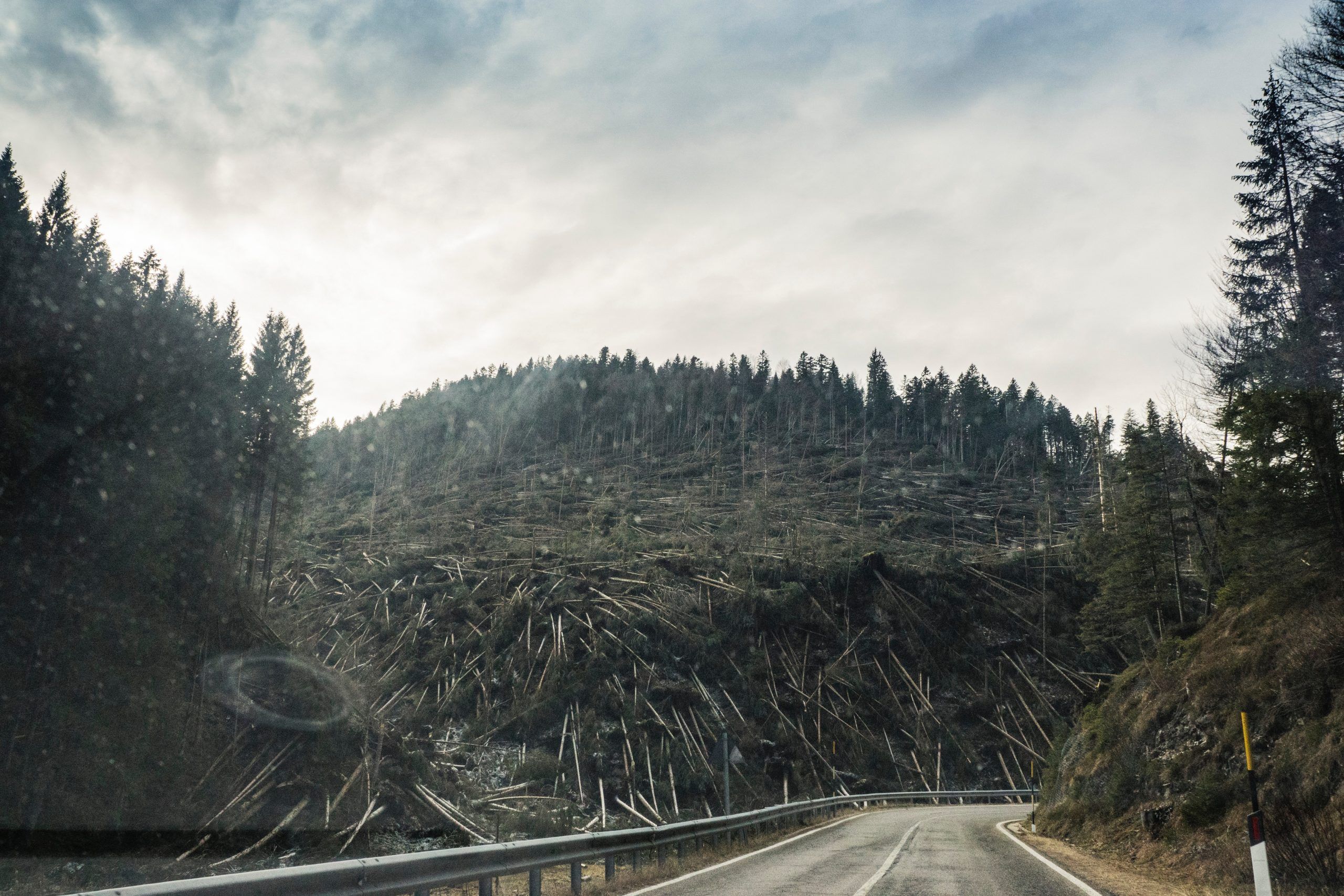
In response to climate change and biodiversity loss, new laws require companies to ensure that their products do not cause deforestation or forest degradation.
While no country or raw material would be banned, companies can only sell products in the EU if their suppliers have issued a “due diligence” declaration. It must demonstrate that the product is not derived from land logged after 31 December 2020, has not resulted in deforestation and is not derived from irreplaceable primeval forests.
As requested by the Parliament, companies will also have to demonstrate that these products comply with the relevant legislation of the producing country, including human rights legislation, and that the rights of affected indigenous peoples have been respected.
Products covered
The products covered by the new legislation are: cattle, cocoa, coffee, palm-oil, soya and wood, including products that contain, have been fed with or have been made using these commodities (such as leather, chocolate and furniture), as in the original Commission proposal. During the negotiations, MEPs successfully added rubber, charcoal, printed paper products and a number of palm oil derivatives.
Parliament also secured a wider definition of forest degradation that includes the conversion of primary forests or naturally regenerating forests into plantation forests or into other wooded land.
COP15: historic global deal for nature and people |
Risk-based controls
The Commission will classify countries, or parts thereof, as low-, standard- or high-risk based through an objective and transparent assessment within 18 months of this regulation entering into force. Products from low-risk countries will be subject to a simplified due diligence procedure. The proportion of checks is performed on operators according to the country’s risk level: 9% for high-risk countries, 3% for standard-risk and 1% for low-risk.
The competent EU authorities will have access to relevant information provided by the companies, such as geolocation coordinates, and conduct checks with the help of satellite monitoring tools and DNA analysis to check where products come from.
Penalties for non-compliance shall be proportionate and dissuasive and the maximum fine must be at least 4% of the total annual turnover in the EU of the non-compliant operator or trader.
The new law was adopted with 552 votes to 44 and 43 abstentions.
Quote
After the vote, rapporteur Christophe Hansen (EPP, LU) said: “Until today, our supermarket shelves have all too often been filled with products covered in the ashes of burned-down rainforests and irreversibly destroyed ecosystems and which had wiped out the livelihoods of indigenous people. All too often, this happened without consumers knowing about it. I am relieved that European consumers can now rest assured that they will no longer be unwittingly complicit in deforestation when they eat their bar of chocolate or enjoy a well-deserved coffee. The new law is not only key in our fight against climate change and biodiversity loss, but should also break the deadlock preventing us from deepening trade relations with countries that share our environmental values and ambitions.”
A press conference with Mr. Hansen is scheduled for today at 14.30. You can follow it live here.
Next steps
The text now also has to be formally endorsed by Council. It will then be published in the EU Official Journal and enter into force 20 days later.
Background
The UN Food and Agriculture Organization (FAO) estimates that 420 million hectares of forest — an area larger than the EU — were converted from forests to agricultural use between 1990 and 2020. EU consumption represents around 10% of this global deforestation. Palm oil and soya account for more than two-thirds of this.
In October 2020, Parliament made use of its prerogative in the Treaty to ask the Commission to come forward with legislation to halt EU-driven global deforestation. The deal with EU countries on the new law was reached on 6 December 2022.In adopting this legislation, Parliament is responding to citizens’ expectations concerning enforcement of responsible forest management to protect and restore biodiversity as expressed in Proposals 5(1), 11(1), 1(1) and 2(5) of the conclusions of the Conference on the Future of Europe.
More information
Publicaciones relacionadas:
 How nature can protect us from climate change?
 Climate change: new rules for companies to stop EU-driven deforestation globally
 Deforestation: causes and how the EU is tackling it
 LIFE projects: 47 million euros for 25 new Spanish green projects
 Global agreement on protection and sustainable use of resources and biodiversity in high seas
Leave a Reply