
At the UN Biodiversity conference COP15 in Montréal, Canada, the EU joined 195 countries in the historic Kunming-Montreal Global Biodiversity Framework. This framework contains global goals and targets aiming to protect and restore nature for current and future generations, ensure its sustainable use as well as spur investments for a green global economy. Together with the Paris Agreement on climate, it paves the way towards a climate-neutral, nature-positive and resilient world by 2050.
The agreement is a solid framework with clear, measurable goals and targets, with complete monitoring, reporting, and review arrangements to track progress complemented by a robust resource mobilisation package.
More than half of global GDP depends on ecosystem services. 70% of the world’s most vulnerable people depend directly on wild species. The Kunming-Montreal agreement will accelerate ambitious policies around the world and mobilise financing for biodiversity from all sources – USD 200 billion per year by 2030. It commits the global community to actions to protect and restore nature and remove pollution – such as those that are part of the European Green Deal. This will ensure that nature continues sustaining societies, economies and communities for decades to come.
Goals and targets for ambitious action by 2030 and 2050
The Kunming-Montreal biodiversity agreement includes key global targets to:
- Restore 30% degraded ecosystems globally (on land and sea) by 2030
- Conserve and manage 30% areas (terrestrial, inland water, and coastal and marine) by 2030
- Stop the extinction of known species, and by 2050 reduce tenfold the extinction risk and rate of all species (including unknown)
- Reduce risk from pesticides by at least 50% by 2030
- Reduce nutrients lost to the environment by at least 50% by 2030
- Reduce pollution risks and negative impacts of pollution from all sources by 2030 to levels that are not harmful to biodiversity and ecosystem functions
- Reduce global footprint of consumption by 2030, including through significantly reducing overconsumption and waste generation and halving food waste
- Sustainably manage areas under agriculture, aquaculture, fisheries, and forestry and substantially increase agroecology and other biodiversity-friendly practices
- Tackle climate change through nature-based solutions
- Reduce the rate of introduction and establishment of invasive alien species by at least 50% by 2030
- Secure the safe, legal and sustainable use and trade of wild species by 2030
- Green up urban spaces.
Ecosystem and ecosystem services accounts. Time for applications |
Mobilising finance and allow for business to take responsibility for biodiversity
The deal will significantly increase the mobilisation of finance for biodiversity from all sources, domestic, international – both public and private – mobilising at least USD 200 billion per year by 2030. It will create incentives for domestic and international sources, including from business investment.
It also addresses subsidies harmful to biodiversity, with the commitment to identify by 2025 and eliminate by 2030 a total of at least USD 500 billion per year.
As part of the agreement, the EU subscribed to an international solidarity package, particularly for the most vulnerable countries and the most biodiverse. The new Global Biodiversity Framework Fund established under the Global Environment Facility will be open to financing from all sources.
In a major step to improve business action on biodiversity, large and transnational companies and financial institutions will be required to regularly monitor, assess and disclose risks, dependencies and impacts on biodiversity; and provide information to consumers to promote sustainable consumption.
EU engagement creating space for agreement
European unity and leadership were essential throughout the four-year negotiations. In Montréal, the EU negotiating team, headed by Commissioner Sinkevičius, together with the EU Member States, coordinated by the Czech Council Presidency, succeeded in creating the space and driving ambition in parallel with progress on finance.
The agreement is an important boost for multilateralism, at a time when global solidarity and cooperation are more needed than ever.
Next steps
As the negotiations of the new agreement have concluded, it is time for all countries to implement the framework through domestic and international action.
Before the next COP in 2024, all countries have to prepare updated National Biodiversity Strategies and Action Plans as well as National Biodiversity Finance Strategies. The next COPs will consider if the cumulative impact of the national actions is sufficient to reach the global goals and targets for 2030 and 2050.
In parallel to policy action, countries and multilateral financial institutions will now work on a fast start to the mobilisation of financing.
The European Green Deal puts Europe at the forefront of this global economic transformation. Our proposals, such as the recently adopted law on deforestation-free supply chains and further work on eliminating pollution will drive our delivery on the Kunming-Montreal deal.
Background
Keeping nature healthy, greening our cities, and maintaining the enormous diversity of life on our planet are essential for our future. Nature cleans our water, gives us nutritious food, protects us from floods and helps mitigate climate change.
At COP 15 in Montreal, the EU formed alliances and initiatives to help deliver the Global Biodiversity Framework on the ground. Together with a number of Member States and several other countries the EU joined forces to significantly increase finance for biodiversity from all sources. The EU also joined key initiatives to help partner countries strengthen capacities and knowledge to deliver the Global Biodiversity Framework. These include the high ambition Accelerator Partnership to support the future implementation of the Global Biodiversity Framework, and the Global Knowledge Support Service for Biodiversity, to help countries monitor progress in fulfilling biodiversity objectives. The EU also signed with Guyana an agreement on sustainable trade of legal timber.

How EU Space helps protect – even restore – Europe’s forests |
More information
Publicaciones relacionadas:
 EU4Environment: helping Eastern Partnership become greener
 First “Green Deal” funding from European Innovation Council awards over €307 million to 64 startups
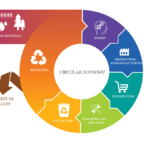 Circular economy: definition, importance and benefits
 Commission welcomes provisional agreement on the European Climate Law
 Why is EU funding for regions so important?
Leave a Reply