

On 22 March, the Commission proposed common standards against money laundering and misleading environmental claims. Under the proposed proposals, consumers will have greater clarity and confidence that when something is marketed as organic, choosing environmentally friendly products and services is an authentic message of better quality. Businesses will also benefit, as consumers will be able to recognise and reward those who make a genuine effort to improve the environmental sustainability of their products, thereby increasing sales rather than suffering unfair competition. In this way, the proposal will contribute to the creation of a level playing field with regard to information on the environmental performance of products.
A Commission study from 2020 highlighted that 53.3% of examined environmental claims in the EU were found to be vague, misleading or unfounded and 40% were unsubstantiated. The absence of common rules for companies making voluntary green claims leads to ‘greenwashing’ and creates an uneven playing field in the EU’s market, to the disadvantage of genuinely sustainable companies.

The European Parliament agrees to include gas and nuclear energy as environmentally sustainable economic activities |
Reliable, comparable and verifiable information for consumers
According to the proposal, when companies choose to make a ‘green claim’ about their products or services, they will have to respect minimum norms on how they substantiate these claims and how they communicate them.
The proposal targets explicit claims, such as for example: ‘T-shirt made of recycled plastic bottles’, ‘CO2 compensated delivery’, ‘packaging made of 30% recycled plastic’ or ‘ocean friendly sunscreen’. It also aims to tackle the proliferation of labels as well as new public and private environmental labels. It covers all voluntary claims about the environmental impacts, aspects or performance of a product, service or the trader itself. However, it excludes claims that are covered by existing EU rules, such as the EU Ecolabel or the organic food logo, because the current laws already ensure that these regulated claims are reliable. Claims which will be covered by upcoming EU regulatory rules, will be excluded for the same reason.
Before companies communicate any of the covered types of ‘green claims’ to consumers, such claims will need to be independently verified and proven with scientific evidence. As part of the scientific analysis, companies will identify the environmental impacts that are actually relevant to their product, as well as identifying any possible trade-offs, to give a full and accurate picture.
Clear and harmonised rules and labels
Several rules will make sure that claims are communicated clearly. For example, claims or labels that use aggregate scoring of the product’s overall environmental impact, will no longer be permitted, unless set in EU rules. If products or organisations are compared with others, such comparisons should be based on equivalent information and data.
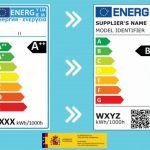
The proposal will also regulate environmental labels. There are currently at least 230 different labels and there is evidence that this leads to consumer confusion and distrust. To control the proliferation of such labels, new public labelling schemes will not be allowed, unless developed at EU level, and any new private schemes will need to show higher environmental ambition than existing ones and get a pre-approval to be allowed. There are detailed rules about environmental labels in general: they must also be reliable, transparent, independently verified, and regularly reviewed.
Next steps
Following the ordinary legislative procedure, the Green Claims Directive proposal will now be subject to the approval of the European Parliament and the Council.
Background
Today’s proposal complements the March 2022 proposal on ‘empowering consumers for the green transition’ by providing more specific rules on environmental claims, in addition to a general prohibition of misleading advertising. Today’s proposal is also presented together with a proposal on common rules promoting the repair of goods, which will also contribute to sustainable consumption and enhance the circular economy.
Today’s proposal makes good on an important Commission commitment as part of the European Green Deal. It is the third package of proposals on circular economy, together with the proposal on common rules promoting the repair of goods. The first and second circular economy packages were adopted in March and November 2022. The first package included the new proposed Regulation on Ecodesign for Sustainable Products, the EU Strategy for Sustainable and Circular Textiles, and the proposed Consumer law directive on empowering consumers in the green transition. The second package included the proposals for the Packaging and Packaging Waste Regulation, the communication on biodegradable, biobased and compostable plastics and the proposed EU Certification for Carbon Removals Regulation.




Leave a Reply