
The European Commission selected 94 transport projects to receive nearly €2.8 billion in EU grants under the Connecting Europe Facility (CEF). By modernising railways, inland waterways and maritime routes across the trans-European transport network (TEN-T), the projects will not only help better connect European regions and cities – north to south, east to west, but also make the EU’s internal market more competitive, and more resilient.
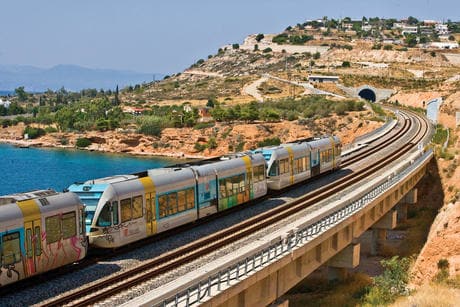
Europe’s green transition runs on rail
Rail transport will receive the largest share of the funding – 77% of the total – with investments directed towards major infrastructure upgrades across the TEN-T core and extended networks, particularly in cohesion countries. This includes the construction of Rail Baltica in the Baltic region and Poland, and improvements in Greece and Slovakia. High-speed rail lines will also be developed in the Czechia and Poland.
In addition, 46 projects in 11 Member States – including Austria, Germany, Hungary, Italy, and Sweden – will implement the European Rail Traffic Management System (ERTMS) on trains and tracks, improving rail safety and interoperability across borders.
Greener ports and increased resilience
The EU is investing in a range of projects to reduce the environmental impact of maritime and inland waterway transport. This includes upgrading ports in Ireland, Cyprus, Malta, Croatia, and Poland with shore-side electricity to reduce emissions from ships at berth. Support will also go to the construction and upgrading of multi-purpose icebreakers in Estonia, Finland and Sweden to strengthen the security and resilience of submarine cables, in line with the EU’s recent action plan. In France and Spain, digital traffic management systems will be deployed to improve the safety and efficiency of short-sea shipping, and reduce congestion.
For inland waterways, France will see upgrades along the Rhine, while digitalisation of waterborne transport will be advanced in Belgium.
Smarter and safer transport networks
In road transport, safe and secure parking areas will be built or upgraded across 10 Member States, including Germany, France, Italy and Romania. Projects will also support the roll-out of Cooperative Intelligent Transport Systems (C-ITS), improving road safety and traffic flow, particularly in urban areas.
Air traffic management projects will continue to contribute to the development of the Single European Sky, to create a safer, more efficient and sustainable aviation system. This will reduce congestion, lower emissions, and improve the overall air travel experience.
Urban mobility will also benefit, with funding to prepare for the construction or upgrade of multimodal passenger hubs in cities such as Leuven (Belgium), Norrköping (Sweden), Nice and Marseille (France), and Bolzano (Italy). These hubs will provide seamless connections between different modes of transport, making it easier for people to get around cities.
Strategic and solidarity investments
The EU is building on its efforts to strengthen the EU-Ukraine Solidarity Lanes, with projects to improve rail connectivity and border crossing points between Slovakia and Ukraine, and between Romania and Moldova. EU support will help Ukraine adopt the standard EU railway gauge, facilitating seamless cross-border rail traffic and boosting regional trade.
Additionally, the EU will support one project to enhance accessibility and infrastructure resilience in the Arctic region, ensuring secure supply routes and developing dual-use infrastructure capable of withstanding climate change impacts.
Next steps
Yesterday, the CEF Committee approved the list of 94 selected projects. The Commission will now formally adopt the selection decision, and CINEA will start preparing grant agreements for the chosen projects. These agreements are expected to be finalised by October 2025. The results are currently provisional and will only become official once the Commission adopts the corresponding award decision.
Background
The 94 projects have been selected from a pool of 258 applications submitted under the recent call for proposals, which closed on 21 January 2025.
EU funding for these projects will be provided in the form of grants, which are used to co-finance total eligible project costs.
The CEF Transport program for 2021-2027 has a total budget of €25.8 billion. It is available to fund projects in all EU Member States as well as in Ukraine and Moldova – two CEF associated countries. With the current selection, 95% of this budget has already been allocated.
Since its launch in 2014, the Connecting Europe Facility supported 1861 projects (including the current selection of 94 projects) with a total of €47.34 billion in the transport sector.
More information: European Commission
Publicaciones relacionadas:
 Local and regional leaders urge EU action to combat mobility poverty
 Updated rules for safer roads, less air pollution and digital vehicle documents
 Average car emissions kept increasing in 2019, final data show
 EU cohesion policy: 77 million euros for green transport in Andalusia
 How do Europeans feel about self-driving cars?
Leave a Reply