• Skip to primary navigation
  • Skip to main content
  • Skip to primary sidebar
  • Skip to footer
  • Bluesky
  • Facebook
  • Instagram
  • Twitter
  • YouTube
CDE Almería – Centro de Documentación Europea – Universidad de Almería

CDE Almería - Centro de Documentación Europea - Universidad de Almería

Centro de Documentación Europea de la Universidad de Almería

  • HOME
  • WHAT´S ON
    • EU NEWS
    • Activities
    • EU Calls and Awards
    • Radio Program «Europe with You»
  • DOCUMENTATION
    • EU Media Collection
      • Web Space
      • MEDIATHEQUE REPOSITORY
  • Europe on the net
    • Institutions
    • EU Representation in Spain
    • European information network of Andalusia
  • ABOUT US
    • Presentation
    • Services
    • People
    • Contact
  • Spanish
  • English

EU budget for 2025 to focus on research, health, education, and climate action

Inicio » Noticias UE » Mercado » Economy and Finance » EU budget for 2025 to focus on research, health, education, and climate action

25 de October de 2024

Parliament demands an EU budget for 2025 that focuses on improving people’s lives, boosting competitiveness, and addressing current challenges.
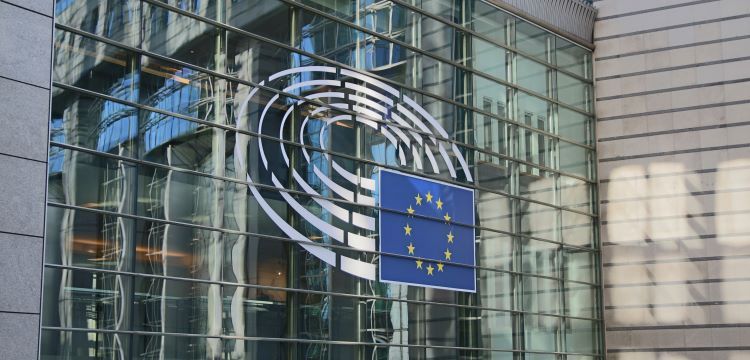
MEPs set the overall level of commitment appropriations for the 2025 draft budget at almost €201 billion, €1.24 billion more than the Commission’s proposal from last June. Parliament wants to boost programmes vital in addressing health challenges, supporting young people, agriculture and rural areas, helping people suffering from natural disasters, boosting climate action, managing migration and security needs, and strengthening EU support for neighbouring regions experiencing geopolitical and humanitarian crises. MEPs restored €1.52  billion in funding cuts proposed by the Council, and set payment appropriations at €153.5 billion.

Repayment costs for the European Recovery Instrument (EURI)

The EURI repayment costs, which are twice the amount initially forecast for 2025, should not result in reduced funding for essential programmes, like Erasmus+ or R&D, according to Parliament. MEPs want to reverse cuts made by member states to appropriations dedicated to these areas and to use the new “EURI cascade mechanism” introduced by the revision of the EU’s long-term budget . This mechanism is designed to manage escalating Next Generation EU borrowing costs without affecting key initiatives, maintaining the budget’s flexibility and response capacity.

Quotes

Victor Negrescu (S&D, Romania), general rapporteur for the EU budget 2025 (for section III – Commission), said: “Today’s vote is a strong signal of support for a citizen-centred EU budget focused on investments in economic development and improving people’s lives. That is why we are asking for an increase of €110 million for actions in the area of health, an additional €70 million for Erasmus, €42 million to protect our citizens against the effects of natural disasters, an additional €96 million for agriculture, €120 million for humanitarian aid, and €110 million for the Eastern and Southern Neighbourhood.”

Niclas Herbst (EPP, Germany), rapporteur for the other sections, said: “Cybersecurity is vital for EU institutions and has remained a pressing concern since 2023. Another key priority is ensuring that the institutions have enough staff to fulfil new tasks, like for the implementation of the Artificial Intelligence Act. Additionally, improving the security of European External Action Service buildings, particularly in delegations situated in remote and high-risk areas, is essential. To address this, an increase of €37 million is required.”

Next steps

The vote initiates three weeks of “conciliation” talks with the Council, with the aim of reaching a deal for next year’s budget, which then has to be voted on by Parliament and signed by its President.

Background

Over 90% of the EU budget funds activities in EU countries and beyond, benefiting citizens, regions, farmers, researchers, students, NGOs, and businesses. Unlike national budgets, the EU budget is primarily aimed at investment, to generate growth and opportunities across the European Union.

The EU serves 27 countries with a total population of 450 million. With these figures in mind, the annual EU budget is actually relatively small – on average €160-180 billion annually in 2021-27. This is comparable to the national budget of Denmark, which serves 5.6 million people, and is about 30% smaller than the budget of Poland, which serves 38 million people. (Source: Commission)

Further information: European Parliament
Publicaciones relacionadas:

Will the Spanish economy be boosted after Covid-19? Default ThumbnailReducing unemployment: EU policies explained MEPs want more effective measures to respond to rising prices New EU industrial strategy: the challenges to tackle Cryptocurrency dangers and the benefits of EU legislation

Economy and Finance,  EU News EU Budget 2025,  European Parliament

“This is a space for debate. All comments, for or against publication, that are respectful and do not contain expressions that are discriminatory, defamatory or contrary to current legislation will be published”.

Reader Interactions

Leave a Reply Cancel reply

Your email address will not be published. Required fields are marked *

This site uses Akismet to reduce spam. Learn how your comment data is processed.

Primary Sidebar

Footer

  • CDE Almería
  • Biblioteca Nicolás Salmerón – Universidad de Almería
  • Planta: 1ª, Despacho: 1.05.0B.
  • Ctra. Sacramento s/n. Almería (Spain)
  • Teléfono: (+34) 950 015266

HOME
NEWS
DOCUMENTATION
EUROPE ON THE NET
ABOUT US

  • LEGAL NOTICE
  • PRIVACY POLICY
  • COOKIE POLICY
  • ACCESSIBILITY
  • SITEMAP

Copyright © 2026 CDE Almería · Creative Commons LicenseThis work is licensed under a Creative Commons Attribution-NonCommercial 4.0 International License.

<p>El Centro de Documentación Europea de la Universidad de Almería utiliza cookies propias y de terceros para facilitar al usuario la navegación en su página Web y el acceso a los distintos contenidos alojados en la misma. Asimismo, se utilizan cookies analíticas de terceros para medir la interacción de los usuarios con el sitio Web. Pinche el siguiente enlace si desea información sobre el uso de cookies y como deshabilitarlas. </p>

Politica de privacidad

El Centro de Documentación Europea de la Universidad de Almería utiliza cookies propias y de terceros para facilitar al usuario la navegación en su página Web y el acceso a los distintos contenidos alojados en la misma. Asimismo, se utilizan cookies analíticas de terceros para medir la interacción de los usuarios con el sitio Web. Pinche el siguiente enlace si desea información sobre el uso de cookies y como deshabilitarlas. <a href="/politica-de-cookies" rel="noopener" target="_blank">Más información</a>

Cookies estrictamente necesarias

Las cookies estrictamente necesarias tiene que activarse siempre para que podamos guardar tus preferencias de ajustes de cookies.

Básicamente la web no funcionara bien si no las activas.

Estas cookies son:

  • Comprobación de inicio de sesión.
  • Cookies de seguridad.
  • Aceptación/rechazo previo de cookies.
Cookies de terceros

Esta web utiliza Google Analytics, Google Tag Manager y Yandex Metrika para recopilar información anónima tal como el número de visitantes del sitio, o las páginas más populares.

Dejar estas cookies activas nos permite mejorar nuestra web.

Política de cookies

Pinche el siguiente enlace si desea información sobre el uso de cookies y como deshabilitarlas. Más información