
The European Commission has allocated nearly €130 million this year in humanitarian aid for Latin American and the Caribbean, to address the needs of the most vulnerable people affected by the main ongoing emergencies. This includes over €1 million just approved to respond to the devastating floods in Brazil, which in past weeks have affected 90% of the territory of Rio Grande do Sul.
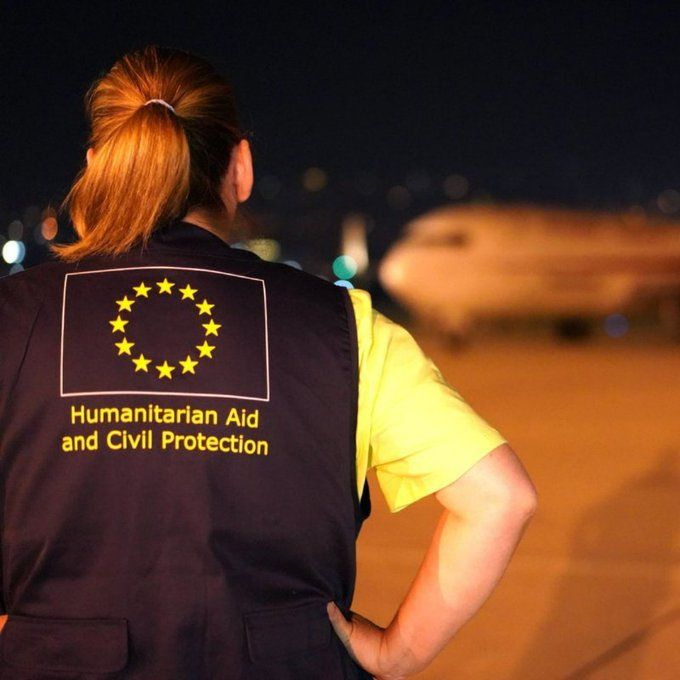
Part of this funding will also be dedicated to reinforcing disaster preparedness, as the region is exposed to natural hazards that are becoming more frequent and intense due to climate change.
The announcement comes as Commissioner for Crisis Management, Janez Lenarčič, is visiting Trinidad and Tobago and Barbados. Today in Bridgetown, Barbados the Commissioner will also sign a Memorandum of Understanding with several regional organisations and governments to increase cooperation in disaster risk management between the EU and Latin American and the Caribbean.
The largest allocation of EU funding is for Venezuela, with nearly €50 million. Most of the funding will help tackle the consequences of the protracted humanitarian crisis in the country and its regional impacts, while €5 million will be dedicated to disaster preparedness.
In Colombia, as people continue to suffer the impact of armed conflicts, €11 million are allocated for humanitarian aid. In addition, €5 million are earmarked for disaster preparedness.
For the rest of South America, funding amounts to €22 million. This includes €14 million to respond to the main humanitarian needs, notably forced displacement that continues to be a major issue across the subregion, of which €2 million for the response to the internal crisis in Ecuador, and the mentioned €1 million for the floods in Brazil. The remaining €8 million will go to disaster preparedness.
EU-Central America agreement enters into force |
In Central America, €17 million will support the response to the main humanitarian crises, mainly resulting from chronic violence and the record numbers of displaced people on the move. An additional million is earmarked for disaster preparedness.
As already announced in March, €20 million in humanitarian aid were released for Haiti, where the EU recently launched a Humanitarian Air Bridge. For the rest of the Caribbean, over one million euros will go to humanitarian aid, notably in response to the migration flows stemming mostly from Venezuela, Cuba and Haiti, and another €1 million for disaster preparedness.
Finally, an additional amount of €1.5 million has just been allocated to respond to the dengue outbreak in Central and South America.
Reinforcing disaster risk management
The new Memorandum of Understanding will be signed today in Barbados during a ceremony co-hosted by the European Union, the Caribbean Disaster Emergency Management Agency (CDEMA), and the government of Barbados. The MoU brings together the European Union and the LAC region through the Caribbean Disaster Emergency Management Agency (CDEMA), the Coordination Centre for the Prevention of Disasters in Central America and Dominican Republic (CEPREDENAC), the Southern Common Market (MERCOSUR) and the General Secretariat of the Andean Community (SGCAN), as well Chile, Cuba and Mexico. It will strengthen joint work on disaster preparedness and prevention and foster information sharing and training opportunities. This was one of the key commitments made during last year’s EU-CELAC summit in Brussels.
More information: European Commission
Publicaciones relacionadas:
 EU and US hold fourth Joint Dialogue on Technology Competition Policy
 New VAT rules for e-commerce in the EU
 The European Structural and Investment Funds supported more than 4 million SMEs between 2014 and 2020
 An EU approach to enhance economic security
 Commission adopts rules for implementing the Foreign Subsidies Regulation
Leave a Reply