• Skip to primary navigation
  • Skip to main content
  • Skip to primary sidebar
  • Skip to footer
  • Bluesky
  • Facebook
  • Instagram
  • Twitter
  • YouTube
CDE Almería – Centro de Documentación Europea – Universidad de Almería

CDE Almería - Centro de Documentación Europea - Universidad de Almería

Centro de Documentación Europea de la Universidad de Almería

  • HOME
  • WHAT´S ON
    • EU NEWS
    • Activities
    • EU Calls and Awards
    • Radio Program «Europe with You»
  • DOCUMENTATION
    • EU Media Collection
      • Web Space
      • MEDIATHEQUE REPOSITORY
  • Europe on the net
    • Institutions
    • EU Representation in Spain
    • European information network of Andalusia
  • ABOUT US
    • Presentation
    • Services
    • People
    • Contact
  • Spanish
  • English

EFSA recommends increased protection of farms from wild birds

Inicio » Noticias UE » Agricultura, Ganadería, Silvicultura y Pesca » Agricultural Policies » EFSA recommends increased protection of farms from wild birds

2 de November de 2023

While the situation in poultry has eased over the summer, highly pathogenic avian influenza (HPAI) virus continued to affect seabirds in Europe, mostly along coastlines. As the autumn migratory season starts, the protection of poultry and other farmed animals from wild birds should be prioritised. Biosecurity should be enhanced in fur animal farms.
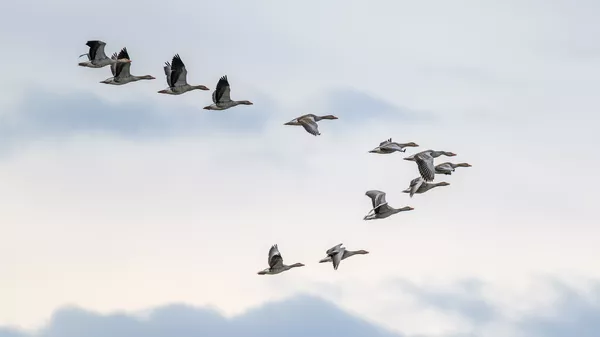
Between 24 June and 1 September 2023, HPAI outbreaks were reported in domestic (25) and wild (482) birds across 21 European countries, according to the latest report on avian influenza by the European Food Safety Authority (EFSA), the European Centre for Disease Prevention and Control (ECDC), and the EU reference laboratory (EURL).

Wild and domestic carnivores continued to be the most affected mammal species with Finland reporting 26 outbreaks in fur farms keeping America mink, red and Arctic foxes, and common raccoon. The most likely source of introduction was contact with wild gulls, but between-farm transmission cannot be completely excluded. Within-farm transmission occurred with some contact animals not showing any clinical signs of infection.

ECDC assessed that the risk of infection with HPAI virus in Europe remains low for the general population , and low to moderate for occupationally or otherwise exposed people to infected birds or mammals (wild or domestic). To further reduce the risk of infection, experts recommend avoiding exposure to dead or diseased seabirds or mammals.

Now available: improved Bird Flu Radar

An improved version of EFSA’s Bird Flu Radar is available to everyone. New features allow users to explore weekly predictions of the probability of HPAI introduction in wild birds. Users may subscribe to receive weekly alert emails for their areas of interest. The Bird Flu Radar is closely integrated with EFSA’s Migration Mapping Tool, which shows the movements and abundance of 50 wild bird species, mainly waterbirds, in which avian influenza has been reported.

More information: European Food Safety Authority

Publicaciones relacionadas:
Needs of farmers and agri-food companies are significant, also in light of the COVID-19 crisis Allergenicity assessment of GM plants: stakeholders to support working group Use of antibiotics in animals is decreasing Avian influenza: 25 EU/EEA countries affected New rules on food transparency and sustainability


Agricultural Policies,  Agriculture, Livestock Farming and Fisheries,  Diseases,  EU News,  Health avian influenza,  Bird,  EFSA,  wild birds

“This is a space for debate. All comments, for or against publication, that are respectful and do not contain expressions that are discriminatory, defamatory or contrary to current legislation will be published”.

Reader Interactions

Leave a Reply Cancel reply

Your email address will not be published. Required fields are marked *

This site uses Akismet to reduce spam. Learn how your comment data is processed.

Primary Sidebar

Footer

  • CDE Almería
  • Biblioteca Nicolás Salmerón – Universidad de Almería
  • Planta: 1ª, Despacho: 1.05.0B.
  • Ctra. Sacramento s/n. Almería (Spain)
  • Teléfono: (+34) 950 015266

HOME
NEWS
DOCUMENTATION
EUROPE ON THE NET
ABOUT US

  • LEGAL NOTICE
  • PRIVACY POLICY
  • COOKIE POLICY
  • ACCESSIBILITY
  • SITEMAP

Copyright © 2026 CDE Almería · Creative Commons LicenseThis work is licensed under a Creative Commons Attribution-NonCommercial 4.0 International License.

<p>El Centro de Documentación Europea de la Universidad de Almería utiliza cookies propias y de terceros para facilitar al usuario la navegación en su página Web y el acceso a los distintos contenidos alojados en la misma. Asimismo, se utilizan cookies analíticas de terceros para medir la interacción de los usuarios con el sitio Web. Pinche el siguiente enlace si desea información sobre el uso de cookies y como deshabilitarlas. </p>

Politica de privacidad

El Centro de Documentación Europea de la Universidad de Almería utiliza cookies propias y de terceros para facilitar al usuario la navegación en su página Web y el acceso a los distintos contenidos alojados en la misma. Asimismo, se utilizan cookies analíticas de terceros para medir la interacción de los usuarios con el sitio Web. Pinche el siguiente enlace si desea información sobre el uso de cookies y como deshabilitarlas. <a href="/politica-de-cookies" rel="noopener" target="_blank">Más información</a>

Cookies estrictamente necesarias

Las cookies estrictamente necesarias tiene que activarse siempre para que podamos guardar tus preferencias de ajustes de cookies.

Básicamente la web no funcionara bien si no las activas.

Estas cookies son:

  • Comprobación de inicio de sesión.
  • Cookies de seguridad.
  • Aceptación/rechazo previo de cookies.
Cookies de terceros

Esta web utiliza Google Analytics, Google Tag Manager y Yandex Metrika para recopilar información anónima tal como el número de visitantes del sitio, o las páginas más populares.

Dejar estas cookies activas nos permite mejorar nuestra web.

Política de cookies

Pinche el siguiente enlace si desea información sobre el uso de cookies y como deshabilitarlas. Más información