
The EU has made strides towards building a more integrated, efficient and attractive single market for research and innovation, but further work is needed to fully tap into its potential. These are the conclusions of the Communication on the implementation of the European Research Area (ERA) that the Commission adopted today, reaffirming its commitment to placing research and innovation at the core of Europe’s future growth. As highlighted by the Draghi report and the Political Guidelines for the next Commission, research and innovation are critical drivers of economic resilience, competitiveness and wellbeing.
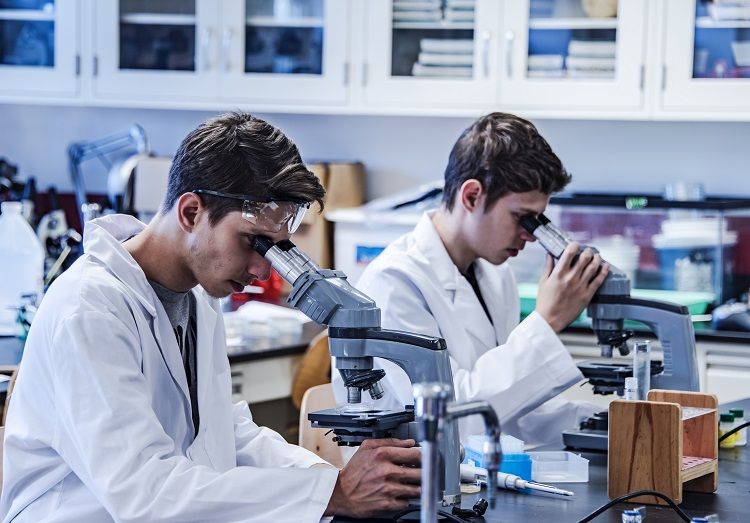
Initiated in 2000 to address fragmentation in the European research landscape and given a new push in 2020, the ERA aims to create a dynamic and attractive environment for researchers and innovators across Europe, making it the place to be for them. The new Communication takes stock of the progress made under the four strategic objectives agreed with the member states and highlights where further work is needed:
- Prioritising investments and reforms: the Commission has worked with Member States to align research and innovation efforts, supporting reforms and investments through cohesion policy funds, the Recovery and Resilience Facility, and through expert support under Horizon Europe’s Policy Support Facility and the Technical Support Instrument. However, Europe is still far from achieving the target of 3% of EU GDP invested in research and development (R&D). The key issue remains low private investment, which is hindered by regulatory, legal, and administrative barriers that need to be addressed to attract more investors and innovators.
- Improving access to excellence: Support provided under Horizon Europe for collaborative projects and mobility schemes such as Marie Skłodowska-Curie Actions (MSCA) helped reinforced scientific cooperation networks. The widening part of Horizon Europe has also invested over €1 billion so far to support the development of stronger R&I capacities in less performing Member States. However, more work is needed to reduce bureaucracy and provide better information on available opportunities for researchers.
- Translating results into economic impact: The European Innovation Council (EIC) has become the largest investor in deep tech in Europe, with every euro invested by the EIC Fund attracting four euros from private investors. The ERA framework has supported the development with member states of targeted guidance for the economic exploitation of research results and technology roadmaps, but Europe still needs more venture capital to scale breakthrough innovations. The recent launch of the Trusted Investors Network marks a step forward in syndicating European investors.
- Deepening the ERA: The ERA framework has led to significant progress in improving working conditions and career development for researchers, including through the adoption of the Council Recommendation on research careers, but more can still be done. In line with European values, Horizon Europe also led the way to further boost gender equality and research integrity, open science and data-sharing efforts. Through the adoption of a Council recommendation on research security, further progress was also made to ensure the security of European research. However, more effort is needed to address remaining disparities in career development opportunities across the Union and to ensure the long-term sustainability and accessibility of European research and technology infrastructures.
Background
Over the past two decades, the ERA has triggered structural, economic and policy change. The current ERA Framework results from a revitalisation process, starting with the 2020 Commission Communication on a new ERA for Research and Innovation, followed by a new policy and governance framework adopted by the Council, and the Council recommendation on a Pact for Research and Innovation in Europe as well as the Council conclusions on the future governance of the European Research Area (2021).
The first ERA Policy Agenda (2022-2024) is nearing completion with tangible results, and this new Communication comes as the second ERA policy agenda (2025-2027) is being prepared.
For more information: European Commission
Publicaciones relacionadas:
 Commission sets out new ambitious mission to lead on supercomputing
 Commission mobilises €123 million for research and innovation to combat the threat of variants
 Can life from Earth survive on a planet like Mars?
 Particle physics milestone achieved at CERN
 Spain wins the Environment category of the LIFE Awards
Leave a Reply